
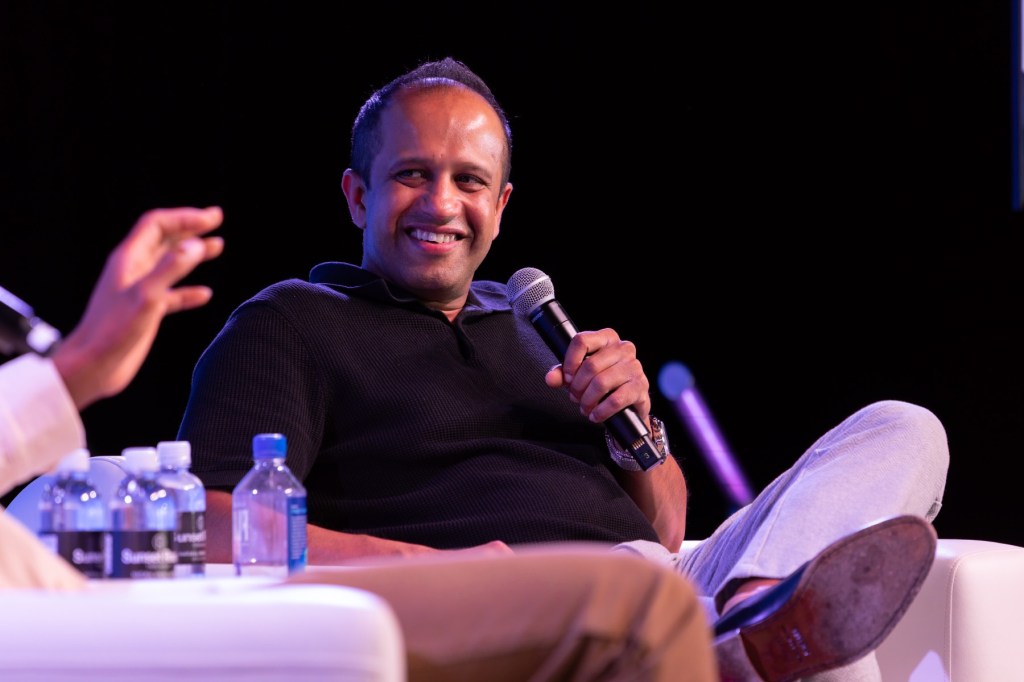
"It's wildly competitive, no matter what some news companies say," Saumil Mehta said at the Trapital Summit on Tuesday (Sept. 15). Ticketmaster global president Saumil Mehta at the 2026 Trapital Summit in LA on Sept. 15 Sean T. Smith/Courtesy Trapital Trending on Billboard Ticketmaster’s new global president Saumil Mehta — who joined the Live Nation-owned ticketer last November after nearly a decade at business platform Square — disagrees with the narrative that music venues and sporting facilities lack choices when it comes to which ticketing companies they can work with. “At a headline level, I would categorically reject that venues don’t have choices,” he told Trapital founder Dan Runcie at the tech and music conference Trapital Summit in Los Angeles on Tuesday (Sept. 15). Related “I have participated in many, many, many [ticketing contract] renewals over the last 10 months and I’m fully aware of how competitive it is,” Mehta continued. “Every renewal we go up on, whether it’s sports teams or clubs or theaters or amphitheaters…there are competitors bidding for those venues. Those rights to be in those buildings are getting more expensive. There is no question about it.” Mehta added that retaining or signing new ticketing contracts comes with a lot of scrutiny from venues that are comparing Ticketmaster with its competitors, with the financials, product and services all being considered. He went on to explain that the live entertainment industry in the U.S. runs on an exclusivity model, where venues can sign exclusive contracts with ticketing companies — meaning that any artist or team that performs at that venue will be subject to using the exclusive ticketer. Ticketmaster’s exclusive contracts with venues were a major topic of the recent antitrust trial against Live Nation. Ultimately, a jury found that Live Nation does indeed operate an illegal monopoly by threatening to withhold concerts from venues that do not sign exclusive contracts with Ticketmaster. Live Nation denies those claims. The ticketing model differs in other countries, including the U.K., where large venues use multiple ticketing companies for the same event and allocate a certain amount of inventory to each entity. Mehta added that if the U.S. were to move to the allocation model, Ticketmaster is “perfectly willing and able to respond,” adding that Live Nation and Ticketmaster have been doing business “successfully” in the U.K. for a long time. “I have empirical evidence that we’ve done it in the U.K., so it’s fine,” he said. The narrative that Live Nation and Ticketmaster have a stronghold on live entertainment isn’t the only criticism Mehta has had to combat in the past 10 months on the job. When asked by Runcie where the disconnect between what he at the ticketer and its public opinion comes from, Mehta said, “Depending on how you count, [the modern ticketing] industry has been around for 40-plus years and narratives build up and calcify over long periods of time. So, I’ve inherited 40 plus years of decisions and narratives, both good and less good, and that’s okay.” “My mission and my message to our team is: Come in here, compete every day, build better products, and know that if we continue to build better products and do great work for fans and artists and teams, we will get picked, and if we don’t, we will lose clients, and we will deserve to lose clients,” Mehta continued. “It’s a free market. It’s wildly competitive, no matter what some news companies say, so I act like it.” Trapital founder Dan Runcie and Ticketmaster global president Saumil Mehta at the 2026 Trapital Summit in LA on Sept. 15 Sean T. Smith/Courtesy Trapital When asked what criticisms of Ticketmaster he believes to be the most valuable, Mehta explained that the business of live entertainment is not as simple as economic transactions. “We’re not selling toothbrushes,” Mehta said. “We’re selling extremely scarce, extremely valuable, completely perishable, high-demand inventory. In many cases, with a deeply emotional connection between the fan and the artist, or the fan and the sports team. In a world like that, I think that [Ticketmaster has] an opportunity to operate with more fan transparency, and we have the opportunity to better connect the desires of the artist and the team with the information that the fan has access to.” Mehta provided the example of sports teams geo-fencing (in this scenario, deciding who can purchase tickets based on zip codes) for playoff games, which he said is a common request from teams to keep “home court advantage.” Ticketmaster has received criticism for the practice, but believes better in-the-moment communication with fans could have diminished the admonishment from ticketbuyers. “If we don’t do an exceptional job of fan communication, fan transparency, fan education in the moment — not a social media post that you sent out two days prior — during the transaction flow, during the checkout flow, for better or worse, we’re going to catch the criticism,” he said, “and it’s our responsibility to do more there.” Daily newsletters straight to your inbox Sign Up More From Pro
Ticketmaster Global President ‘Categorically Rejects That Venues Don’t Have Choices’ for Ticketers
Full Article
Original Source
Read the full article at Billboard →KhanList aggregates and links to publicly available news content. We do not host full articles from third-party sources. Always verify important information with original sources.