
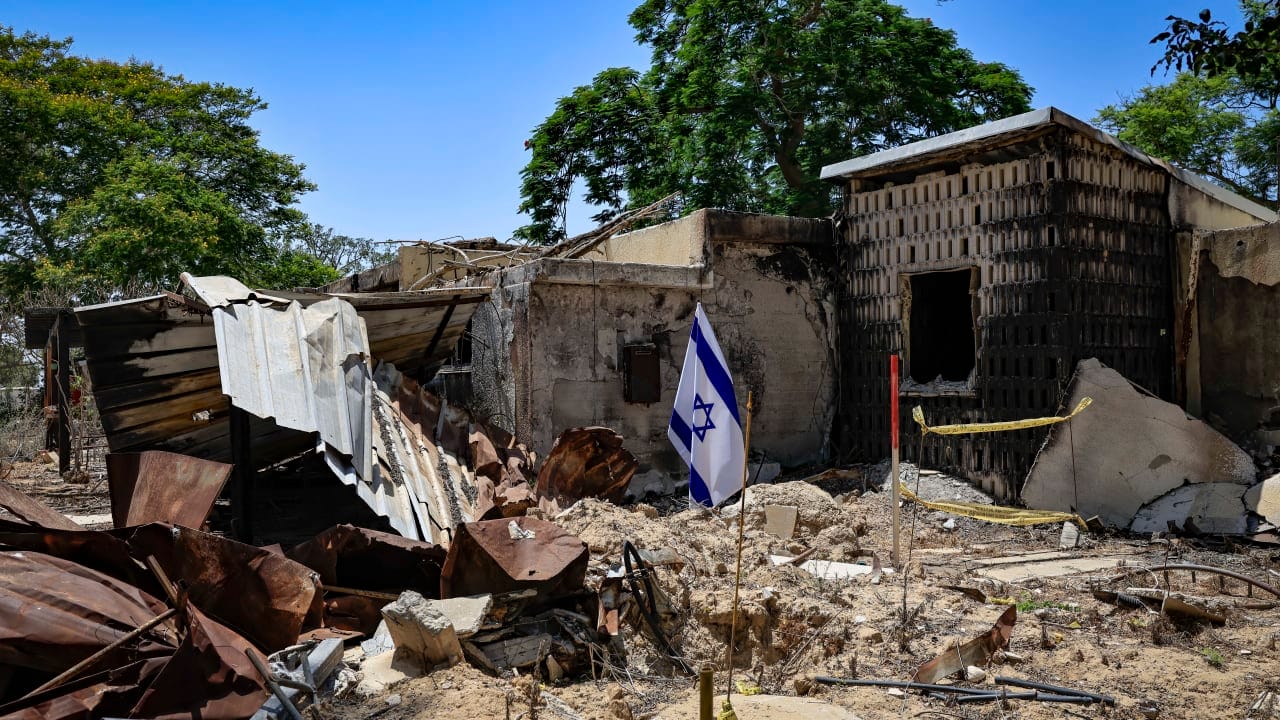
OCTOBER 25, 2026 18:02Updated: OCTOBER 25, 2026 18:06A new report released by the Jewish Federations of North America (JFNA) details the allocation of $908 million raised across the Jewish Federation network to support Israel in the wake of the October 7, 2023, attacks and the subsequent period of rocket fire from Hezbollah, cross-border drone threats, and direct conflicts with Iran.Of the total funds raised, $252 million was allocated through the central fund of the Israel Emergency Response Committee, which operated for two years before completing its work in the fall of 2025. The remaining funds were allocated directly by individual federations.Operating through four core pillars covering lifeline services, medical and trauma relief, economic relief, and community resilience, the committee distributed 800 grants to more than 400 organizations and initiatives. Much of this distribution was executed alongside long-standing partners including the Jewish Agency for Israel and the American Jewish Joint Distribution Committee (JDC).Rebecca Caspi, Director-General of JFNA’s Israel office, said in a statement to The Jerusalem Post, “This report is a powerful reminder to the Israeli people that Jewish Federations have their back. For more than 100 years, Jewish Federations have helped build Israel, investing in its communities, strengthening its society, and supporting its people even before the establishment of the State.”“After October 7, that longstanding commitment became an unprecedented emergency response, with Federations raising $908 million to provide lifesaving relief, care for the most vulnerable, and help communities endure and recover through three years of war. That work laid the foundation for our current Rebuild Israel framework, with a focus on restoring communities, helping Israelis heal, and building a stronger future,” Caspi told the Post.Scenes of houses destroyed by Hamas terrorists in Kibbutz Be'eri during the massacre of thousands of Israelis on October 7, taken October 25, 2023 (credit: EDI ISRAEL/FLASH90)Over $47 million in funding directed towards immediate relief for displaced familiesThe emergency response directed over $47 million toward basic needs and immediate relief. Families who evacuated their homes with minimal belongings received clean clothing, hot meals, hygiene essentials, and safe shelter. Funding also went toward emergency preparedness, including training volunteers, improving communication technology, repairing bomb shelters, and supplying essential equipment to first responders through a national JDC initiative.The aid reached populations facing hidden vulnerabilities, including households struggling with extended grocery needs and individuals encountering increased domestic violence. “My youngest hasn’t slept through the night since the sirens started. The flashlight you brought has let him sleep through the night for the first time in months. Such a simple thing has restored his sense of safety in an uncertain world,” a grandmother in Nahariya said, according to the report.In medical care and rehabilitation, the JFNA allocated over $27 million to support emergency medical teams and patients. Basic ambulances were upgraded into mobile intensive care units, and hospitals across the country received lifesaving equipment and expanded capacities to function during sustained missile attacks, including moving departments underground.The funding also addressed emerging wartime injuries by bringing foreign physicians to underserved regions, expanding screening capabilities for concussive brain injuries, and adapting housing for severely wounded soldiers. “I can drive, which is a dream. I feel real improvement when it comes to the movement of our arms and legs, which gives me a feeling of relief that there is light at the end of the tunnel,” an injured soldier in rehabilitation stated in the report.Contributions used to fund treatment for psychological traumaTo address widespread psychological trauma, an additional $23.2 million was allocated toward mental health and resilience. Within the first month, contributions reached every psychiatric hospital in the country, followed by the establishment of community-based mental health centers in partnership with the Ministry of Health. Support spanned individual and group therapies, unconventional programs like surfing and public art therapy, and training for school staff to recognize severe trauma.Vulnerable populations hardest hit by the emergency received over $19 million. This funding provided specialized safety measures, such as equipping residential facilities for children with disabilities to move to shelters quickly, distributing vibrating alert bracelets to the hearing impaired, and supplying mobile safe rooms to Bedouin villages in the Negev that lacked permanent shelters.The allocation also funded caseworkers and hot meals for elderly Israelis and Holocaust survivors, Arabic-language mental health care, and support for the Jewish Agency in offering programming for new immigrants in absorption centers under missile attacks, alongside helping new immigrants, Russian-speaking Israelis, and refugees access counseling, respite, and company in their native language.For victims of terror and war, allocations totaled over $30.9 million. This funding supported the Jewish Agency’s Fund for Victims of Terror to cover immediate relocation costs for families whose homes were destroyed. Federations provided continuous support for bereaved families, hostages and their families, Nova festival survivors, and survivors of sexual assault through memorial arrangements, support circles, and specialized community spaces.Reservists and their families received $4.5 million as frequent, short-notice call-ups disrupted civilian life. Working alongside national and local government, Jewish Federations established the National Headquarters for Families of Reservists to serve as a single community resource, while also funding loans, employment counseling, legal aid, and couples’ workshops for returning soldiers.To mitigate disruptions caused by school closures and evacuations, over $19 million was allocated to education and youth-at-risk. The funding supported interim and remote education, teacher recruitment, tutoring, matriculation boot camps, and upgraded school shelters. It also sustained youth movements, summer camps, and mentorship initiatives such as the Jewish Agency’s Youth Futures program, giving children structured routines and engagement opportunities.For economic relief and community partnerships, the Israel Small Business Loan Fund received over $48 million to keep people employed, finance job placement and upskilling, and help agricultural initiatives like ReGrow replace destroyed farming equipment in the Negev and replant northern orchards.Concurrently, the central fund allocated over $28 million to partner directly with communities in the Gaza envelope and northern border regions, equipping public shelters, hosting evacuees, restoring communal spaces, and funding long-term resilience plans developed with local authorities.Follow us on Google
Three years, hundreds of millions: JFNA report details Diaspora impact on post-Oct. 7 Israel
Full Article
Original Source
Read the full article at Jpost →KhanList aggregates and links to publicly available news content. We do not host full articles from third-party sources. Always verify important information with original sources.