
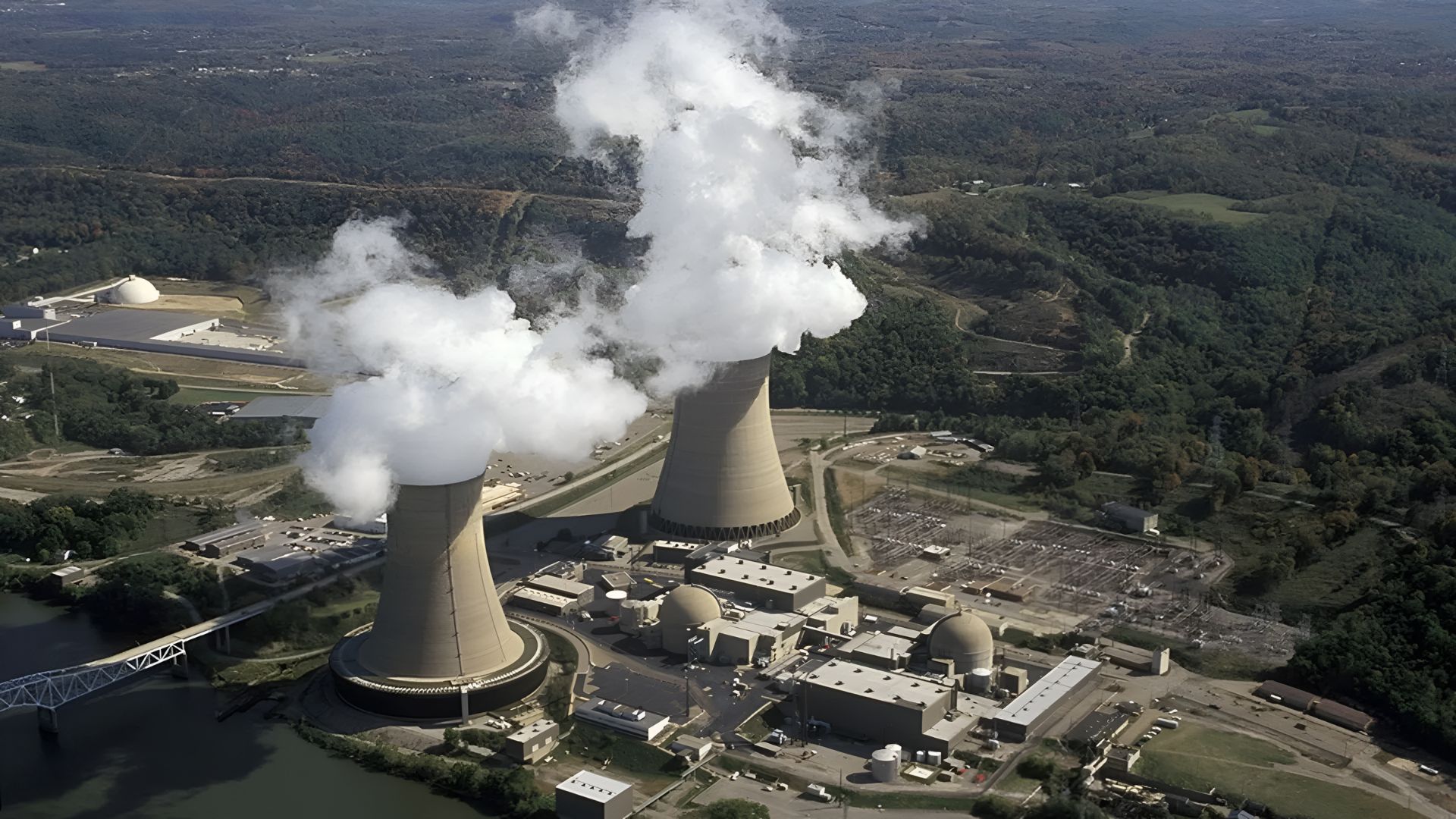
The U.S. Department of Energy (DOE) has offered up to $4.2 billion in conditional financing to upgrade existing nuclear plants and add 433 megawatts of generating capacity in Pennsylvania and Ohio. The financing would support uprates and modernization across Vistra’s Beaver Valley plant in Pennsylvania and its Davis-Besse and Perry plants in Ohio. Uprating involves modifying an existing reactor so it can safely generate more electricity without building an entirely new nuclear plant. The projects are also expected to preserve nearly 4 gigawatts of existing nuclear capacity, which the DOE says is enough to power more than 3 million homes. The additional 433 MW would help meet growing electricity demand across PJM Interconnection, the nation’s largest power grid, which serves more than 67 million people across 13 states, including Pennsylvania, Ohio, New Jersey, Virginia and Maryland, as well as Washington, D.C, and the District of Columbia. The DOE’s Office of Energy Dominance Financing announced the conditional loan commitment on Monday. Vistra must still meet technical, legal, environmental and financial requirements before the agency signs definitive financing agreements or provides any funds. Existing reactors gain capacity Vistra, a Texas-based power producer that operates the second-largest competitive nuclear fleet in the U.S., plans to increase electricity production at Beaver Valley, Davis-Besse and Perry without adding new transmission corridors or building equivalent new generating facilities, according to the DOE. The investments would also support operation of the plants for an additional 20 years beyond their existing licenses. The financing package includes an option for potential future uprates at Vistra’s Comanche Peak Nuclear Power Plant in Texas. “By getting more power out of the nuclear plants we already have, we can deliver more affordable, reliable, around-the-clock energy for American families and businesses,” U.S. Energy Secretary Chris Wright said. Nuclear uprates can increase the output of existing reactors through equipment upgrades and other changes to plant systems. In this case, the approach allows Vistra to add hundreds of megawatts while continuing to use existing nuclear sites and infrastructure. The proposed investment comes as U.S. electricity demand is rising and policymakers seek additional sources of round-the-clock generation. Thousands of jobs supported The DOE estimates the planned work will support about 3,000 project-related jobs across engineering, construction and planned reactor outage work. It is also expected to preserve thousands of permanent jobs associated with the plants. The financing advances an executive order signed by President Donald Trump in 2025 aimed at expanding U.S. nuclear generation and strengthening the domestic nuclear industry. “These investments will extend the life of existing reactors, increase nuclear generation, and deliver abundant, around-the-clock power to lower costs and power American prosperity for decades to come,” EDF Director Gregory A. Beard said. The $4.2 billion figure represents the maximum amount available under the conditional commitment, rather than money already awarded to Vistra. The company will receive financing only if it meets the DOE’s conditions and the two sides complete final loan documents.Get the latest in engineering, tech, space & science - delivered daily to your inbox.With over a decade-long career in journalism, Neetika Walter has worked with The Economic Times, ANI, and Hindustan Times, covering politics, business, technology, and the clean energy sector. Passionate about contemporary culture, books, poetry, and storytelling, she brings depth and insight to her writing. When she isn’t chasing stories, she’s likely lost in a book or enjoying the company of her dogs.
Three US nuclear plants get $4.2B upgrade to add 433 MW of generating capacity
Full Article
Original Source
Read the full article at Interestingengineering →KhanList aggregates and links to publicly available news content. We do not host full articles from third-party sources. Always verify important information with original sources.