
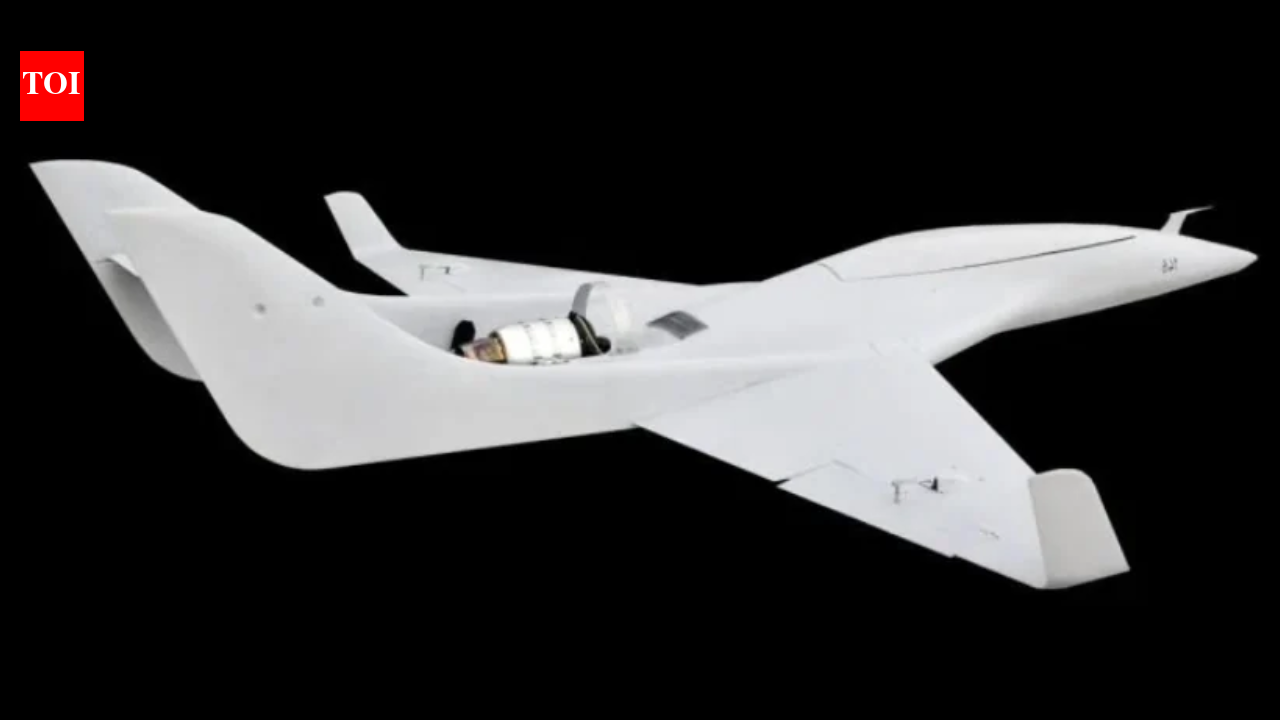
The Agniveg jet-powered loitering munition has been made domestically and has been procured by the armed forces. (Image credit: SMPP)The drones of the next war may not buzz like the slow propeller-driven Shaheds of recent years. They may arrive at nearly three times the speed. The Indian Army will begin field trials of indigenous jet-powered kamikaze drones this week at Pokhran in Rajasthan, in a programme estimated at Rs 2,000 crore. Under the Jet Based Kamikaze Drone System (JBKDS), the Army plans to buy 540 units through the Fast Track Procurement scheme. It is the first time the Army is acquiring high-speed kamikaze attack drones under a dedicated programme.The competition is limited to Indian companies. Around 60 responded to the Army's Request for Information (RFI) in July 2026, 18 submitted bids and 11 qualified for the trials. Those named include Bharat Forge with VEDA Aeronautics, NIBE, Adani Defence, SMPP with NewSpace Research and Technologies, Tonbo, Munitions India Limited and Apollo Micro Systems. Vendors must show not just the drone but a complete operational package, including vehicles to carry it and mission planning and briefing vehicles.Why jetsKamikaze drones, or loitering munitions, hover over an area, find a target and crash into it with an explosive payload. Propeller-driven types fly at 150 to 200 kmph, while jet-powered ones reach around 450 kmph, which gets them to their targets sooner and makes them harder to intercept. The Air Force used Harpy and Harop drones against Pakistani radars and command posts during the 88-hour Operation Sindoor, and the war in Ukraine has shown how cheap platforms can hit military infrastructure.Iran fielded the jet-powered Shahed-238 in 2023, and Russia went on to the Geran-3, 4 and 5. The Geran-4 flies at up to eight km at 450 to 500 kmph with a range of over 700 km, and Ukrainian intelligence estimates Russia makes around 3,000 Geran-4 and Geran-5 drones a month. Ukraine has used F-16s and interceptor drones against them.India's building blocksIndia is working on the key part, the engine. The Defence Research and Development Organisation's Gas Turbine Research Establishment (GTRE) has developed a 350 kg class expendable turbojet, the kind used in cruise missiles and jet-powered loitering munitions. It sits just below the 450 kg class Small Turbofan Engine for the Long-Range Land Attack Cruise Missile. GTRE works with Azad Engineering, and firms such as DG Propulsion, Nabhdrishti Aerospace and Paninian Aerospace are also entering the field.The Army has also taken delivery of 106 jet-powered Agniveg drones from SMPP, 100 operational and six for training. Agniveg flies at up to 450 kmph, is claimed to hit within five metres of its target and is built to resist jamming and spoofing. If the trials go well, the Army will have a domestic answer to a kind of strike weapon that is changing how wars are fought.
Three times faster, harder to intercept: Army sets sights on 540 jet-powered kamikaze drones
Full Article
Original Source
Read the full article at Timesofindia →KhanList aggregates and links to publicly available news content. We do not host full articles from third-party sources. Always verify important information with original sources.