
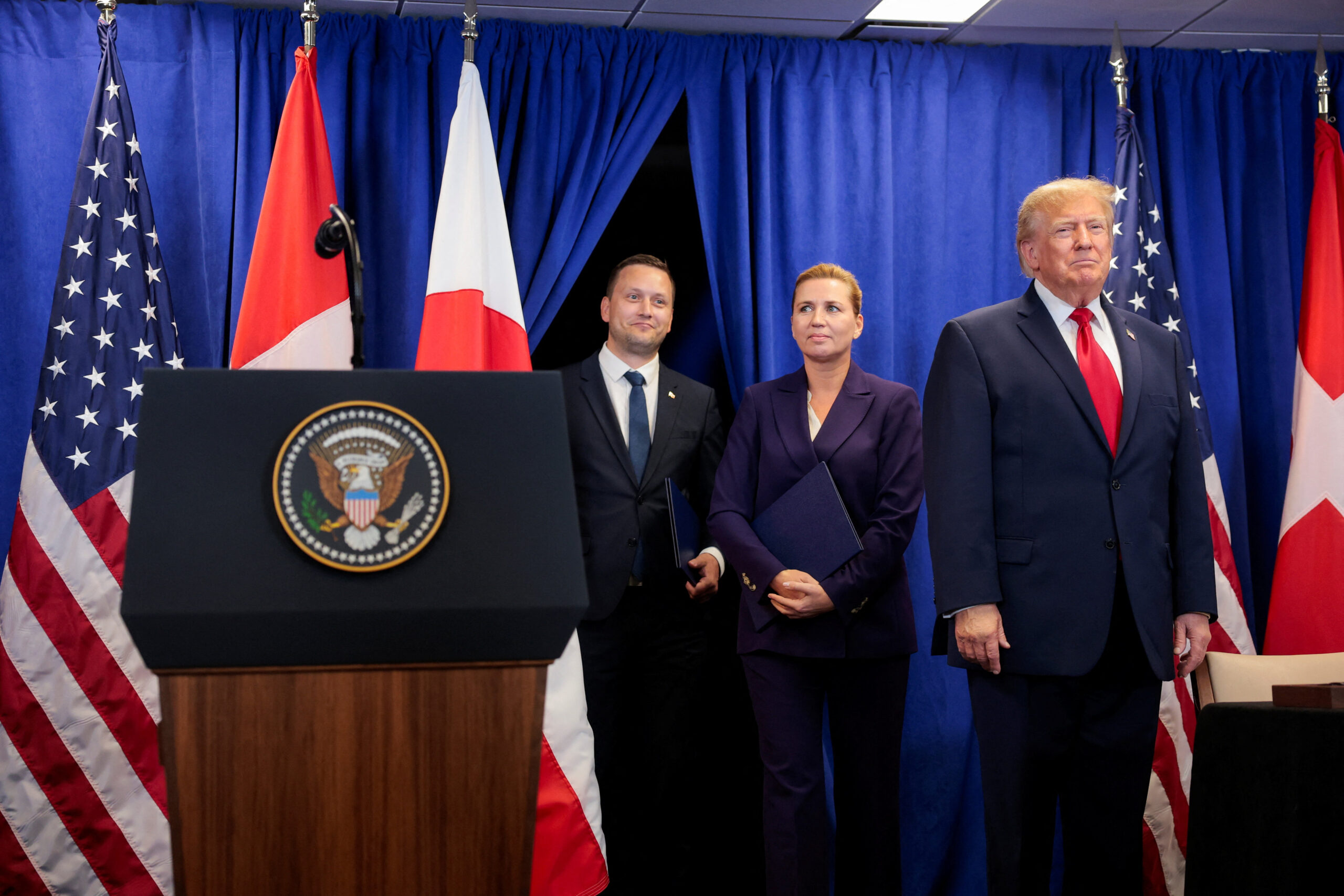
NEW YORK—US President Donald Trump, Danish Prime Minister Mette Frederiksen, and Greenlandic Prime Minister Jens-Frederik Nielsen signed a new agreement Tuesday on the defense of Greenland, which will hopefully bring an end to the almost two-year-old crisis that has deeply damaged the relationship between the United States and its allies in Europe. The agreement largely reiterates the conditions of the existing 1951 defense agreement, which has thus far governed US defense activities on the island. However, there are several provisions that grant the United States new authorities over aspects of Greenland’s security and confirm the longevity of the US defense presence there. Here are three new aspects of the agreement. 1. It explicitly bars non-NATO military presence in Greenland and highlights NATO’s role in Arctic security The new agreement states that non-NATO nations may not establish a military presence in Greenland without the sign-off of all three parties. Trump has repeatedly expressed concerns about Russian and Chinese military activity near Greenland and the possibility of adversaries establishing a presence there that could threaten the US homeland. At present, adversary activity near Greenland is nearly nonexistent, and there had been no real indication that Russia or China was close to establishing a base on the island. Nonetheless, this provision should assuage the administration’s concerns about potential future threats. While barring adversary presence, the agreement explicitly highlights the role of NATO in Arctic security. The Trump administration has called for European allies to take primary responsibility for their conventional defense, and this extends to the Arctic as well. This agreement reiterates this call and signals support for NATO initiatives such as the Arctic Sentry enhanced vigilance activity. A US F-35A operates out of Pituffik Space Base, Greenland, on September 10, 2026. (US Air National Guard photo by Master Sgt. Mary Greenwood) 2. It gives the United States a new role in investment screening in Greenland Along with worries about adversary military presence in Greenland, the Trump administration has also expressed concerns about adversaries gaining access to or control over Greenland’s critical mineral resources. The agreement establishes that the United States, Denmark, and Greenland must unanimously approve any investments in sensitive sectors like mining and infrastructure by non-NATO, non-NATO-partner, or non-EU states. All three must agree that such investments do not constitute a national security risk. While Denmark has already used its own investment screening mechanisms to block Chinese investments, the deal now gives the United States a new level of input over which third-party states or investors constitute a national security threat in Greenland. This is a major change that gives the United States increased influence over Greenland’s affairs. 3. It includes provisions in case Greenland becomes independent A majority of Greenlanders support independence from the Kingdom of Denmark at some point, and procedures are already in place if Greenlanders make that decision. The new deal directly addresses this possibility and directly states for the first time that an independent Greenland will assume the rights and responsibilities of the Kingdom of Denmark under the agreement through the independence process. This eases concerns among some in the administration that the existing 1951 agreement did not adequately address US access to Greenland in the event of independence. Importantly, the deal lays out a vision for an independent Greenland firmly within the NATO alliance after independence, reiterating Greenland’s commitment to the transatlantic community. Taken together, the new provisions in the deal represent an incremental shift in the US-Denmark-Greenland relationship rather than a wholesale rewrite. The deal reaffirms the sovereignty and territorial integrity of Greenland and the Kingdom of Denmark, thus avoiding Nuuk and Copenhagen’s red lines. US defense activity in Greenland is still governed by the same procedures, and all three parties must still consent to new US defense areas—although the new deal specifically applies these procedures to unmanned military installations, likely clearing the way for new defense sites in support of the United States’ Golden Dome continental defense network. Overall, the deal strikes a balance between change and continuity that should enable a sustainable path forward for defense in Greenland and ease the tension between the United States and its allies in NATO.
Three things to know about Trump’s Greenland deal
Full Article
Original Source
Read the full article at Atlanticcouncil →KhanList aggregates and links to publicly available news content. We do not host full articles from third-party sources. Always verify important information with original sources.