
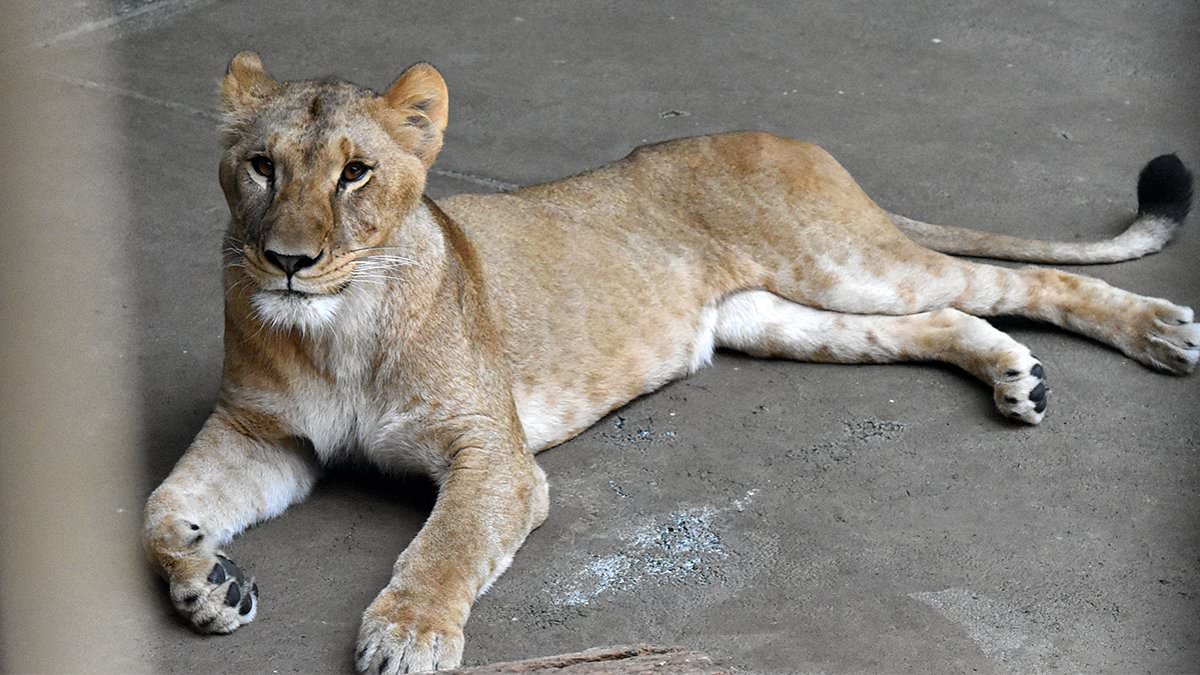
Three female lions have died from suspected heatstroke at a zoo in Tokyo as Japan swelters in 'cruelly hot' conditions.Since mid–July, 10 of the 16 lions at Tama Zoological Park have suffered symptoms such as loss of appetite and decreased activity as temperatures reached a punishing 40°C.Sadly, three lionesses have died after struggling with the high levels of humidity, the zoo said in a statement.Despite using industrial fans, administering intravenous fluids and spraying them with water, one lion passed away on Tuesday, another on Friday and another on Sunday.'According to our veterinarian, the cause of the deaths is suspected to be heatstroke as dehydration and multiple organ failure were observed,' a spokeswoman said.'Even though lions are thought to be resistant to heat, zoo keepers have been strengthening countermeasures to cope with Japan's summer heat in recent years. Heat here comes with high humidity – that is different from heat with dry air in Africa.'Worryingly, a top animal welfare expert told the Daily Mail that animals in UK zoos could suffer a similar fate, as 'temperatures once considered exceptional are becoming more frequent'.Samantha Ward, Professor of Zoo Animal Welfare and Legislation at Nottingham Trent University said: 'I do not think UK zoos should assume that traditionally "warm–climate" species will automatically cope with British heatwaves.' Mugi, who was just three years old, experienced a loss of appetite on July 19 and was unable to stand up the next day. She died on 28 July from suspected heatstrokeThe three lionesses that died include Luena, who was 15 years old, Ichigo, who was 11, and Mugi who was just three.According to the zoo, Mugi had a loss of appetite on July 19 and was unable to stand up the next day.Staff provided ventilation and water to cool her down, and later administered subcutaneous fluids, liver tonics and vitamins, but she ultimately died on July 28. Ichigo died days later on July 31, and Luena died on Sunday.Autopsies show systemic dehydration and multiple organ failure in all three lions, suggesting that heat stress was a cause, the zoo said.It added that their causes of death can only be confirmed after test results are out.There are three lions – two males and one female – that are 'still unwell and unable to stand', the zoo said in a statement on Monday, adding that its staff are administering fluids, medication and vitamins to the felines.Professor Ward told the Daily Mail that the lions are unlikely to have died simply because temperatures reached 40°C.Instead, humidity, enclosure conditions and the speed of the heatwave are all likely to have played a role. Despite using industrial fans, administering intravenous fluids and spraying her with water, Ichigo, who was 11, died several days later What measures could UK zoos take to prevent this from happening? Increased shaded areas throughout enclosuresAdditional indoor climate–controlled refugesMist systems and water features where appropriateImproved ventilation in indoor housingReal–time temperature and humidity monitoringHeatwave action plans with defined intervention thresholdsBehavioural monitoring to identify early signs of thermal stressAdjusting feeding and enrichment schedules to cooler periodsTemporary access restrictions to public viewing areas if animals need protected cooling spacesSpecies– and individual–specific heat–risk assessmentsSource: Professor Samantha Ward 'Lions do not sweat effectively like humans,' she said. 'They rely heavily on behavioural strategies, respiratory cooling (panting), shade–seeking and reducing activity.'When humidity is high, evaporative cooling becomes less effective.'She explained that in the wild, lions are notoriously inactive for much of the day, often resting in shade and limiting activity to cooler periods.Wild lions can also move across large areas to find cooler spots, whereas zoo animals have fewer options.'It's also worth noting that these lions have never experienced 'the wild' and African temperatures, therefore although their physiology is built for heat, if the lions are not used to it, especially with rapid spikes in temperature this could also cause problems,' she added.The expert said climate change means zoos should now treat extreme heat as a foreseeable welfare risk, just like flooding or disease outbreaks.While Tokyo's Tama Zoo had cooling measures in place, including fans and water cooling, the tragedy suggests these may no longer be enough during increasingly severe heatwaves. 15–year–old Luena was the third lioness to pass away, following sweltering temperatures reaching 40°CAs the UK warms, British zoos will face similar challenges, according to Professor Ward. 'UK zoos may face a particular challenge because many facilities were designed around a relatively temperate climate. Historically, far more attention was given to preventing cold stress than extreme heat,' she explained. The species she would potentially be most concerned about are not just lions, she added.Older animals, large carnivores, species adapted to cooler climates and those with underlying health conditions may all be particularly vulnerable.The expert said zoos should consider more shade, climate–controlled shelters, misting systems, better ventilation and heatwave action plans to protect animals.She added that closely monitoring changes in animals' behaviour could provide an early warning that they are suffering from heat stress before it becomes life–threatening.Dr Paul Rose, from the Centre for Research in Animal Behaviour at Exeter University, said he would be surprised if this occurred in a healthy, adult individual lion in the UK – but warned that older individuals and cubs are susceptible to heat exhaustion and stroke.'Animals that live at good zoos in the UK will receive extra care in hot weather,' he said. 'We are prepared for such scenarios in zoos and keepers work hard to ensure that animals are kept comfortable.'Scientists say human–induced climate change is increasing the frequency and intensity of extreme heat events in Japan and elsewhere.Its highest recorded temperature was registered on August 5, 2025, at 41.8C in Isesaki, north of Tokyo.Close to 18,600 people were taken to hospital for heatstroke between July 20 and 26, with 45 of them pronounced dead on arrival, according to the fire and disaster management agency.Tama Zoo said it is introducing further measures to help its lions in the heat including sprinkling water, improving ventilation and installing spot air conditioners.
Three lions at Tokyo zoo die from suspected heatstroke as parts of Japan hit 40°C - and experts warn animals at UK zoos could be next
Full Article
Original Source
Read the full article at Dailymail →KhanList aggregates and links to publicly available news content. We do not host full articles from third-party sources. Always verify important information with original sources.