
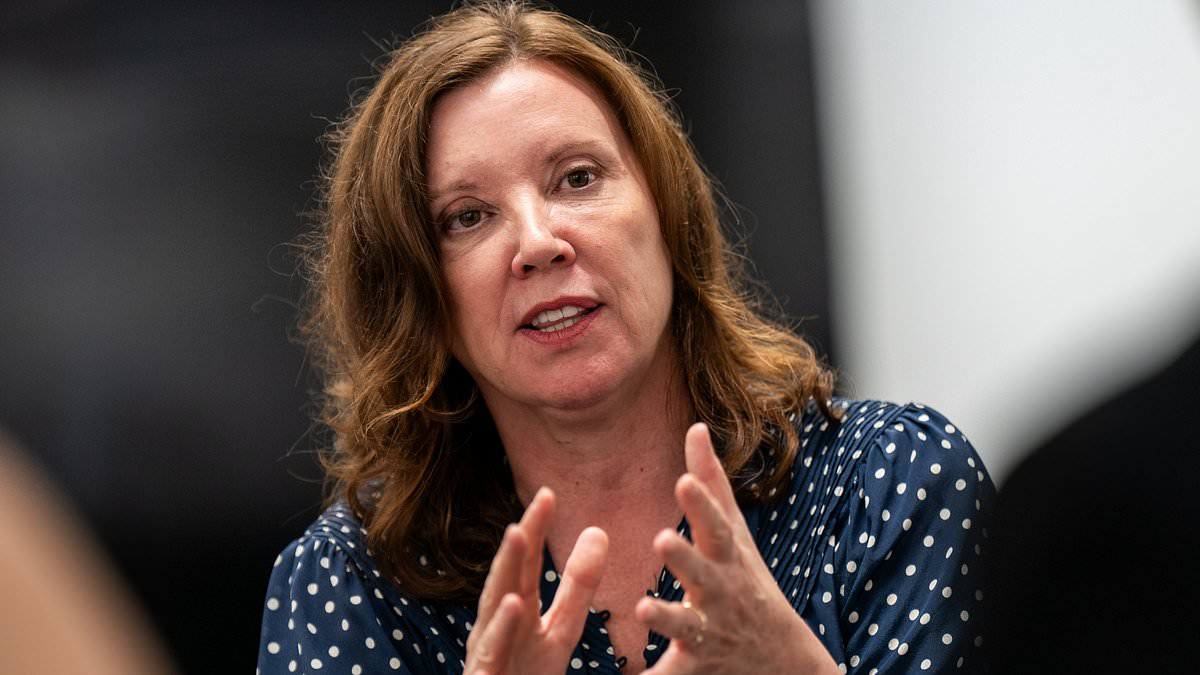
Thousands of children referred to Prevent for suspected extremist beliefs are being sent back to school with no support, the children's commissioner warned today.Dame Rachel De Souza said two-thirds of children referred to the Government's flagship anti-terror programme by schools and colleges were returned to them. In 93 per cent of these cases, the youngsters in question had not received any additional support. Dame Rachel warned that sending students suspected of extremism back to schools or colleges without understanding what was fuelling their behaviour risked 'missing opportunities' to prevent them from engaging in acts of violence. She said a growing number of youngsters were being 'intoxicated with extremism' on social media, driving a rise in Prevent referrals for children from 2,918 in 2016-17 to 4,715 in 2024-25.Axel Rudakubana – who murdered three girls at a dance class in Southport two years ago – was referred to Prevent three times before his case was prematurely closed over a lack of clear ideology.Sir Adrian Fulford, who led the inquiry into the atrocity, said officers were 'hampered' by a lack of clarity on whether they should take someone on who demonstrated signs of being fixated on violence but without adherence to a particular ideology.In her report, Dame Rachel called for a 'stronger safeguarding response, particularly for children who were fixated by violence but had no identified extremist ideology'. Dame Rachel De Souza said two-thirds of children referred to the Government's flagship anti-terror programme by schools and colleges were returned to them She said: 'It is clear that we have a cohort of children becoming intoxicated by extremism, radicalisation or a desire to harm others, who need interventions that Prevent is not able to provide. A merry-go-round of referral and inaction. 'There is a group of children - those who are radicalised but are fixated on violence without a clear ideology - that the system we have created to protect us all from terror doesn't work for. 'That keeps me awake at night. I think about the victims, their loved ones, a town coming to terms with the trauma. But I also think about services which should have identified the risk and intervened to stop it but didn't.' Dame Rachel's office's analysis suggested seven in ten (71 per cent) referrals to Prevent involved children who did not have a clear ideology, with many linked to exposure to harmful content online such as videos of violence, discussion of weapons and sharing of extreme pornography.Of the total Prevent referrals for children between April 2024 and March 2025, 79 per cent were closed without progressing through the programme.In this time period, almost 60 per cent of Prevent referrals came from education, while police accounted for 20 per cent and local authorities 11 per cent.Her report said: 'This highlights that there is a group of children which professionals are greatly concerned about, and seeking support for, but are finding closed doors and dead ends.'Dame Rachel has called for the Home Office and Department for Education to issue joint statutory guidance on children who pose a risk to others.She said this should require all children deemed to be violence-fixated, or who there are concerns around being drawn into terrorism, or other criminality to be referred to local authority safeguarding teams alongside Prevent.The assessment teams should 'act as a 'triage' for all these children, including drawing on expertise from counter-terror police at the initial assessment stage when concerns about terrorism are identified, and then children should be allocated to the appropriate intervention from there'.She also called for a national database of evidence-based interventions for children at risk of causing harm, including for those fixated on violence, but who do not have an ideology. A court sketch of Axel Rudakubana appearing via videolink at Liverpool Crown Court during his trialDame Rachel said: 'A referral should be the start of understanding a child's individual circumstances, not the end of the process. 'When a child does not progress through Prevent, we must be confident other services are there to understand and meet their needs. What is Prevent? Prevent was set up in 2006 to combat the threat of Islamic terrorism in the UK following the 7/7 London bombings which killed 52 commuters.The stated aim of the voluntary programme is to 'divert' people from potential terrorism-related activity before they offend, and it is not a criminal sanction. Since 2015, local authority staff and other professionals such as doctors, teachers and social workers have a duty to flag concerns about an individual being radicalised or drawn into a terrorism.Less serious reports may be sent to council services, which could include parenting support for families whose children have been watching inappropriate videos online.Serious reports are forwarded on to Prevent's Channel stage, at which a panel of local police, healthcare specialists and social workers meeting monthly will consider the case.Hundreds of Prevent officers also work inside police forces and local authorities to identify potential extremists, and intervene with a programme of deradicalisation. Over the years, Prevent has been reformed several times. Each year, thousands staff undergo Prevent training. 'Simply returning children to services that made the referral, without a clear understanding of what is driving their behaviour or who will be responsible for meeting their needs, risks missing opportunities to provide the right support children desperately need.'We need a stronger safeguarding response particularly for children who are fixated with violence but have no identified extremist ideology.'Professionals working with children need the expertise and support to identify children's needs and behaviours, intervene early and provide appropriate interventions.'The second phase of the Southport Inquiry, which opened in July, is examining how to deal with individuals who pose a risk of extreme violence, but where ideology is not the primary driver, as well as the role of the internet and social media in influencing and enabling them.Dame Rachel has also recommended that online platforms should be required to complete a risk assessment for the risk of radicalisation or violence fixation, and that Government should 'restrict technology companies from accessing children, until they are able to prove that they have measures in place to protect them from harm'.A Government spokesman said: 'We are committed to ensuring all children are safe from radicalisation and Prevent plays a crucial role in this, moving more than 6,000 people away from violent ideologies since 2015.'Every Prevent referral is assessed thoroughly by experts.'If it's determined a person is not at risk of being drawn into terrorism, it is right they are supported by other, more appropriate services.'We thank the Children's Commissioner for her report.'We are reviewing it alongside our work in response to the Southport Inquiry – including developing further options to manage those fascinated with extreme violence.'
Thousands of children referred to anti-extremism Prevent scheme are sent back to school with no support, report warns
Full Article
Original Source
Read the full article at Dailymail →KhanList aggregates and links to publicly available news content. We do not host full articles from third-party sources. Always verify important information with original sources.