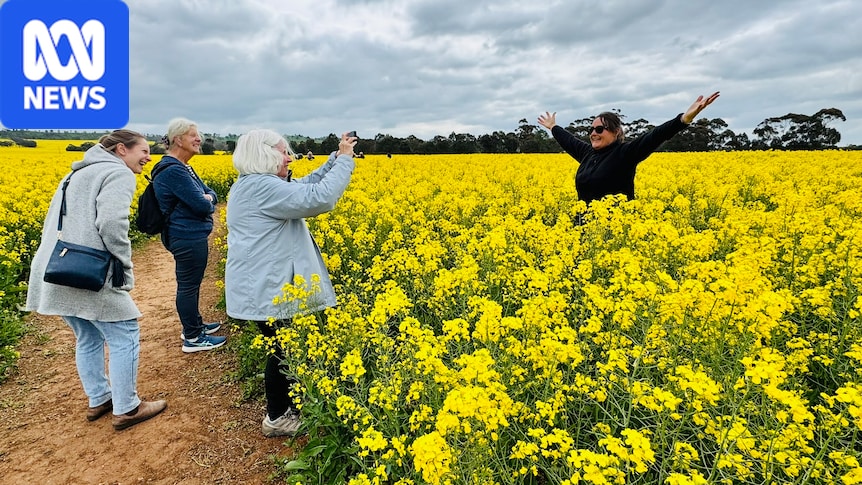
Farmers usually try to keep selfie-seekers out of their canola crops, but in Cornella, near Heathcote in central Victoria, they are inviting them in.The canola walk at Shiraz Republic is one of the state's fastest-growing agritourism attractions, drawing 20,000 visitors last season — four times the number expected.Now in its fifth year, owner Brian Spencer said it started out as a fairly simple idea, in response to the growing social media trend."700 people came [in 2022] and we thought that was pretty cool," Mr Spencer said."Then each year it's just doubled and more than doubled."Last year, 20,000 people visited the canola at Cornella. (Supplied: Shiraz Republic)Blooming in springtime, the fields of vibrant yellow canola flowers attract hoards of people wanting to snap colourful photos.But farmers often warn the public to stay out of the canola, as they risk their personal safety and farm biosecurity.Shashika and Sachana Samith travelled two hours from their home in Notting Hill in Melbourne's south east to visit the canola at Cornella."We wanted to experience the countryside," Mr Samith said."We live in a quiet place with a small garden, but this is something completely different."Seeing this landscape covered in yellow flowers is so natural and beautiful."Mr Samith said escaping the city was part of the appeal."We live in an apartment where it's noisy and busy," he said. "Out here it's calm and peaceful. It's mesmerising."Shashika and Sachana Samith captured drone footage of the crop. (ABC News: Nate Woodall)The couple brought along a drone to get aerial shots."Around where we live there are lots of restrictions because of a nearby helipad," he said."Here we can fly legally by following the regulations and capture amazing footage."Deanne Jeffers lives in Shepparton, about an hour's drive away."We see canola from the roadside all the time, but being able to walk through it is exciting," she said."For people from the city, it's a chance to immerse themselves in scenery they don't usually experience."Fellow visitor and friend Jim Sutherland had also seen the canola while driving."Standing in the middle of a field is completely different," he said."You get the smell, the earth under your feet, and a totally different perspective."Friends Jim Sutherland and Deanne Jeffers enjoyed being in the canola crop. (ABC News: Nate Woodall)Opening up the canola paddocks to visitors was an extension of the agritourism business already established on the farm, said Mr Spencer, who also runs a winery and offers grape-picking."We thought, well, we got a [canola] crop, we got a car park, we got toilets, and we can probably sell a bit of wine and beer if they like as well," he said."So we carved a simple track into the crop the first year and parked an old truck out there so they could climb up on the back of it."But he was blown away by the enthusiasm of the crowds."Overwhelmingly, there's this sense of just being part of a joyful experience for a lot of people," he said.Brian Spencer says people have travelled from as far away as Indonesia to have photos in the canola. (ABC News: Nate Woodall)Tourism boostCampaspe Shire Mayor Daniel Mackrell said the surge in visitors to the Cornella canola fields had helped the region, which had dealt with floods and fires in recent years."People come for the spectacular fields of colour, but while they're here they're also visiting cafes, wineries, accommodation providers and other local attractions," he said."It's a fantastic example of agritourism at its best, bringing together our agricultural heritage, landscape and local business community."Agritourism is a growing industry for Australia, with visitors spending $20.3 billion in 2024, according to the latest report by Tourism Research Australia.It makes up 14 per cent of the total tourism spend across the nation.Daniel Mackrell says the tourism boost in Cornella benefits the whole region. (Supplied: Campaspe Shire Council)Ballarat-based chair of industry group Australian Regional Tourism, Joel Chadwick, said agritourism diversified farmers' income and expanded the understanding of the work they did."Experiences such as the Canola Walk give visitors a reason to explore beyond the traditional tourism offering and see a working agricultural landscape in a different way," he said.Mr Chadwick said the sector was continuing to grow."Agritourism is also now identified as a 'Signature Experience' by Tourism Australia so it is becoming increasingly recognised as a sector with great opportunity and potential growth," he said.Ms Jeffers said she valued the opportunity to learn about farming."It's great to see primary producers making the most of their land while giving people the chance to learn more about farming and regional communities," she said.Canola started blooming earlier than usual in Victoria this year. (ABC News: Nate Woodall)Weather variablesOne of the big challenges of agritourism operations, particularly crop-based visitor attractions, is the weather.Mr Spencer said his team have had to bring forward their opening times this year, because of early blooming."Last year it was a very dry start to the season, and you really wondered whether you were going to get a crop and then it didn't start till the end of August," he said."This year we were about a month earlier than last year with the flowering."But how long it runs, who knows? Some farmers say it'll still keep going through 'til the end of September, others say it may finish a bit earlier."You've certainly gotta be flexible, and it certainly puts you under pressure when your whole timeline changes by a month."
Thousands flock to Victorian canola farm chasing social media snaps
Full Article
Original Source
Read the full article at Abc →KhanList aggregates and links to publicly available news content. We do not host full articles from third-party sources. Always verify important information with original sources.