July is one of the busiest months for tourists in Crete, with millions visiting the island each year.Around 224 firefighters have been deployed in the region, with 53 engines,11 specialised units and two aircraft allocated, according to the country's fire service.Greek Fire Service chief Theodoros Vagias published a note of condolence to the two firefighters who died on Wednesday, naming them as 58-year-old Emmanouil Stratidakis and 25-year-old Pantelis Diamantakis.Both will be buried on Thursday, the statement added.Meanwhile, around 600 people have been evacuated in Spain near the border with Portugal due to a fire in the Spanish city of Zamora.Five people have been injured in a fire in the eastern town of Valpaços in Portugal, according to local media.However, fires near the Spanish capital of Madrid have stopped spreading and thousands of residents been allowed to return home.Further west, a fire in Ávila province, which has burned more than 43,000 hectares (108,000 acres) over the last week, is now considered the largest recorded wildfire in Spanish history. In Turkey, hundreds of homes have also been evacuated but the majority of fires in the region have been brought under control, authorities said.Despite temperatures of up to 41C (106F) in the last couple of days, a wildfire in France's Gironde region has not spread for the third day in a row, with cooler weather and some rain expected on Thursday.The fire, which ravaged some 42,000 hectares (103,784 acres), is the largest to burn in France since 1949.In the south-east of the country, several regions have been placed under orange heatwave alerts, starting Thursday at 12:00 local time (11:00 BST).Climate change is driving up temperatures around the world, and Europe is the fastest warming continent, heating up twice as fast as the global average, according to the Copernicus Climate Change Service.This is causing increased summer heatwaves, greater pressure on Europe's water supply, and more intense wildfires.
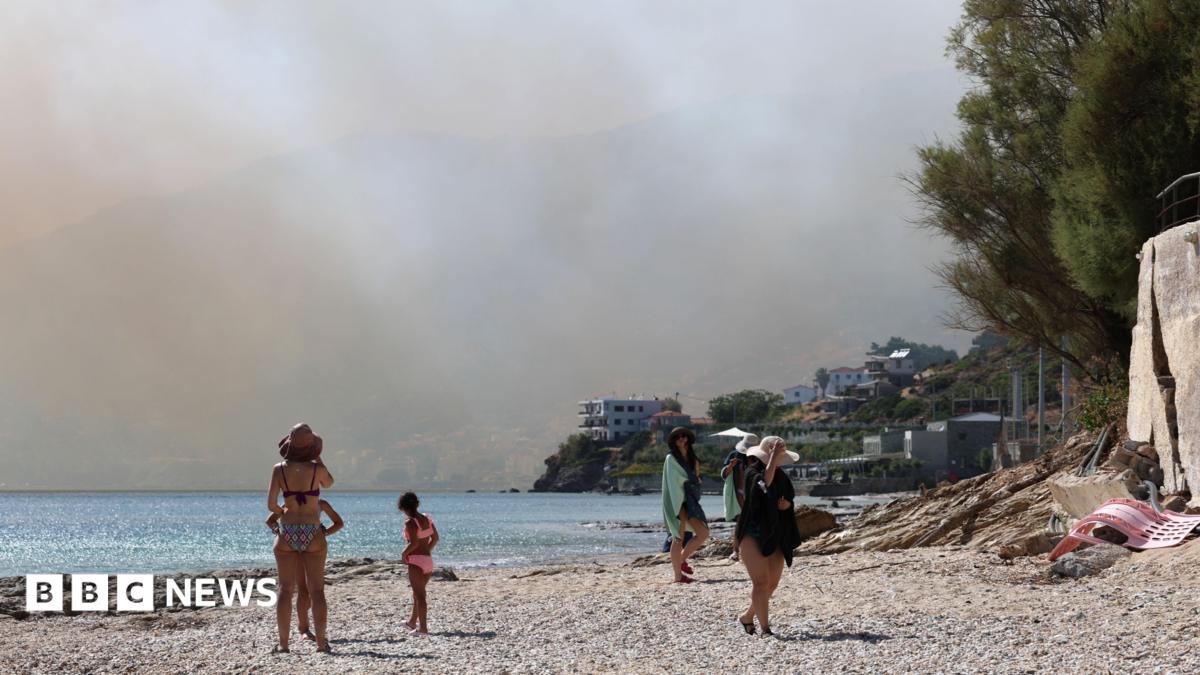
Thousands evacuated in Crete as European wildfires continue to rage
Full Article
Original Source
Read the full article at Bbc →KhanList aggregates and links to publicly available news content. We do not host full articles from third-party sources. Always verify important information with original sources.