
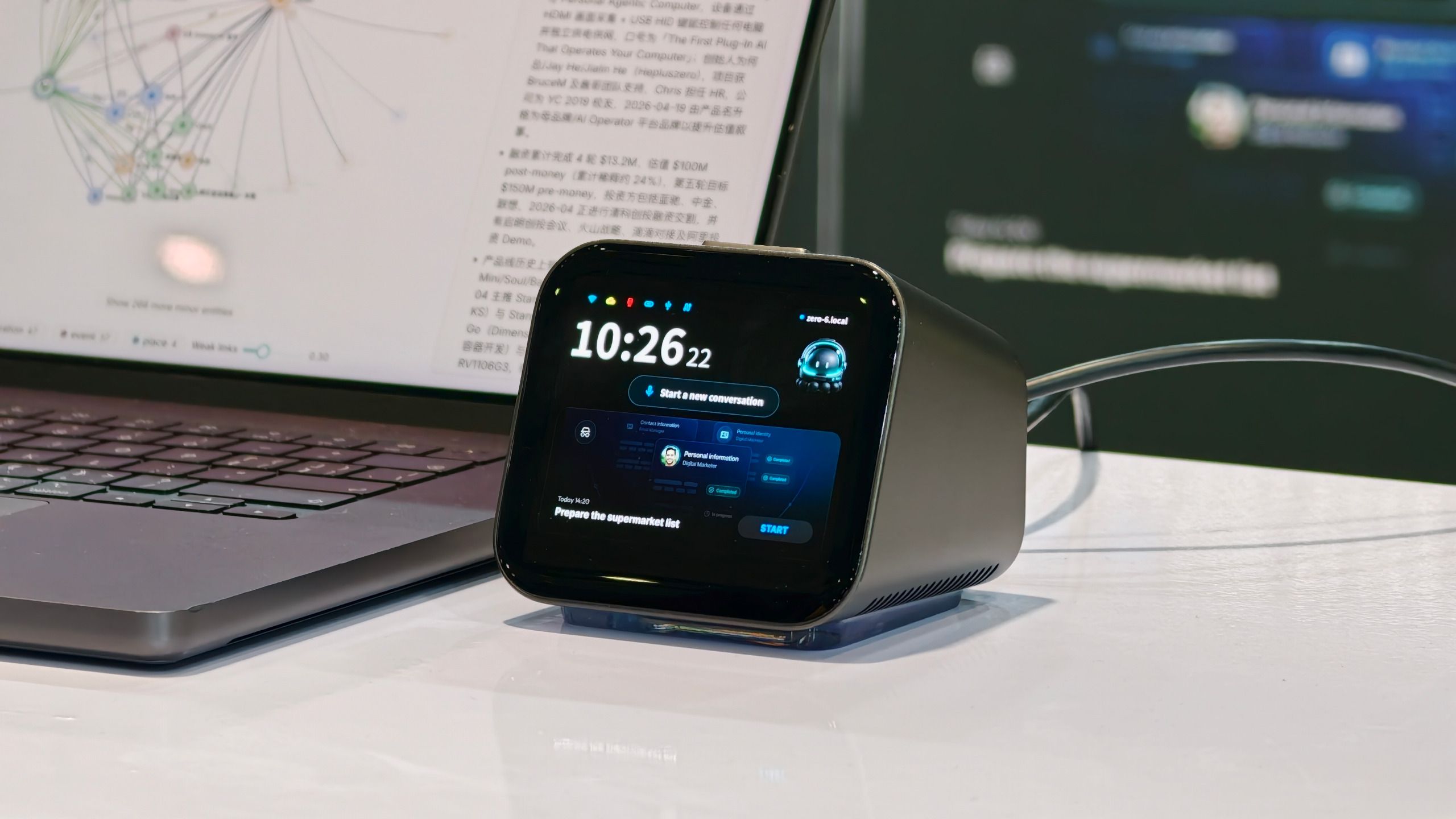
(Image credit: Sanuj Bhatia / Tom's Guide) There's been a sudden surge of AI agents that can help you perform tasks on your PC, even while you're away. You've probably heard about tools like OpenClaw, which can run autonomously on your behalf. But one of the problems with running these kinds of agents locally is that they often require plenty of hardware resources to function properly.I'm not someone who changes laptops every year. I still use a MacBook Air M3 from 2023, and I'll probably continue using it until it gives up on me, which hopefully won't be for another five to seven years. But that also means my laptop isn't necessarily built for running powerful local AI agents, and upgrading my entire computer just for that doesn't make much sense.Well, for people like me, Violoop might have an interesting solution. The company has just showcased its new hardware AI agent at IFA 2026, and unlike software agents that run directly on your laptop, use its resources, and potentially drain more battery, Violoop is a separate device that connects to your computer and handles much of the AI processing itself. (Image credit: Sanuj Bhatia / Tom's Guide)Similar to software-based agents, Violoop is screen-aware. It can understand what's happening on your display and help perform tasks based on that context. For example, if someone asks you to send them an address, Violoop can pull up the relevant information and fill it in for you. If you're looking at a long PDF that you don't have time to read, you can ask it to summarize the document instead.The idea is that the device gradually understands you better the more you use it. Violoop builds what the company calls a continuous memory graph, which learns about your workflows, preferences, and patterns over time so the agent has more context when you're asking it to do something.Of course, having an AI constantly looking at what's on your screen and building a memory around what you do immediately raises some privacy questions. Violoop says it has taken a local-first approach here. Screen data is processed directly on the device and, according to the company, is never transmitted to the cloud. (Image credit: Sanuj Bhatia / Tom's Guide)Inside, there's an 8-billion-parameter local AI model with 26 TOPS of on-device AI performance handling these tasks. When Violoop does need to use the cloud, the company says it sends "only the information necessary" to complete the task, while your screen itself is never streamed.Get instant access to breaking news, the hottest reviews, great deals and helpful tips.There's also a dedicated STM32H563 security processor for handling approvals around sensitive tasks. The company says you'll be able to connect your preferred AI services, including ChatGPT, Claude, Gemini, and others.The hardware itself is also pretty interesting. There's a small display on the front showing things like the time and what the AI agent is currently doing. The whole thing almost looks like a tiny old-school computer monitor sitting next to your laptop, which I actually quite like. (Image credit: Sanuj Bhatia / Tom's Guide)One thing worth noting is that Violoop isn't powered directly through your laptop's USB-C port. It requires its own external power source. Around the back, you'll find three connections: USB-C, HDMI, and a dedicated power input.There's also a physical button on top that acts as a hardware-level approval key. When the agent wants to perform a sensitive action or something that involves multiple steps, you can physically press the button to approve it rather than letting the AI simply go ahead on its own.Perhaps the most interesting part for me is that Violoop isn't tied to one operating system. The company says it works with both Windows and macOS, and setup is supposed to be largely plug-and-play. At least, that's what Violoop tells me.Violoop is launching on Kickstarter on September 15, 2026, with an introductory price of $399. The company expects to begin shipping in mid-October, after which the device is expected to be more widely available for $799. Follow Tom's Guide on Google News and add us as a preferred source to get our up-to-date news, analysis, and reviews in your feeds. More from Tom's GuideBest laptops of IFA 2026: Wild colors, ultrathin designs and rollable displaysI tried Acer's new 7-inch gaming handheld at IFA 2026 — this might be the sweet spotI used Dell's latest MacBook Neo rival — and I'm not complaining about having another one Sanuj is a tech writer covering smartphones, tablets, and wearables for Tom's Guide. He also contributes to Android Central, Android Police, and Pocket-Lint. He started his tech journey with a Nokia Lumia before diving into both Android and iPhone. When he's not testing gadgets, he's usually sipping tea, watching football, or playing cricket.
This tiny AI box could save me from upgrading my perfectly good laptop
Full Article
Original Source
Read the full article at Tomsguide →KhanList aggregates and links to publicly available news content. We do not host full articles from third-party sources. Always verify important information with original sources.