
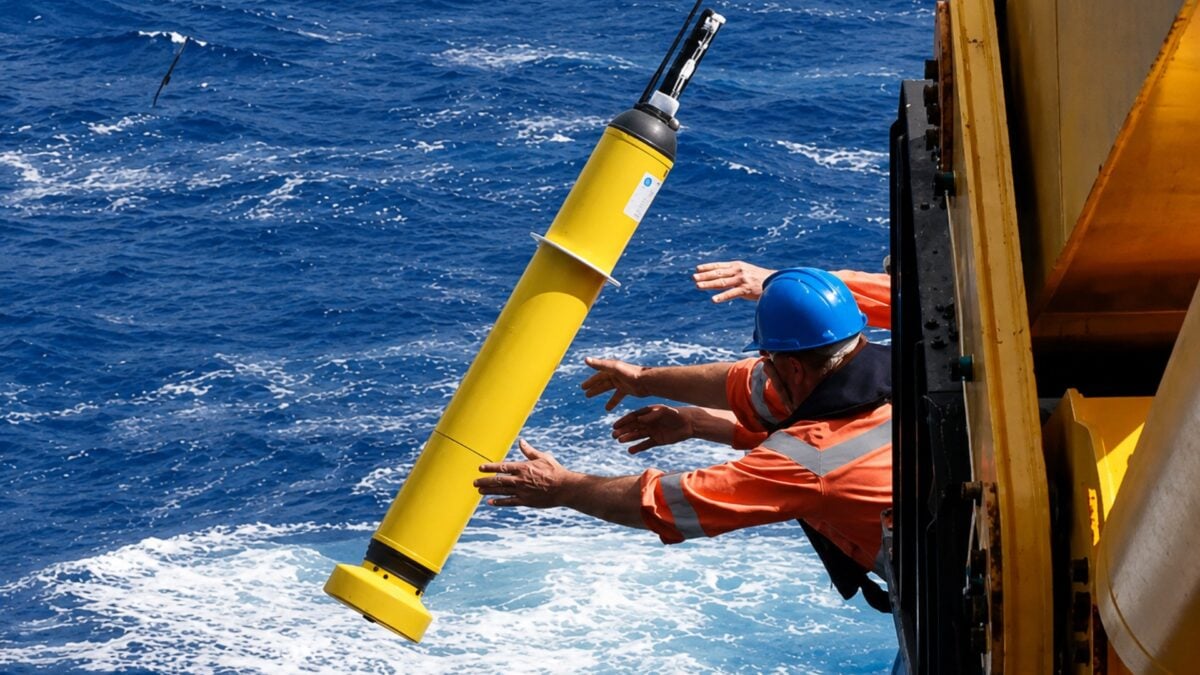
Since May, scientists have been watching sea surface temperatures in the tropical Pacific Ocean rise at unprecedented speeds. By some metrics, this El Niño is already considered the strongest on record, and we’re still weeks away from its expected peak. At that point, which should arrive around December, sea surface temperatures in the Niño 3.4 region—a key area of the central equatorial Pacific that experts monitor for El Niño and La Niña—are forecast to be about 7.2 degrees Fahrenheit (4 degrees Celsius) above average. All that extra heat will wreak havoc on marine ecosystems, drive up Pacific sea levels, boost global temperatures, and alter weather patterns around the world. We’re already seeing some of these impacts unfold. El Niño-driven drought in Indonesia and the Amazon is fueling devastating wildfires. Record-high sea levels are flooding the California coast. The Pacific basin has churned out one powerful cyclone after another this hurricane season. And that’s just a taste of what’s likely to come. But rather than viewing this super El Niño solely as a driver of environmental disaster, many researchers see it as a rare scientific opportunity. This event will serve as a natural experiment, allowing scientists to observe how the ocean and atmosphere respond to exceptionally warm Pacific waters, improve their understanding of El Niño itself, and potentially make better predictions about our warming world. “I am both very concerned and very excited about this El Niño,” Yassir Eddebbar, an assistant research scientist at the University of California, San Diego’s Scripps Institution of Oceanography, told Gizmodo. “This is essentially a unique opportunity to test a lot of hypotheses and assumptions that we have about El Niño.” Observing a super El Niño with new tools Eddebbar studies ocean biogeochemistry, focusing on how climate variability and ocean circulation influence oxygen levels, the exchange of carbon between the air and sea, and primary productivity in the Pacific basin. El Niño naturally manipulates certain variables in the marine environment, and observing its impacts can help researchers like Eddebbar learn how critical processes respond to those changes. “In the past, we’ve mostly had satellite observations of temperature and chlorophyll and Argo floats that measure the temperature and salinity of the ocean,” he said. The global Argo ocean-monitoring network is made up of about 4,000 floats that supply data to scientists around the world. In recent years, a network of biogeochemical (BGC) Argo floats has scaled significantly, and Eddebbar is eager to see what data they gather during this El Niño. “These are essentially autonomous instruments that go all the way down about 2,000 meters [6,600 feet], and they measure temperature, chlorophyll—which is a pigment that’s created by phytoplankton photosynthesis—as well as nitrate and oxygen,” Eddebbar explained. “So, for the very first time during a major El Niño event, we have really good coverage of some of the ecosystem variables, the drivers of ecosystems, and how they’re going to change with this event.” Eddebbar is most interested in investigating how the subsurface ocean responds to large El Niños, particularly in terms of how nutrients, chlorophyll, oxygen content, and phytoplankton production change. These conditions are foundational to the functioning of the entire marine ecosystem—altering any one of them can trigger cascading effects that ripple through the food web. NASA has also launched two new ocean-observing missions in the past several years: the Plankton, Aerosol, Cloud, ocean Ecosystem (PACE) satellite and the Surface Water and Ocean Topography (SWOT) satellite. Data from PACE will allow researchers to see how plankton communities respond to thermal and nutrient stress driven by El Niño, while SWOT data will inform questions about how El Niño influences small-scale circulation patterns such as eddies and turbulent flows. Studying heat stress in the natural environment The intensity of this El Niño will also provide an exceptional opportunity to study how thermal stress impacts marine ecology, which will help scientists understand the consequences of climate change. “It’s a natural experiment of how ocean warming—human-caused ocean warming—will impact organisms, populations, species, and whole ecosystems,” John Bruno, a marine ecologist and distinguished professor at the University of North Carolina at Chapel Hill, told Gizmodo. Most of the time, this type of research is restricted to laboratory aquariums that allow scientists to manipulate temperatures, but these artificial settings are not perfect analogs for the marine environment. “It’s very unnatural, obviously,” Bruno said. “It’s not the whole ecosystem. Organisms don’t have the right currents. They behave weirdly in laboratory settings. So, ideally in ecology, we always like to replicate experiments out in nature.” That’s what this El Niño will allow researchers to do. And because El Niño produces localized patches of unusually warm ocean water—called marine heatwaves—rather than warming the entire ocean uniformly, scientists can compare affected areas with others that haven’t warmed, effectively using them as controls. “That’s the beauty of it—it’s a really nice natural experiment with a treatment and a control, and then there’s replication,” Bruno said. “We’ll have multiple places that warm and multiple places that don’t, so we can track how it impacts populations and the way species interact.” This El Niño will be especially useful for studying how extreme thermal stress affects coral reefs. It’s well understood that too much heat causes corals to expel their symbiotic algae—or zooxanthellae—which then leads to bleaching and potentially death. Observing how corals respond to the record-breaking warmth of this El Niño will reveal how sensitive they are not only to these events but also to future human-driven warming. What’s more, El Niño could provide an opportunity to stress test reef restoration schemes and other climate resilience and adaptation strategies aimed at protecting coastal communities, fisheries, and infrastructure. In an article published in the journal Proceedings of the National Academy of Sciences in September, Bruno and a dozen other scientists advocate for this type of work. “I feel like we’re not learning lessons fast enough,” he said. “Climate change is happening in our lifetimes, and we’re just being too slow to figure out what really works.” Untangling El Niño and climate change While El Niño can serve as a window into certain aspects of a warmer world, it isn’t a perfect analog for human-caused climate change. The two phenomena produce starkly different patterns of warming, Zeke Hausfather, a climate scientist at the non-profit research organization Berkeley Earth, told Gizmodo. However, El Niño could provide opportunities to study how Earth’s systems—particularly the carbon cycle—respond to higher global temperatures, he said. This phenomenon ratchets up atmospheric CO2 levels because warmer ocean waters absorb less CO2, while drought and wildfires release stored carbon and reduce the amount that plants take up from the atmosphere. Observing this super El Niño will help scientists understand how Earth’s natural carbon sinks will function as global temperatures continue to rise. “Having more data, particularly more really strong warm years, can potentially help answer some of those questions for how the biosphere more broadly will change as the world warms,” Hausfather said. He noted, however, that individual years can only reveal so much. Data gathered during this event could also help scientists investigate questions about the complex relationship between El Niño and climate change. As this event unfolds against a backdrop of significantly higher baseline temperatures, will its impacts shift? Is climate change leading to stronger El Niños? And how might the combination of El Niño and human-caused warming intensify weather extremes? Lack of federal support will hinder research The Trump administration has frozen, delayed, or canceled billions of dollars of federal research grants for major agencies like the National Science Foundation. It has also drastically reduced the budget and workforce of the National Oceanic and Atmospheric Administration, which plays a leading role in El Niño research. “We’ve cut off not all, but a lot of our funding for this kind of work,” Bruno said. “I have no funding because I work on climate change, and the National Science Foundation does not fund climate change anymore.” He said many of his colleagues reached out to NSF seeking RAPID (Rapid Response Research) grants—which are reserved for situations where research must begin immediately due to urgency, like the onset of El Niño—but were turned down. Federally funded observational programs that are critical to El Niño research are also at risk. “The BGC Argo [network] is a fairly new program, and we’re approaching global coverage that’s given us a really good view into the ocean’s interior, but funding for that program is running out this month,” Eddebbar said. “It is absolutely crucial that we continue funding these observing platforms well into the future, not just for El Niño, but for the recovery, for the next El Niño, and for a number of other events that we don’t fully understand.” Hopefully, researchers will find ways to navigate this treacherous funding landscape. Otherwise, this rare opportunity to study a globally consequential climate phenomenon—and better understand our warming world—could pass us by.
This Super El Niño Might Be a Global Disaster. It Will Also Be an Incredible Scientific Opportunity
Full Article
Original Source
Read the full article at Gizmodo →KhanList aggregates and links to publicly available news content. We do not host full articles from third-party sources. Always verify important information with original sources.