
At around five o’clock on a winter evening in 2013, then college student Sam Forstag was driving through a snowstorm toward his third job of the day, making sandwiches at the Subway inside a Walmart.“I was always late,” Forstag recalled with a laugh more than a decade later.Halfway there, the gray sedan in front of him lost traction. It spun across the icy road and slid nose-first into a ditch. Forstag’s first instinct was to pull over. Growing up in a tight-knit community in North Portland, Oregon, and later in Montana, he had learned that when someone’s car ended up in a ditch, you stopped. You grabbed a shovel or you called a neighbor. You helped push the car back on to the road. That was simply what people did.But he kept driving.“I remember thinking, ‘I should stop – but I don’t have time,’” he said. He couldn’t afford to lose the job that helped pay his rent, car payment and groceries. He thought about it for the rest of that sandwich-making shift.That memory has become part of Forstag’s political identity as a firefighter turned Democratic candidate hoping to flip Montana’s first congressional district in November’s midterm election. Once a scholarship kid at a Catholic high school, 32-year-old Forstag has built his campaign around a deeply personal argument: that the economic pressures consuming many Americans do more than empty their wallets. They leave people with less time and capacity to care for one another. That message has helped Forstag galvanize young and working-class voters in a district that has long favored Republicans.“There are a lot of people in this country who don’t have the time,” he said. “It’s much harder to extend the kind of compassion your neighbors deserve when you’re working three jobs just to get by.”He sees Donald Trump-era politics as a consequence of years of economic struggle that has shattered the lives of working-class people. And he believes that politicians such as the president exploit that desperation, he said, turning economic anxiety into anti-immigrant rhetoric and culture-war battles while voters’ material conditions continue to deteriorate.“If your life is getting materially worse year after year, and you vote for the party out of power, that’s how democracy works. People who vote [for the opposition] are rightfully disillusioned and frustrated with the entire system because the system has not served them for too damn long,” he said.But his own life story gives him reason to think there’s another way out. Forstag grew up in a single-parent household in which his mother, an intensive care nurse, worked overnight shifts to raise her children.“I remember being a nine-year-old who was worried that Mom was working too much,” he said. On days when she had to work overnight, she would drop him and his sister at a friend’s house at about 6am. By the time school ended, she was often still at the hospital. Friends’ parents would drive him home, or he’d frequently ride his bike home: a $20 pink garage sale find, complete with sparkly decorations that were supposed to embarrass him when he’d lost a previous bike (“instead, I loved it,” he said).But what he remembers most is not how hard his mother worked, but how after a full emergency room shift, his mother didn’t treat caring for others as extraordinary.The fire insideBy the time he turned 30, Forstag felt he had finally found stability, a place to call home and, most important, his community. And it came through smokejumping, or parachuting into fire zones to put out the blaze.Smokejumping was the first career that gave Forstag health insurance, a retirement account, and a paycheck steady enough to cover his mortgage and student loans.For eight fire seasons, he and his crew dropped into remote terrain to battle some of the country’s most dangerous fires. The work was physically brutal and often dangerous, but the people who stood beside him became more than co-workers. Many came from backgrounds that felt familiar to him – working-class families, small town residents, people who depended on the job not only for a paycheck but for healthcare, retirement and a sense of purpose.Then, after Trump returned to the White House in 2025, that sense of security began to unravel. Trump had campaigned on reducing government and appointed Elon Musk to lead the “department of government efficiency” (Doge), which oversaw sweeping reductions in the federal workforce.Among those affected were smokejumpers and other federal wildland firefighters in Montana. Friends and union colleagues who had spent years risking their lives fighting wildfires suddenly found themselves without jobs or health insurance. “That pissed me off,” Forstag said, voice trembling.Forstag turned to the elected officials he believed were supposed to represent them but found little help from the people who publicly celebrated his industry’s service in the past.Sam Forstag in his smokejumping uniform on 24 May 2023. Photograph: Sam for Montana“I was pissed off at [retiring incumbent] Ryan Zinke when he was holding his seat,” Forstag said. “When we were going through those cuts, we reached out to him time after time. And I got crickets. That’s a failure of representation. Meanwhile, that guy got $20m richer while sitting in office.”While the Guardian could not independently verify Forstag’s specific claim about $20m, Zinke’s financial disclosures showed significant wealth accumulation while holding public office. Additionally, Zinke faced 18 federal investigations during his tenure as interior secretary, from March 2017 to January 2019, including into real estate dealings in his home town. The Guardian reached out to Zinke’s office multiple times for comment but did not receive a response.For Forstag, the answer was not to abandon politics but to make government work for people like the ones he grew up with. Running for Congress, however, meant risking the first stable life he had ever built.“I have to leave the only retirement I’ve got, that I’ve been building,” he said. “And leaving behind the only healthcare I have. I have to leave the only career I’ve got to risk it all on this.”He spent weeks talking through the decision with friends from the National Federation of Federal Employees (NIFF), a union he led as vice-president. Eventually, he drove alone to one of his favorite lakes in Montana’s Swan Valley, a place so secluded that he refused to tell the Guardian its name. He camped there for the night, beyond cell service, trying to decide whether to abandon the first secure career he had ever known.“I woke up in the morning and decided to do it,” he said.Campaigning from the couchThe campaign that followed hardly looked like a congressional operation, though Forstag was almost immediately endorsed by the progressive senator Bernie Sanders.Its headquarters was Forstag’s modest 900-sq-ft house in Missoula, a place he had only recently been able to afford. Staff members crowded on to a shared couch in the living room, making phone calls and texting voters. Volunteers pitched pop-up tents outside and turned the front yard into a makeshift office.Aaron Derry, a 53-year-old physician assistant and lifelong Democratic voter and volunteer, was struck by the energy. “I’ve never seen so many young people show up,” Derry said. “I’ve never seen so many 20-year-olds.”“My 22-year-old daughter, who’s away at college, called me and asked if I was on Sam’s team.”Across western Montana, Forstag’s campaign drew an unusually young coalition of volunteers and first-time supporters.Sam Forstag stands with supporters at a get-out-the-vote rally in Bozeman, Montana, on 29 May 2026. Photograph: Lauren KernerBut the frustration of young Montanans did not necessarily translate into enthusiasm for Democrats or even awareness of Forstag. Lukas Kosel, 22, a recent Montana State University graduate, was preparing to leave the state for Baltimore, where he planned to pursue graduate studies in African American studies. Like Forstag, Kosel was raised by a single mother and loves Montana’s open spaces. But almost two months before the election, he hadn’t heard much about the candidate.“I have to do research on him,” he said. “But I imagine he is like any other Democratic candidate” – and that’s not a good thing. “Much of my life, I have seen Democrats or Republicans doing the same things,” he said. “They have all the money to fund the war in the Middle East, but what about our student debt, our future prospects?”That skepticism is precisely what Forstag argues his party has failed to reckon with.“We have a national Democratic party that is refusing to open the doors of change to a lot of young people,” Forstag said. He believes Democrats must make room for a new generation of candidates willing to challenge both the party establishment and long-held political assumptions.In some ways, Forstag fits neatly within that surging movement. He rejected support from the American Israel Public Affairs Committee (AIPAC), called for conditioning US assistance to Israel on what he described as “strictly enforced humanitarian requirements” and connected increases in military spending to quality of life at home.“We’re in another war, in Iran, that nobody wants, talking about hundreds of billions of dollars,” he said. “That is not helping anybody’s life here in the States.”skip past newsletter promotionafter newsletter promotionTwo-party criticismIn May, the congresswoman Alexandria Ocasio-Cortez and Sanders came to Montana to campaign for Forstag, in an event that galvanized young voters across the state.Four months after entering the race, Forstag defeated the Democratic establishment’s preferred candidate by nearly five percentage points, pulling off one of the biggest primary upsets in recent Montana politics.Montana’s first congressional district stretches across the western half of the state, encompassing liberal college towns, fast-growing mountain communities and vast rural counties that have long favored Republicans. While Trump remains deeply popular across much of the district and endorsed conservative radio host Aaron Flint to succeed Zinke, Democratic strongholds such as Missoula and Bozeman have made the seat a genuinely competitive congressional districts in Montana.Again and again, Forstag returns to the same argument: Democrats have spent too much time debating ideology and too little time listening to the economic frustrations shaping everyday life in places like Montana.“And I find that so damn frustrating,” he said. “Six months ago, everybody said affordability is the thing to talk about. Well, where the hell have y’all been living for the last 10 years? Here in Montana, every time I go to a bar, that’s what people are talking about. ‘My rent went up $100.’ ‘Mine went up $150.’ This isn’t new. Somebody just came up with a buzzword for it.”A poll conducted in late April and early May showed that 62% of Montana voters reported difficulty affording healthcare, and 61% struggled with gas and transportation costs. Those anxieties are not unique to Montana. A March Gallup poll found that 51% of Americans worried about the economy “a great deal”. Another poll found that 77% of Americans rated the economy poorly.Sam Forstag speaks with voters at the Pink Bench Distillery in Troy, Montana, on 24 April 2026. Photograph: Lauren Kerner“One party was saying the economy’s better than you think it is,” he continued. “The other was saying the system’s broken. Unfortunately, the latter was lying about everything they were going to do to fix it.”Though focused on his Republican opponents, Forstag is critical of how the left operates too. He believes progressives became too focused on cultural battles at the expense of material concerns. He wanted the energy of the left without what he saw as its blind spots.Some voters share the concern. Mary Brower, 62, a retired high school teacher in Bozeman and a lifelong Democrat, believes Forstag has struck a chord with younger voters. But she worries about the limits of progressive politics in Montana.“I just worry that Sam will be seen as too liberal,” Brower said. “Most Montana voters are still more centrist. Even though he’s in favor of a lot of liberal causes, I think he’s got to walk the center line as much as possible while still being honest and authentic.”But earlier this month, Forstag won the endorsement of the Blue Dog Coalition, the moderate and centrist Democratic caucus in the House, an endorsement that unsettled some of his progressive supporters.And the Montana Democratic party chair, Shannan O’Brien, said Forstag’s message reflects a broader frustration with politics as usual.“People are ready for a change,” she said. “People are exhausted hearing the same thing in Washington over and over again, and they heard something different from Sam.”O’Brien’s defense of Forstag comes at a moment when the national Democratic party is facing growing tensions between its moderate, establishment wing and a newer generation of younger, more progressive candidates. In recent cycles, many progressive insurgents have ousted moderate incumbents, prompting some establishment Democrats to criticize what they see as a dangerous populist shift.How big is this tent?Forstag’s economic message and his willingness to engage with Republicans have resonated beyond his Democratic constituents. More than five Republican former and current legislators have endorsed him.Brian Putnam, a former Republican legislator from Kalispell who represented one of Montana’s most Republican-leaning districts, is among them.“I was in the Montana legislature for the 2021 session as a Republican, and that’s where I met Sam,” he said. Despite their different parties, Putnam respected Forstag, who was lobbying at the time for the ACLU. “He’s a straight shooter,” Putnam said. “He’s a guy you could come to and ask about something, and whether it’s good for him or not, he’s going to give you the correct answer.” What impressed Putnam most was Forstag’s ability to work across party lines.Endorsing Forstag put Putnam at odds with his own party. But he believes Montana Republicans should reject Trump’s approach to politics. “I disagree with a lot of Trump’s policies,” he said. “I don’t think that Trump actually has policies. He has whims and things.”Still, even after endorsing Forstag, Putnam remained skeptical of parts of his campaign. He worried that endorsements from Bernie Sanders and Alexandria Ocasio-Cortez might pull Forstag too far to the left.Aaron Flint, Forstag’s Republican opponent, has sought to portray him as a radical.“Is it radical that you should be able to work one good job and afford a roof over your head?” Forstag said in response. “I don’t think any of that’s radical. I think those are fundamental to what the American dream actually is.”A Bozeman resident with signs he used when looking to buy a home. Housing in Bozeman can be difficult to secure, even if one can afford it. Photograph: Janie Osborne/The GuardianAs the election comes closer, Forstag has less than two months to make his final case to skeptics.To win in November, Forstag will need to rebuild the coalition that had carried Jon Tester in 2024 to victory in the district – a coalition of libertarians, right-leaning Democrats and working-class Republicans.One of those libertarians is Zach Lund, a father of two. A Montana native who works as a chef, Lund, 41, said his biggest concerns are civil liberties, military spending and what he sees as an increasing unwillingness to hold powerful people accountable.“You can’t have the largest sex-trafficking case in the history of the United States and not arrest anybody,” Lund said, referring to the Epstein investigation. “What kind of country is that?”“I feel like a lot of people in the country who leaned libertarian are watching the police state come from the very party they thought was going to promote smaller government and personal freedom,” he said. Lund does not plan to vote in the upcoming election. “A lot of times, lately, promises are made, and then they don’t follow through,” he said. “You kind of feel like, ‘This isn’t what I voted for.’ You kind of get sick of getting burned. It’s hard to have that trust in politicians.”Forstag sees in voters like Lund – those wary of politics and the government, consumed by the rising costs of daily life – a version of the young man he once was, driving home on an icy winter evening after working three jobs, too exhausted and financially strapped to stop for a stranger whose car had slipped into a ditch.That moment has become more than a memory to Forstag. It is the question that has shaped both his politics and his campaign: what happens to a democracy when ordinary people become so consumed by survival that they no longer have the time, hope or the compassion to care for one another?“The American dream was not ever supposed to be something that was a game of chance,” Forstag said. “It was supposed to be something that was open to everybody.”In November, Montana voters will decide whether they believe him.
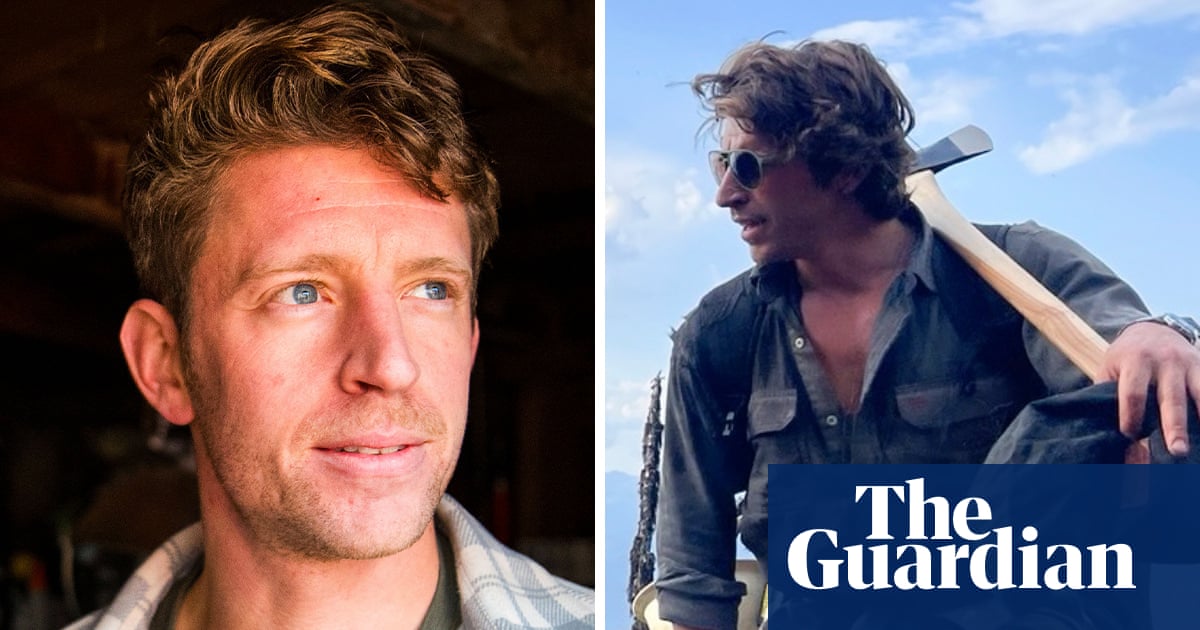
This smokejumper says the US has lost its empathy. That’s why he’s running for Congress
Full Article
Original Source
Read the full article at Theguardian →KhanList aggregates and links to publicly available news content. We do not host full articles from third-party sources. Always verify important information with original sources.