
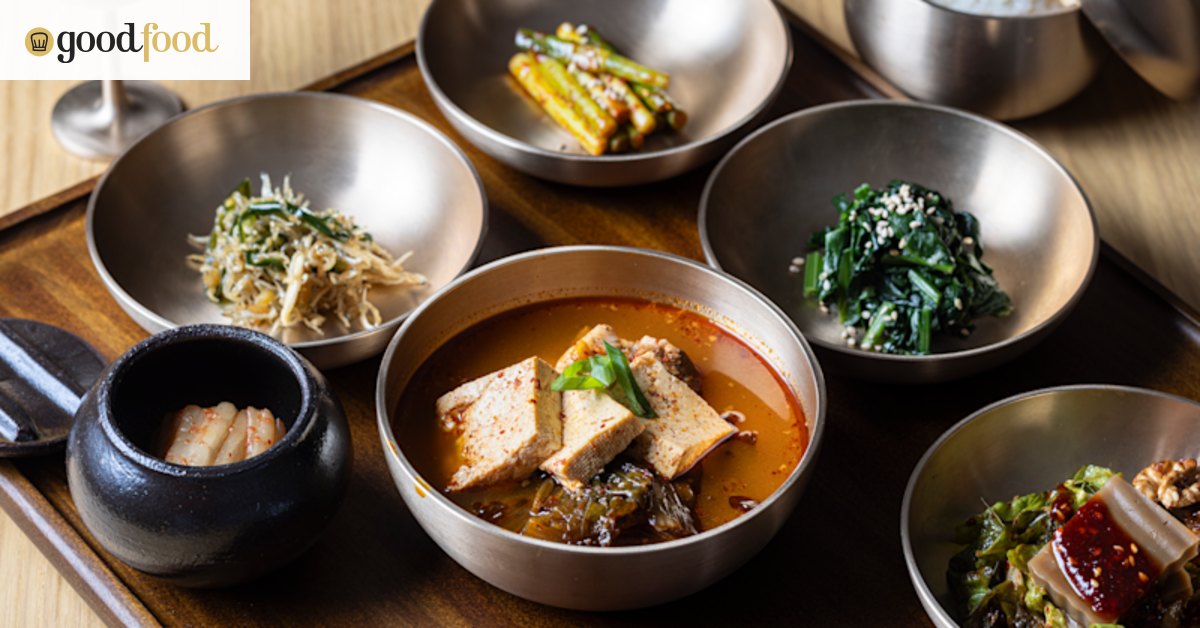
Dining at farm-to-table restaurant House of Mi-Rin, with a spread of bronze bowls laid before her, Emma Breheny wonders if she’s done a life swap to a Korean royal court.House of Mi-RinKorean$$$$What would possess someone to pack up their life in Kuala Lumpur, buy a property in country Victoria and establish a Korean farm-to-table restaurant with no hospitality background? Learning that House of Mi-Rin exists partly because co-owner Sherin Wong won a cooking competition seems the only fitting explanation for such a quixotic undertaking.Wong and partner, Ming Ne Tan, spend their days tending goats, beehives and radishes. A decade ago, their friends would have dropped their flutes of Louis Roederer if anyone suggested such a future. The two owned a TV and film production company in Malaysia, and a business that sold picnics in the rainforest and other “experiential gifts”. In 2018, they felt burnt out and wanted a different challenge. Boy, did they get it.After returning to Victoria, where they had both attended university, they bought nearly 21 hectares in Yea to build a restaurant and boutique retreat. The town charmed them. But the land itself was bare, the soil was clay, and there was no electricity or water. When they installed a bore, the water turned the plants black – ecoli and heavy metals – and after they submitted building plans in 2020, the world (and their developer) imploded. It wasn’t until December 2025 that the pair served their first tasting menus.House of Mi-Rin’s soothing dining room.Bonnie SavageSitting in the chic dining room, with its stone and timber and soothing neutral tones, looking over distant rolling hills, you don’t feel the graft. But as dishes arrive, with a story about this year’s rainfall or the cow’s milk supply, you understand the effort.Restaurant reviews, news and the hottest openings served to your inbox.Sign upThe Korean focus of House of Mi-Rin wasn’t preordained. Wong won a food competition run by the Korean consulate general during the pandemic while the rest of us were nurturing sourdough starters. The win plunged her even further into the cuisine, especially the philosophy of food as medicine – or yaksikdongwon.The farm’s crops colour her set menus; balance, nutrition and vitality are the pillars year-round. Courses build towards the bapsang, a regal spread of seven dishes. As they’re laid before you, you might wonder if you’ve done a life swap. Presented in bronze bowls are banchan – side dishes such as snow peas seasoned only with salt, and acorn jelly paired with nutty and warming ssamjang paste made in-house. These offset a deep-red jjigae, a sour-hot stew with hunks of pork, wobbly tofu and aged kimchi.Chawanmushi - steamed egg custard made with farm-laid eggs and spring onions.Bonnie SavageBefore that, you’ll eat sourdough focaccia with cultured butter from the resident cow, Ilza (lovely); a gentle pumpkin porridge known as hobakjuk (a little too subtle for me), and radish soup with wheat noodles and seasonal vegetables (light but fortifying). Steamed egg custard made with farm-laid eggs and spring onions is a two-ingredient composition that eats like a symphony.Two meaty lamb chops, glazed Korean barbecue-style, are brought with all the accessories needed for ssam: leaves to wrap the meat in, pickles, ssamjang, green chilli and, in an Australian nod, mint jelly. After a virtuous start, it’s quite a climax to serve the rich, fatty lamb immediately before the generous bapsang spread. A mixed approach throughout might enhance the experience.Grilled lamb ssam with condiments.Bonnie SavageNe Tan and another staff member wait tables and, while their unobtrusive style suits the food, there were moments when more service would have been welcome (such as offering to hang coats or take a drinks order), especially at this price. These are kinks that I’m sure will be ironed out with time and experience. Other moments were lovely and sincere, such as letting guests sample different fruit syrups before choosing one for the Korean drink cheong-ade.Dessert ties the bow on the Mi-Rin story. Often a treat inspired by Malaysia, on my visit it’s ais kacang – a jumble of fruit, jellies and syrups – rendered as ice-cream, served alongside the Korean rice cakes injeolmi.Wong’s cooking is only available to 10 casual diners once a month. Other weekends, you must pony up several hundred more dollars and stay overnight, a treat built around bathing, meditation, meals and farm tours.Wong and Ne Tan show obvious pride in what they’ve built and grown, literally from the ground up. You, meanwhile, might feel humbled, realising Victoria’s dining scene is fertile enough to make room for bold gambits like this.The low-down Atmosphere: Soothing spa meets Korean royal court Go-to dishes: Chawanmushi; ssam; bapsang (all part of the set menu) Drinks: Short list of wines by the bottle, rice wine and plum wine; lots of non-alcoholic options including Korean soft drinks and teas Cost: $250 per person for lunch; from $844 per person for an overnight stay This review was originally published in Good Weekend magazineGood Food reviews are booked anonymously and paid independently. A restaurant can’t pay for a review or inclusion in the Good Food Guide.From our partners
This regal countryside retreat is only open to 10 diners for lunch one Saturday a month
Full Article
Original Source
Read the full article at Smh →KhanList aggregates and links to publicly available news content. We do not host full articles from third-party sources. Always verify important information with original sources.