
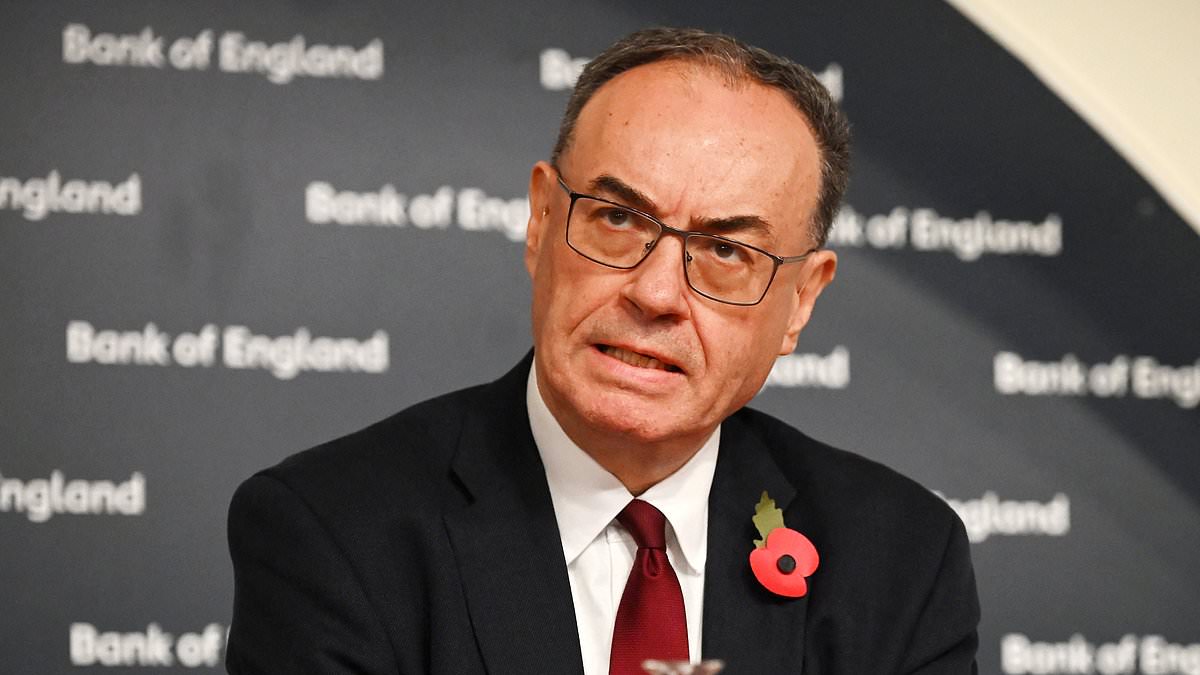
This interest-rate hike was all too predictable, as is the stinging pain it will inflict on borrowers and the wider economy.It will inevitably lead to higher mortgage and borrowing costs for millions, just as energy bills are rising. Families will be wondering what sort of Christmas they have in store – most likely a far more frugal one than they'd hoped.And one key question is: what comes next? Is this hike from 3.75 per cent to 4 per cent the first in a series of punishing rate rises, or will it be ‘one and done’?Well, the bad news is that markets are now betting on as many as three further rate rises next year, expecting the base rate to hit 4.75 per cent by late 2027.This would be nothing less than a hammer blow to the economy – and to the livelihoods of millions.Readers will be well aware of the basic rationale for raising the base rate. Central banks, such as the Bank of England, America’s Federal Reserve or the European Central Bank (ECB) primarily do so to try to tame the beast of inflation. The Bank of England’s governor Andrew Bailey, pictured today, warned inflation could hit 5 per cent next year: a calamity for anyone with a mortgage or other debtThere’s no doubt that price rises are out of control. Britain’s official inflation rate has been above the Bank’s 2 per cent target for two long years, ever since Rachel Reeves’s miserable first Budget in October 2024, which hiked taxes by an unprecedented £40billion.Officially, inflation now stands at 3.5 per cent, and with fuel prices and energy bills soaring, today the Bank’s governor Andrew Bailey warned it could hit 5 per cent next year: a calamity for anyone with a mortgage or other debt.In crude terms, repeatedly hiking the base rate means people have less to spend on everything from haircuts to house extensions, so depressing demand in the economy.This helps to slow price rises – however painfully – while also encouraging savers to squirrel more money away, as banks tend to offer them higher interest rates.But it’s also crucial to look at these rate rises in an international context. In simple terms, raising the base rate tends to make for a stronger pound, as global investors can get better returns on the international markets.It also sends a clear sign to the ‘bond vigilantes’ – who trade billions of pounds of government debt every day – that the Bank is serious about tackling inflation; even if these traders can also see that the British government is plainly unserious in its spending and borrowing plans.This rate hike was not merely predictable, then: many City experts believe that Bailey and his committee should have acted far sooner. After all, the Fed and the ECB have already raised rates to tackle the inflation scourge – while our sluggish central bank is only moving now. Either way, it’s time for Bailey to explain what the end goal is.Higher borrowing costs and mortgage rates might make life more painful, but they are not in themselves going to bring down energy bills or fuel prices. They are not going to bring peace to the Middle East or get oil tankers sailing through the Strait of Hormuz.And that – as well as Labour’s swingeing, socialist tax hikes hitting businesses – are the true source of our inflation problem.The energy price cap – what the typical household pays on gas and electricity every year – leapt from £1,663 to £1,723 in October and could well top £2,000 in January. Diesel is around £2 per litre and unleaded petrol over 170p.These are already squeezing family finances even before the Bank’s Monetary Policy Committee has done their worst.Meanwhile, pay in the private sector is up just 3 per cent on a year ago – less than inflation. At the same time, Labour’s unionised public sector workers are currently enjoying an unaffordable, uncosted 6.3 per cent rise – just as the productive workforce who make such ministerial largesse possible are suffering.In short, I fear that this rate rise will not readily tackle inflation where it genuinely matters.And it will only add to the woes of families up and down the land who are getting out the blankets and turning down the thermostat for what will be a long, cold winter.Best mortgage rates and how to find them Mortgage rates have shot up again due to inflation triggered by the conflict with Iran reversing hopes that the Bank of England would cut rates. This means those remortgaging or buying a home face higher costs.That makes it even more important to search out the best possible rate for you and get good mortgage advice, whether you are a first-time buyer, home owner or buy-to-let landlord.This is Money's partner L&C can help you with its fee-free mortgage service.> Compare mortgage rates> Find the right mortgage for you To help our readers find the best mortgage, This is Money has partnered with the UK's leading fee-free broker L&C.This is Money and L&C's mortgage calculator can let you compare deals to see which ones suit your home's value and level of deposit.You can compare fixed rate lengths, from two-year fixes, to five-year fixes and ten-year fixes.If you’re ready to find your next mortgage, why not use This is Money and L&C’s online Mortgage Finder? It will search 1,000s of deals from more than 90 different lenders to discover the best deal for you.> Find your best mortgage deal with This is Money and L&C Mortgage service provided by London & Country Mortgages (L&C), which is authorised and regulated by the Financial Conduct Authority (registered number: 143002). The FCA does not regulate most Buy to Let mortgages. Your home or property may be repossessed if you do not keep up repayments on your mortgage.
This rate hike was all too predictable - and worse is expected to come. More rises would be nothing less than a hammer blow to the economy: HUGO DUNCAN
Full Article
Original Source
Read the full article at Dailymail →KhanList aggregates and links to publicly available news content. We do not host full articles from third-party sources. Always verify important information with original sources.