
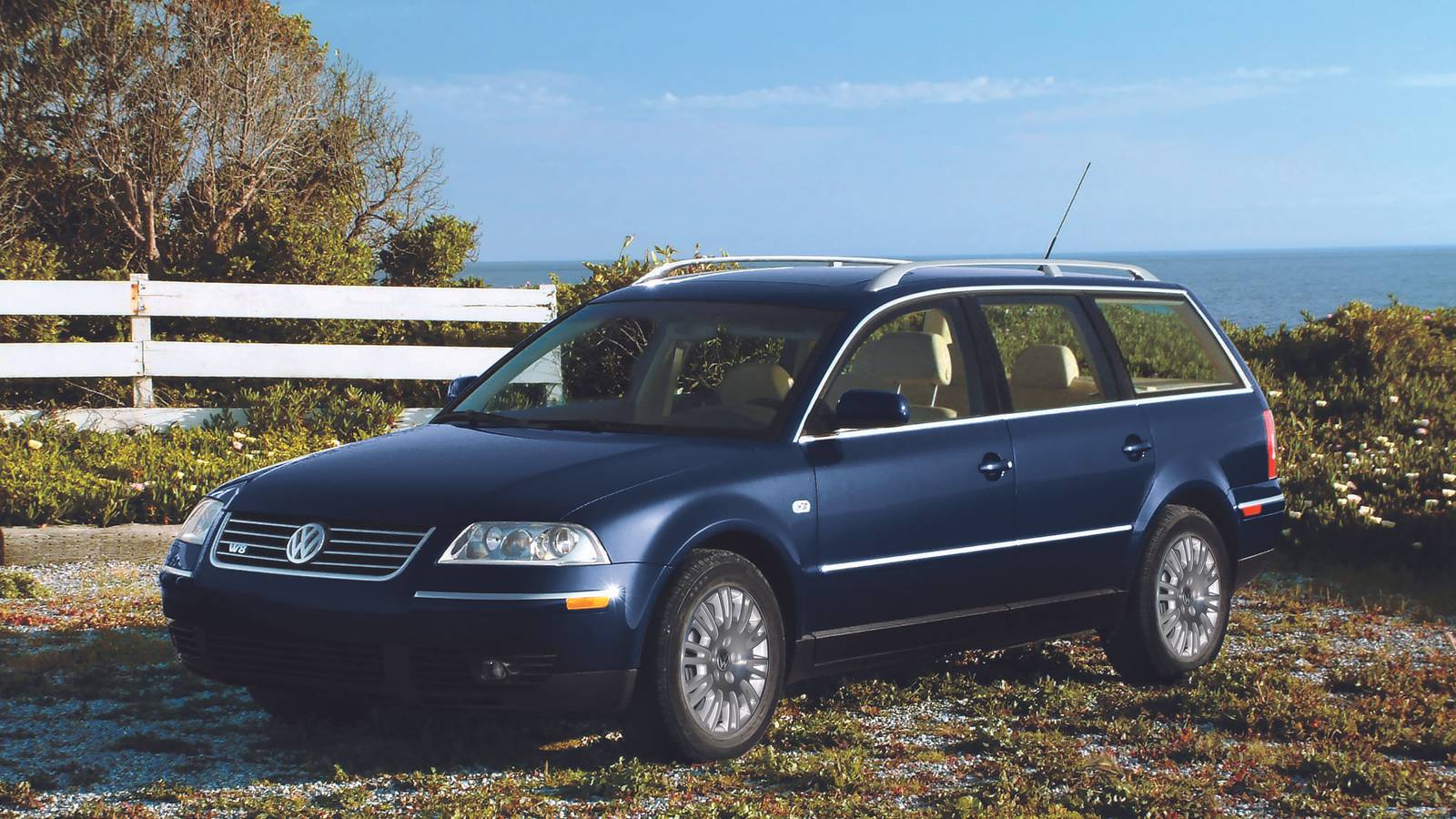
Published Aug 11, 2026, 5:30 PM EDT Based in the Motor City, Carl Anthony is the Automotive Lead at How-to-Geek and the host of AutoVision News Radio, a podcast that focuses on future vehicle technology, including next-generation ADAS innovations, electrification, and software-defined cars. A broadcaster by nature, he has appeared on popular podcasts and radio shows, including Wrench Nation, Cars Yeah, The Car Doctor, and Digital PR Explained. Carl’s frequent appearances on MotorMouth Radio (WHPC 90.3 FM) over the last decade have made him a trusted resource for car enthusiasts, while his hosting of the AutoSens Insights series continues to spotlight the latest automotive technologies. Prior roles include serving as a new vehicle launch and dealer trainer for Ford, Honda, Mercedes-Benz, and Volvo. Carl was a senior product specialist on Chevy's National Truck Team, an experiential marketing program that travels the United States, and a respected member of the FCA (now Stellantis) national auto show team, where he served as the resident expert for consumers on the Dodge Charger and Challenger. Before the automotive industry, Carl was a disc jockey, producer, and programmer at several popular Midwest radio stations, including KIWR, KEZO, KJAN, and KELO-FM. He is a graduate of Iowa Western Community College in Council Bluffs, where he dual-majored in the Electronic Media studies program, earning an Associate of Applied Sciences degree in both radio and television broadcasting. In 1997, on a Shinkansen bullet train running between Tokyo and Nagoya, then-Volkswagen AG CEO Ferdinand Piëch grabbed an envelope and sketched an engine that had been on his mind for a while. He had just finished talking with Karl-Heinz Neumann, the automaker's head of powertrain development, about the VR6, Volkswagen's narrow-angle six-cylinder engine, compact enough to fit transversely even in a Golf. Piëch's sketch took two of those VR6 blocks and mounted them together at a second, wider angle. Viewed head-on, the four cylinder banks no longer formed a V, but rather a W. The drawing would later justify Volkswagen's purchase of Bugatti and give Bentley a reason to exist under VW ownership. And for three model years, the engine would also end up under the hood of an ordinary Volkswagen Passat. An engine built for a supercar family How VW packaged eight cylinders where a V6 used to fit Credit: Volkswagen The idea on the envelope (pictured above) grew into an 18-cylinder engine first, a naturally aspirated 555-horsepower unit built from three merged VR6 blocks. It debuted in the Bugatti EB118 concept at the Paris Motor Show in October 1998, not long after Piëch closed the deal to buy the brand. From there, engineers trimmed the concept down to a W16, the quad-turbo engine that would define the Bugatti Veyron, and a W12, which revived Bentley starting in 2003 and later powered the Phaeton, Touareg, and Audi A8. The smallest member of the family, the W8, was built from two narrow-angle 15-degree VR4 blocks that shared a common crankshaft at a 72-degree angle. The resulting 4.0-liter W8 made 270 horsepower and 273 lb-ft. of torque at 2,750 rpm, numbers modest next to the Veyron's eventual 987 horsepower. However, the W8's real asset was its compact length, not its peak horsepower. At just 16.5 inches long, the W8 fit longitudinally under the hood of a platform that, until then, could only accommodate up to a V6. Volkswagen ultimately used the Passat to prove the W-engine concept before committing it to the costlier Phaeton and Bentley models still to come, badging the car “W8 4Motion” and sending it to market for the 2002 model year. VW's play for the luxury sector An eight-cylinder Passat with a $40,000 price tag Piëch spent the late 1990s pushing Volkswagen upmarket on every front, from the Bugatti acquisition to the Bentley revival to the subsequent Phaeton sedan. The W8 Passat carried that same ambition into VW's mainstream lineup. Every W8 came standard with 4Motion all-wheel drive and a choice of a six-speed manual or five-speed Tiptronic automatic, along with tinted and heat-insulated glass, bi-xenon headlights, park distance control, leather upholstery with wood trim, and an upgraded audio system. A wagon body was available alongside the sedan, a detail that still draws enthusiasts to the model today. Pricing started around $40,000, making the W8 the most expensive Volkswagen sold at the time, yet still thousands less than European luxury sedans with comparable output. Adjusted for inflation, if the W8 Passat were on sale now, its starting MSRP would be about $74,000. Both the sedan and wagon versions of the W8 Passat had an EPA-estimated 16 in the city, 23 on the highway, and 18 combined with the automatic transmission. If you owned one today, your average annual fuel cost would be about $4,200, or about $7.00 per 25 miles driven, according to EPA data. Mechanical issues from the start Reliability problems came with the unusual layout Credit: Volkswagen Packaging eight cylinders into a space built for six came with tradeoffs. Cam adjuster failures, the W8's version of variable valve timing wear, were common enough to trigger diagnostic codes P0011 or P0021 depending on which bank failed. Oil consumption problems were documented starting with the 2002 model year, the very first year the W8 Passat went on sale. Meanwhile, W8 Passats with an automatic often experienced torque converter failures before 70,000 miles, according to VW Tuning's breakdown of common W8 issues. The engine's tight packaging made routine service difficult even for experienced mechanics, since the same compact dimensions that let it fit under the Passat's hood left little room to work. Volkswagen also had an internal competitor to worry about. Audi introduced the B6-generation S4 for 2003 with a 4.2-liter V8 making 340 horsepower, a lighter body, and a 0-to-62-mph time of 5.2 seconds, all for about $5,000 more than the W8 Passat. Buyers weighing the two often chose the Audi badge as the cost was justified with the more powerful and reliable V8 and a more upscale ownership experience. Where the rest of the family ended up Piëch's envelope sketch evolved into three separate engines, each assigned a different job for the Volkswagen Group. The W12 went on to define the modern Bentley, staying in production until 2024, when the automaker retired it in favor of its new Ultra Performance Hybrid V8. While the W12 will always have its allure, Bentley’s 4.0-liter V8 hybrid powertrain outperforms it across the board, evidenced by cars like the Continental GT S and GTC S. Likewise, the W16 has powered Bugatti's flagship hypercars since the original Veyron in 2005, including the Destrier, the one-off unveiled for Monterey Car Week 2026, though the newest Tourbillon has moved to an all-new V16. The W8 was not so fortunate, its mechanical problems relegating it to a short shelf life. Volkswagen built only about 11,000 W8 Passats before ending production in 2004, and no Volkswagen has used the engine since. Today, the W8 Passat enjoys a bit of a cult following, considered less of a cautionary ownership tale and more of an interesting piece of automotive history. Piëch stepped down as Volkswagen's chairman in 2015, capping a career that also included the Porsche 917 and the Audi Quattro, as well as VW's acquisitions of Bugatti, Bentley, and Lamborghini. He was named Car Executive of the Century in 1999 and inducted into the Automotive Hall of Fame in 2014. He died on August 25th, 2019, at age 82.
This rare VW Passat hid the engine that built Bugatti and Bentley—until reliability killed it
Full Article
Original Source
Read the full article at Howtogeek →KhanList aggregates and links to publicly available news content. We do not host full articles from third-party sources. Always verify important information with original sources.