
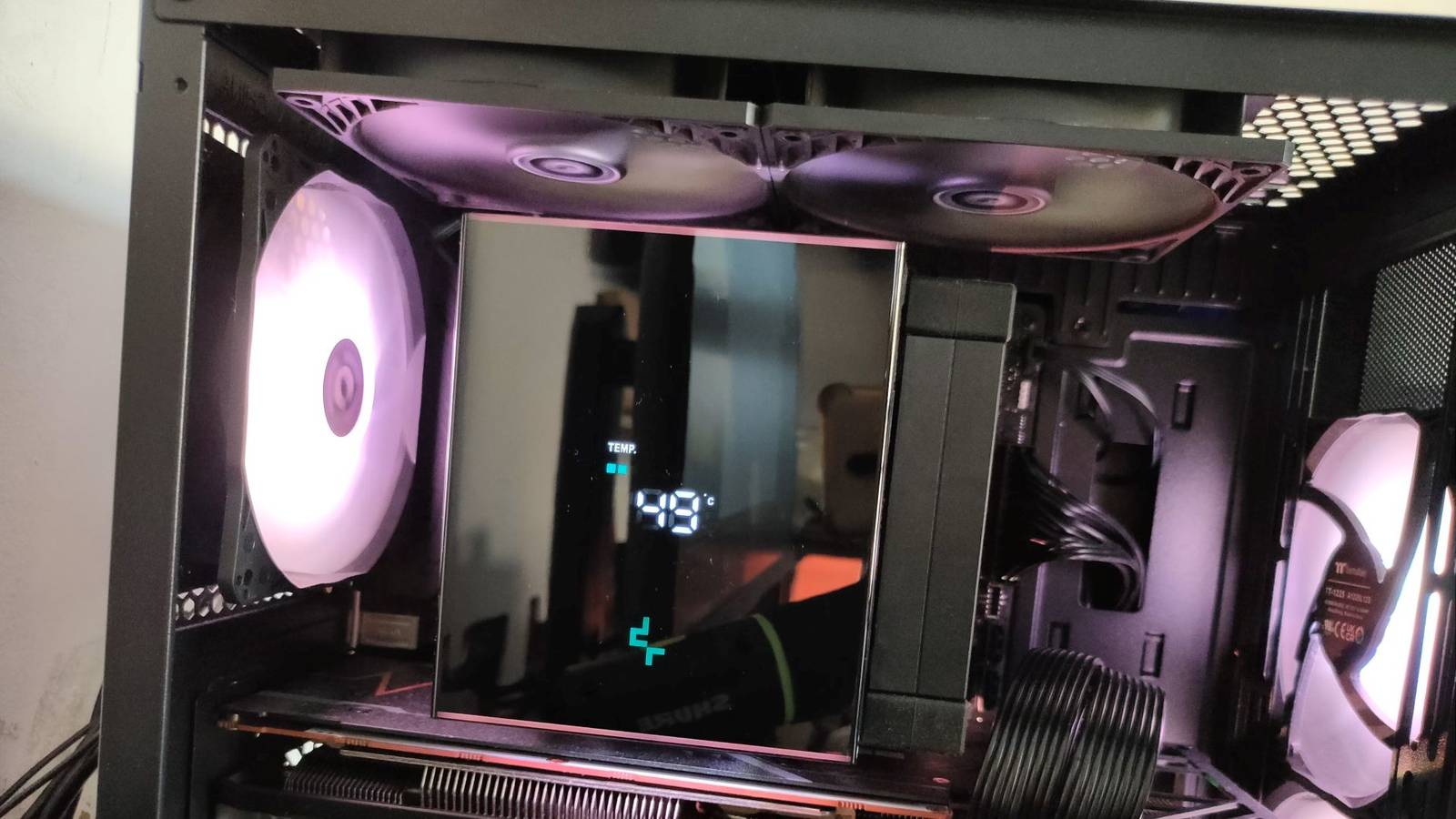
Credit: Ismar Hrnjicevic / How-To Geek Published Nov 27, 2026, 10:38 AM EST Jefferson Mangubat is an experienced technology journalist who has reported on consumer electronics, software updates and big stories in the industry. He's now a Reporter at How-To Geek, and has built a solid reputation for delivering accurate, accessible, and insightful tech journalism. Prior to that, he was a tech reporter for Neowin, where he extensively covered hardware developments from Apple and Google, in addition to digital trends and application updates. Sign in to your How-To Geek account Linux users have long suffered at the hands of USB accessories that work perfectly fine but lose their configuration features when not in Windows. A new open-source project called usb-rea wants to change that by analyzing USB traffic and outputting Python drivers for otherwise unsupported hardware. When a Windows application communicates with a USB device connected to a Windows machine, usb-rea, a tool created by developer Emir Mrkaljevic, records that communication and tries to reconstruct the underlying protocol. It can produce a standalone PyUSB driver and a Markdown report of its findings, providing Linux users with a starting point for supporting hardware that manufacturers have ignored. The process begins with a packet capture, recorded with USBPcap on Windows or usbmon on Linux. You then tag the actions performed in the manufacturer’s app, like changing a fan speed or an RGB setting. usb-rea examines these exchanges to find command structures, counters, lookup tables, and checksums and generates the driver. usb-rea takes the guesswork out of USB reverse engineering It turns captured Windows commands into Python drivers Credit: Justin Duino / How-To Geek The project is about accessories such as case LCDs, RGB controllers, mice, and smart lamps. These are devices that could work on Linux but don't have the official software to access their extra features. There are already some encouraging results. Mrkaljevic noted that usb-rea did byte-by-byte reconstruction of the command byte controlling the fan of the NZXT Kraken X cooler, identical to what was already implemented in liquidctl. It also cross-checked the protocol information of the SteelSeries Rival 100 mouse against rivalcfg, including DPI, polling, and RGB settings. Generated drivers aren't guaranteed to work The project is still in its early stages For now, usb-rea is still alpha software, with version 0.7.14 listed in its GitHub repository. The fact that it passed its tests doesn’t mean every USB accessory will work, and vendor and product IDs alone don’t guarantee that two devices share the same communication protocol. You will also need to capture USB traffic from your device and interact with the Windows software on the device before you can generate a driver. But that’s nowhere near reverse engineering each packet by hand, so usb-rea is a big step toward ease of use. However, it’s not a one-click solution to compatibility. This project is licensed under the MIT license, and you can install it using pip install usb-rea. There's also a simulated-device demo if you want to explore its capabilities without connecting any physical hardware. This is a pretty impressive step toward better hardware compatibility for Linux enthusiasts. But the real test will be whether the community can use it to support accessories that existing Linux projects have been unable to support. Source: usb-rea (GitHub) via CNX Software
This open-source tool gives Windows-only USB accessories a second chance on Linux
Full Article
Original Source
Read the full article at Howtogeek →KhanList aggregates and links to publicly available news content. We do not host full articles from third-party sources. Always verify important information with original sources.