
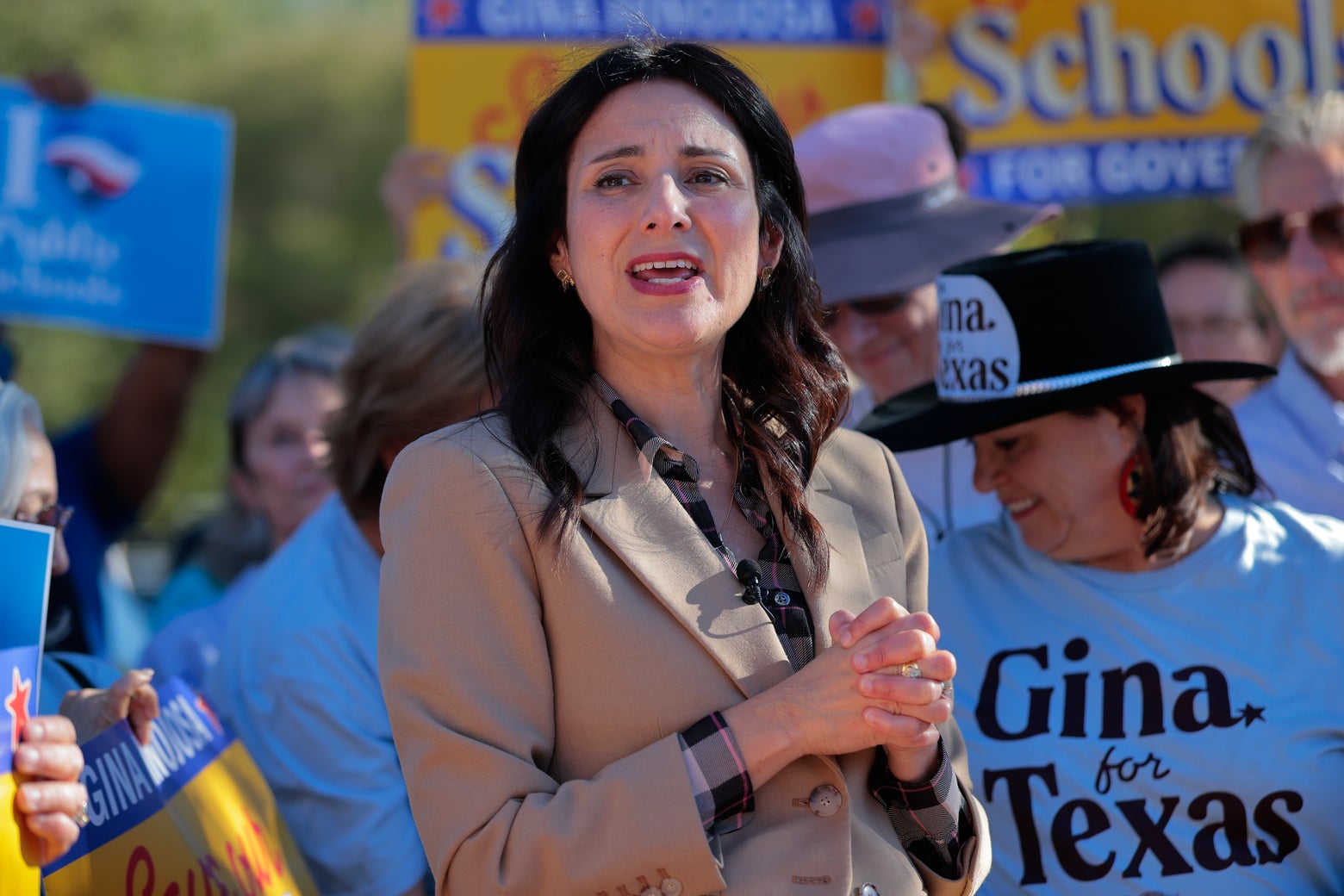
Jurisprudence Texas voted for an anti-death-penalty governor. Gov.-elect Gina Hinojosa on Election Day. Chip Somodevilla/Getty Images Sign up for the Slatest to get the most insightful analysis, criticism, and advice out there, delivered to your inbox daily. You say “death penalty,” and many people in the United States think Texas, and with very good reason. For decades, the Lone Star State was the death penalty capital of America, handing down more death sentences and carrying out more executions than any other state in the Union. No one could get elected to almost any office in Texas without pledging their allegiance to capital punishment. For example, as the New York Times notes, Sen. Ted Cruz has, for a long time, “made the death penalty his cause.” In 2015, during his campaign for the Republican presidential nomination, Cruz even picked a fight with Pope Francis over capital punishment. Politico reports that after the Pope delivered an address to Congress, Cruz said he “respects Francis’ views and the Catholic Church’s teachings on the issue, but ‘as a policy matter, I do not agree. … I believe the death penalty is a recognition of the preciousness of human life.’ ” And no Texas governor in recent history, Democrat or Republican, has openly opposed the death penalty. All that changed on Nov. 3, when Democrat Gina Hinojosa was elected to replace Gregg Abbott, one of Texas’ most ardent death penalty supporters. In October, Hinojosa told CNN’s Kasie Hunt, “I personally do not support the death penalty,” though she added that “as governor, it will be my responsibility to look at each case individually.” Even with the hedge, that was a truly remarkable moment in Texas history: a major politician expressing opposition to capital punishment and winning an election anyway. Still, there are limits on her authority over the death penalty. Under the state constitution, she cannot end the death penalty with the stroke of a pen or declare a moratorium on executions or grant clemency to death row inmates on her own. She can only do the latter if she receives a positive recommendation from the state’s Board of Pardons and Paroles. The governor does have the power to grant 30-day reprieves in capital cases. Newsweek says that opponents of the death penalty are calling on her to use that power to “slow the system down.” They are urging her to “appoint members of the Texas Board of Pardons and Paroles who would recommend that death sentence be reduced to life imprisonment.” Newsweek quotes the Rev. Jeffrey Hood, a prominent anti-death-penalty activist, who reminded the governor-elect of something else she can do to stop capital punishment: “You appoint the board that runs the prisons. That board hires the director. The director buys the drugs. Tell him to stop buying. Let the pentobarbital [used in lethal injection] on the shelf expire.” Whether or not she takes that advice, Hinojosa has a chance to change the conversation about capital punishment in her state. In the CNN interview, she gave a preview of a strategy she might pursue when she said, “I think it is terrible what has happened in this criminal justice system. It is inhumane. …The criminal justice system is broken here in Texas and beyond.” Focusing on the flaws in the criminal justice system, as Hinojosa did, has helped drive down support for capital punishment in many other places in this country. Like many others, whatever their general views about capital punishment, the people of Texas don’t want to see innocent people put to death, or defendants get death sentences because they have lousy legal representation or because of their race or the race of their victims. In addition to her winning the gubernatorial election, several other indicators suggest that Texas may be ready for Hinojosa’s gradualist approach to limiting capital punishment. Polls show a modest decline in Texans’ support for the death penalty. That decline has been most pronounced among self-identified Democrats, 66 percent of whom supported capital punishment in 2010, down to 50 percent in 2023. In addition, Texans recognize the flaws that led Hinojosa to say the “criminal justice system is broken”; 59 percent say they believe that Texas has executed “the wrongly convicted.” Moreover, a 2021 survey of residents of Dallas County, the second most populated in the state, found, as the Death Penalty Information Center put it, “broad support for sweeping changes in death-penalty policy in a county that is responsible for the second most executions in the United States since capital punishment resumed in the 1970s.” DPI notes that “by wide margins, Dallas voters said they believed the county’s death penalty is affected by racial bias and that innocent people have been convicted and sentenced to death. … Nearly two-thirds said they would support the Dallas D.A.’s office ‘pledg[ing] not to seek any new death sentences.’ ” And three-quarters of those surveyed preferred either life without parole or life with parole eligibility after a 20- or 40-year period to the use of the death penalty for people convicted of first-degree murder. If we look at the number of death sentences given and executions carried out on an annual basis in Texas, we see striking declines. In 1998, there were 48 death sentences handed down across the state; in 2025 that number was three. There were 40 executions in Texas in 2000. Last year there were five. The Texas Coalition Against the Death Penalty reports that “whether a person receives a death sentence continues to be driven not by the underlying crime, but by geography. Prosecutors in only two of Texas’s 254 counties—Harris and Tarrant—pursued new death sentences in 2025. … 2025 also was notable for the cases in which prosecutors waived the death penalty, often with the consent of victims’ survivors, due to its exorbitant cost and the lengthy, uncertain legal process.” So, the stars seem to be aligning for Texas to develop and embrace a different way of thinking about the death penalty. Gov.-elect Hinojosa is well positioned to lead that process. Death Penalty Jurisprudence Texas 2026 Midterms
This Might Be the Most Shocking Thing About Gina Hinojosa’s Election
Full Article
Original Source
Read the full article at Slate →KhanList aggregates and links to publicly available news content. We do not host full articles from third-party sources. Always verify important information with original sources.