
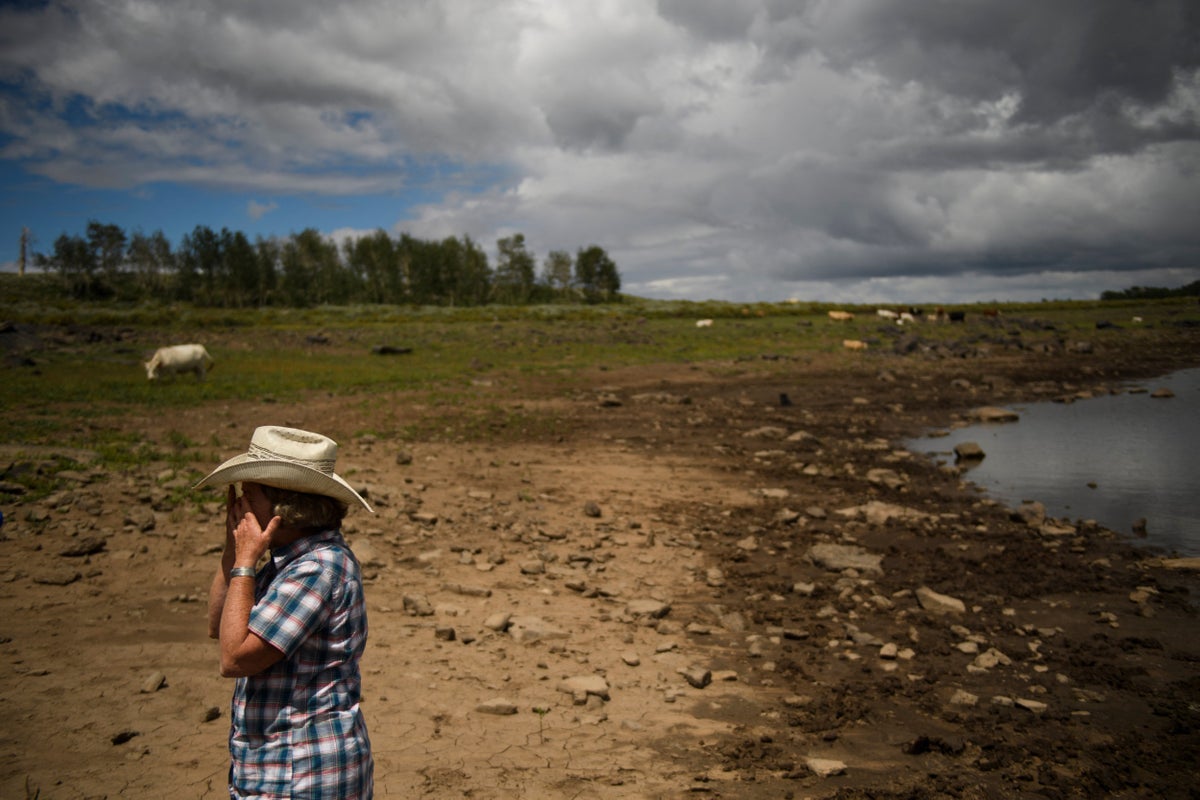
Officials in Denver, Colorado, have proposed a lawn patrol to enforce water restrictions amid worsening drought conditions. Denver relies on mountain snowpack for its water supply — but record-low snowpack and record-high temperatures brought on by climate change caused the city’s water supply to dry up. Local officials have placed strict restrictions on water usage because of the drought — and now they may enlist more than a dozen people to make sure residents are following the rules. Denver’s Board of Water Commissioners has received a staff proposal creating a 15-person lawn patrol for next summer that would likely conduct “2,500-3,500 stops or violations per month,” according to the document reviewed by The Colorado Sun. The board would still have to vote to approve the proposal. The goal is to “demonstrate that Denver Water is enforcing its rules,” the proposal reads. Denver’s Board of Water Commissioners has received a staff proposal creating a 15-person lawn patrol for next summer to enforce water restrictions amid worsening drought conditions (AFP via Getty Images)Last March, the board declared a Stage 1 drought, seeking a 20 percent reduction in water use by the end of April 2027. At the time, water reservoirs were 80 percent full, lower than the historic median for storage during that part of the year. The board approved several water use rules for residents, including watering grass just two days per week, washing cars with a bucket or hand-held hose with an automatic shut-off nozzle and power washing homes only on assigned watering days. Denver Water said that while many residents are conserving water, the city has yet to reach its 20 percent water savings goal. Last March, the board declared a Stage 1 drought, seeking a 20 percent reduction in water use by the end of April 2027 (AFP via Getty Images)At the start of the month, the city banned lawn watering altogether. Local officials warned that any violations will cost residents up to $2,000 in fines, and they may have their water shut off. The ban is in place indefinitely.“From Oct. 1 through Oct. 18, under the post-October 1 violation structure, we issued 448 fines totaling $265,000,” a Denver Water spokesperson told The Colorado Sun. The drought in Colorado is so bad that the old U.S. Highway 6 beneath the Dillon Reservoir has resurfaced. “Believe it or not, I'm walking on a highway that's spent most of the last 60 years underwater,” AccuWeather Meteorologist Tony Laubach said while surveying the land. Dillon Reservoir is currently just 58 percent full, according to the weather outlet.
This major city wants lawn patrol on the beat to enforce water restrictions
Full Article
Original Source
Read the full article at Independent →KhanList aggregates and links to publicly available news content. We do not host full articles from third-party sources. Always verify important information with original sources.