
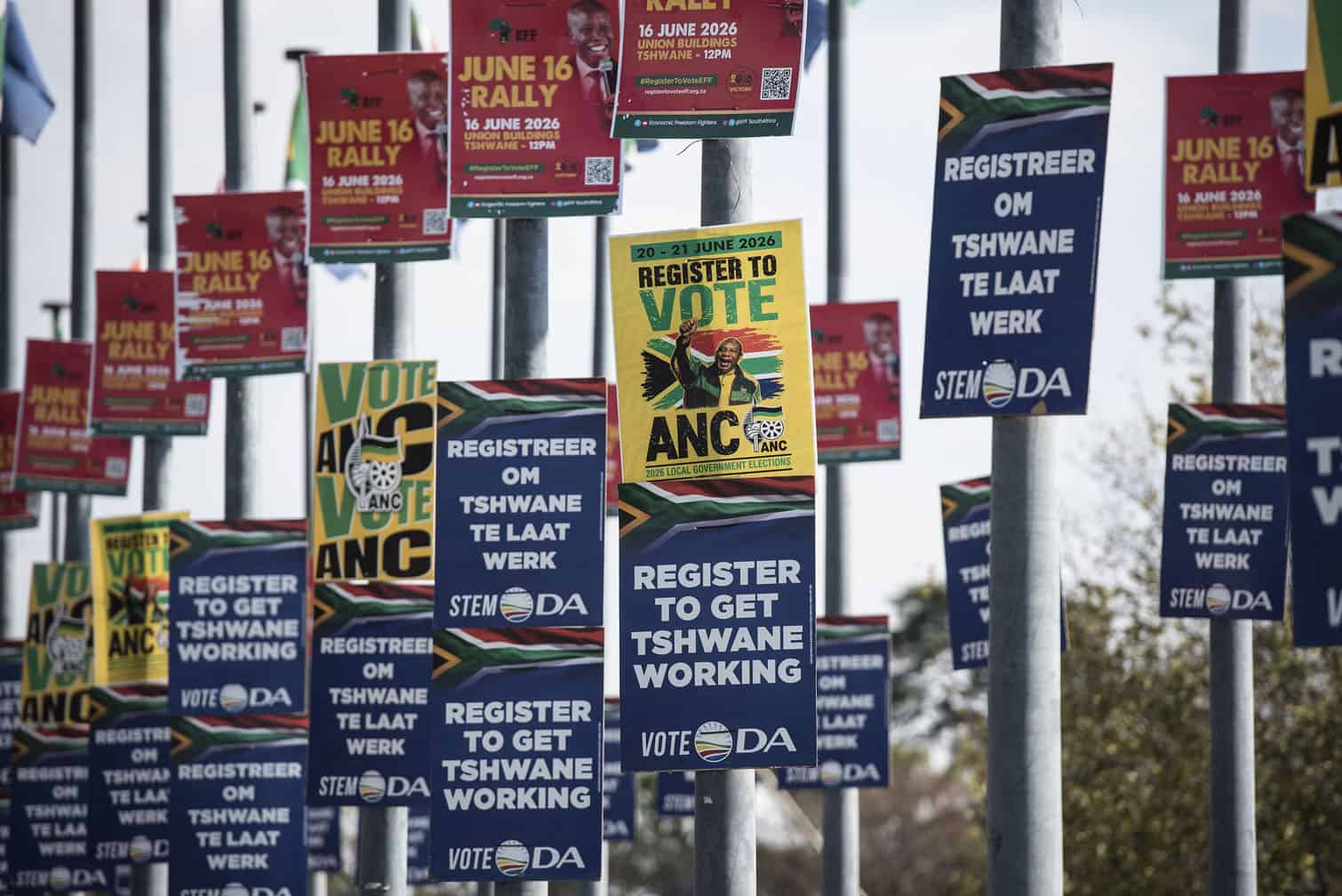
As parties unveil their election manifestos, voters will ultimately decide whether established political parties deserve another chance. With the local government elections less than a month away, social media, particularly X, formerly Twitter, was abuzz with the words DON’T VOTE ANC, DA & EFF. Political parties have been hot on the campaign trail, wooing voters to mark a tick next to their candidates’ names on the ballot. Service delivery failures Several municipalities across the country have been plagued by service delivery failures, making the 2026 local government elections a key test of which parties can convince voters they have solutions to these challenges. LIVE interactive map, latest news, multimedia and more! View Map From no water for months, electricity outages, crime and potholes among other issues plaguing suburbs, residents want action, and they want it now. As parties unveil their election manifestos, voters will ultimately decide whether established political parties deserve another chance or whether alternative formations should be given an opportunity to govern. The social media campaign urging South Africans not to vote for the ANC, DA or EFF is gaining traction online, reflecting growing frustration with service delivery failures and highlighting the increasingly influential role of digital platforms in shaping political narratives ahead of the 4 November local government elections. Speaking to The Citizen, Professor Andre Duvenhage, political analyst and academic at North-West University, said he was not surprised by the trend, arguing that election campaigning has already shifted into high gear and that social media has become a powerful tool for influencing voters. “The election campaigns are now picking up, and social media is playing a more and more important role in reaching the electorate,” Duvenhage said. MK party While the slogan appears to reject South Africa’s three largest parties, Duvenhage believes the biggest beneficiary could ultimately be the MK party. “If the ANC, DA and EFF are not being voted for, we can speculate about who stands to gain. According to my assessment, the main beneficiary will probably be the MK party,” he said. Duvenhage pointed to recent polling indicating growing support for the party despite internal organisational and financial challenges. “Even though the party is internally disorganised and facing financial pressures, surveys suggest it is performing extremely well. Support appears to have risen significantly, making it a major player in the political landscape,” he said. eThekwini With less than a month left until local government elections, Jacob Zuma’s MK party appears to be tightening its grip on eThekwini, with a new voter poll suggesting it is on course to emerge as the metro’s dominant political force. According to a survey commissioned as part of News24’s Elections Poll ’26 project, voter sentiment has shifted dramatically in KwaZulu-Natal’s (KZN) largest municipality, where the ANC has traditionally enjoyed strong support. Frustrations The analyst also suggested that online trends and public campaigns should not always be viewed as spontaneous expressions of public frustration. “I believe some of these campaigns have political origins. They are also a relatively cheap and effective way of propagating a particular political position,” he said. However, Duvenhage cautioned against assuming that smaller parties and independent candidates will dominate the elections simply because voters are frustrated with larger formations. “I expect some movement towards smaller and more identity-driven parties, but I do not see this as a dominant trend,” he said. ANC supporters Instead, he believes the election’s decisive factor will be how traditional ANC voters respond. “The biggest question is what ANC supporters will do. Will they stay away, vote for alternatives, or remain loyal to the party? I believe the ANC is heading for a significant loss of support on 4 November, possibly even worse than what we saw in the national and provincial elections.” According to Duvenhage, while some voters may migrate to smaller parties, much of the shifting support is likely to be absorbed by larger opposition formations, particularly the MK party, which appears well positioned to capitalise on growing voter dissatisfaction ahead of election day.
This is why DON’T VOTE ANC, DA & EFF is trending in SA
Full Article
Original Source
Read the full article at Citizen →KhanList aggregates and links to publicly available news content. We do not host full articles from third-party sources. Always verify important information with original sources.