
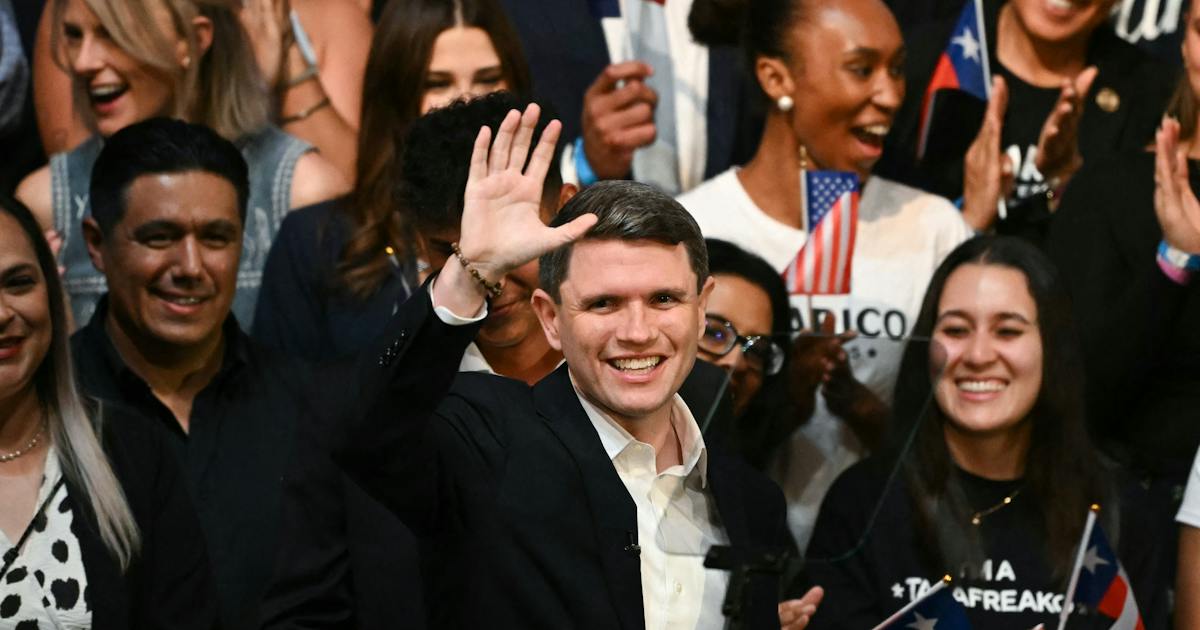
The midterm elections are over. Yes, some returns are still being counted, but the outcome was clear before midnight on Tuesday. Democrats across the country crushed their Republican opponents, in many cases by running on “top versus bottom” economic populism. Victorious candidates—including James Talarico in Texas, Abdul El-Sayed in Michigan, Troy Jackson in Maine, and Sherrod Brown in Ohio—pledged to take on the corporate corruption that has rigged the game against regular Americans. This message worked, even in Republican-leaning districts where Democrats were badly outspent, like Michigan’s 7th, which Sunrise co-founder Will Lawrence managed to flip despite over $23 million in Republican outside spending, the most faced by any House candidate this cycle.With these electoral triumphs, Democrats have seized the initiative. Now they have to decide what to do with it—and already we are seeing very different answers to this question. On one side is Team Small Potatoes. Senator Brian Schatz of Hawaii went on CNN recently to articulate this uninspiring view. “I do not think it is time to propose things that the president of the United States is guaranteed to veto,” said Schatz, who is in line to be the Senate’s next Democratic whip and is a favorite to eventually succeed Senator Chuck Schumer as leader. “I think that’s a bit of wasted energy. If we want to be more aspirational, if we want to make more bold policy changes … that’s for 2028. Right now it’s about stabilizing the country itself.” Soon-to-be Speaker Hakeem Jeffries signaled a similar perspective in August when he preemptively announced his opposition to Medicare for All. On the other side of the debate is Team Go Big, who are refusing to cede ground to the Small Potatoes crowd. Congressman Greg Casar, who is chair of the Congressional Progressive Caucus, went so far as to directly respond to Schatz’s statement, saying he “100% disagree[s].” Casar warned that Democrats “cannot be the party of nervous lawyers who just tinker around the edges” or they will “sleepwalk into President Vance 2028.” On election night, Senator Bernie Sanders similarly declared that holding Trump accountable is not enough: “At a time of massive income and wealth inequality, we must do more. We must aggressively fight for working families.”These arguments raise an obvious question for Small Potatoes advocates like Schatz: Why, exactly, is it “wasted energy” to propose and pass legislation that President Trump might veto? Democrats have a wide array of extremely popular economic policies at their disposal: anti–price gouging laws to bring down the cost of food and housing, an excess profits tax on Big Oil to crack down on fossil fuel profiteering, paid sick leave and family leave and vacation leave, a congressional stock-trading ban, a data center moratorium and AGI kill switch—the list goes on. What is the downside to daring Trump to veto bills like these that are supported by 70 to 80 percent of Americans? As Congressman Ro Khanna posted in response to Schatz’s statement: “Make him veto Medicare for All. Make him veto a $25 living wage. Make him veto free childcare. Make him veto Block the Bombs to Israel.” If Trump does veto these popular policies, great—that demonstrates which side is fighting to bring down prices and end corruption, and which side is standing in the way. And it provides the clearest possible pitch for why voters need to put a Democrat in the White House in 2028. While Team Go Big’s approach is all upside, Team Small Potatoes’ strategy has very real costs. Though Tuesday’s election results represent a major backlash to Trump’s garbage fire of a second term, the Democratic Party is still severely unpopular, and many working-class voters do not trust it to fight for them. If Democrats’ response to winning big majorities in both the House and Senate is to timidly spend the next two years focused just on “stabilizing the country,” as Schatz suggested, they will once again be aligning themselves with the status quo. Americans are furious with the status quo. Democrats already tried a “nothing will fundamentally change” strategy—not once but twice, in 2016 and 2024. Both of these bad bets threw the door open to the fascists. To repeat this catastrophic mistake again—after an election in which voters sent such a clear message that they want change—would be madness. Of course, there’s another reason establishment Democrats might not Go Big in tackling corporate profiteering and corruption: Many don’t want to. They oppose passing these policies not because Trump will veto them but because they’re scared of having to vote on bills their corporate donors hate. The problem is that they, like Trump, are on the wrong side of supermajority issues—which doesn’t matter if a bill is never brought to a vote but becomes quite uncomfortable when you actually have to pick a side.We need to be crystal clear about this dynamic. There is no political rationale for failing to advance incredibly popular policies. The Democrats who oppose these populist measures are not trying to improve their party’s political position—they’re trying to protect their own pro-corporate interests, at the expense of the Democratic Party’s future prospects.Voters don’t want small potatoes. They have made abundantly clear that they aren’t looking for leaders who will just manage a broken system. They want leaders who will change it for the better—who will go big. That’s the lesson of this week’s blue tsunami, and if Democrats don’t heed it, they will blow a historic opportunity that this party may not get again for decades to come.
This Is the Battle That Will Define the Democrats These Next Two Years
Full Article
Original Source
Read the full article at Newrepublic →KhanList aggregates and links to publicly available news content. We do not host full articles from third-party sources. Always verify important information with original sources.