
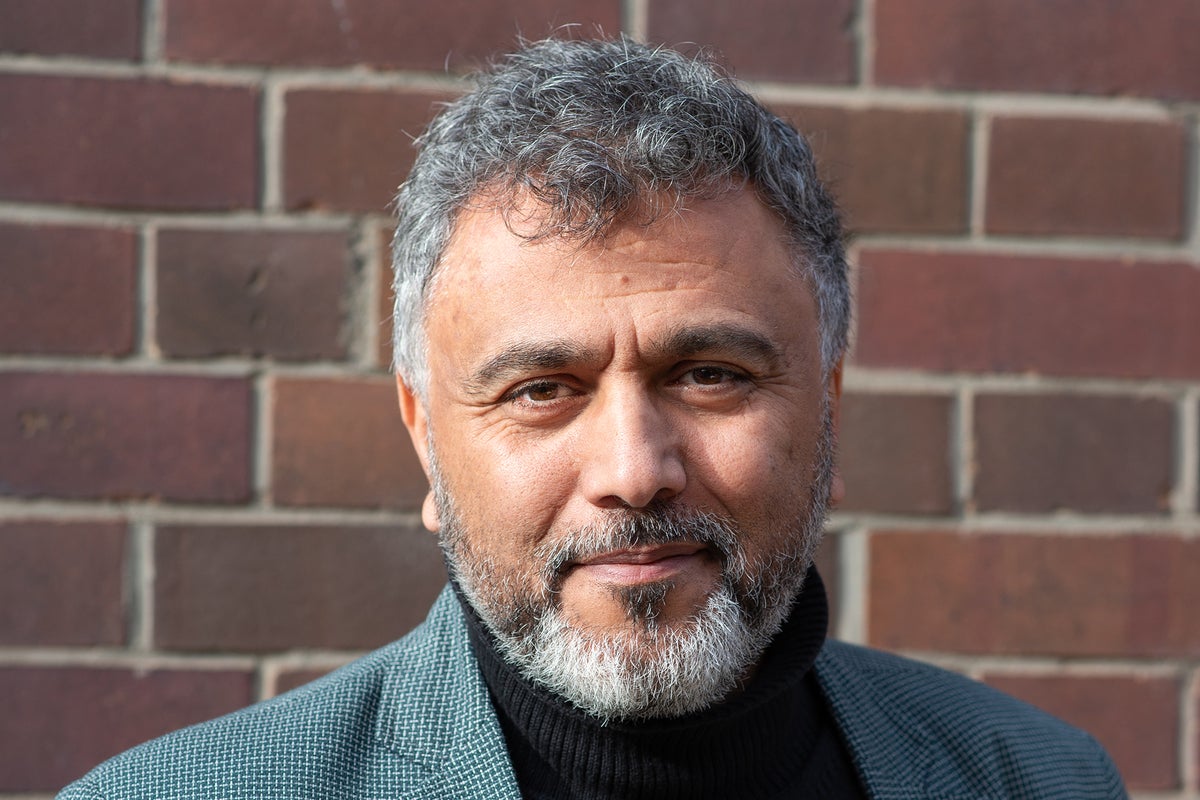
It was election day in the German state of Saxony-Anhalt and Alaa Yakoub Agha was overjoyed. The 55-year-old Syrian, now a German citizen, had voted for the first time since arriving in the country in 2015. Her happiness was short-lived. During a lakeside walk that afternoon, she was the victim of a tirade of racist abuse, as a man bellowed at her to “go back to your own country”. “I looked at him with sadness and walked, on” she told The Independent. “It hurts me that some people still view us as strangers, despite our years of integration and our contributions to society.”Hours later, the far-right Alternative fur Deutschland (AfD) won an overwhelming victory in the state with almost 44 per cent of the vote: the first by a far-right party since the Second World War.But faced with the likelihood of a hostile government and the persistent threat of racist abuse in everyday life, minorities in the state issue a defiant message: “Saxony-Anhalt is our home, too.”Alaa Yakoub Agha was racially abused hours after casting her first electoral vote as a German citizen in Saxony-Anhalt (Alaa Yakoub Agha)To win tickets to see Bel Trew’s latest compelling documentary click hereIn the decade since they arrived in Germany, Agha and her husband have suffered verbal abuse, been spat at, and had stones thrown at them. “Lately,” she says, “I have the feeling that those looks are returning. “I have reached the point where I am sometimes afraid to leave the house in the evening. I worry about my daughter when she is out alone at night, and I fear she might be subjected to racist hostility.”A resurgent far-right is gaining momentum across Europe. In Sweden today, the Sweden Democrats, a party born from the far-right that has since toned down its rhetoric, are looking to make major gains as the country goes to the polls. Throughout the continent, migrants and minorities are reconsidering their futures. Mamad Mohamad, who arrived as an asylum seeker from Syria in 1996 and is now a German citizen and local candidate for the Alliance90/Greens, says thousands of migrants in the state now having to seriously consider their family’s safety. Some are already thinking of leaving. “The election result weighs heavily on my heart,” says the 45-year-old after the AfD secured 39 seats three seats short of a majority but in a strong position to form a government.Mamad Mohamad, a Syrian who arrived in 1996 and is now a German citizen, said the migrant community fears for their future in Saxony-Anhalt (Mamad Mohamad)“When a far-right party leads a state government, potentially making racism a part of everyday life even at the hands of the state, many people reach their limit. This is more than many can bear,” he said. “At the same time, I tell people: We must not let ourselves be driven away. Saxony-Anhalt is our home, too.”Mohamad is a Yazidi Kurd who arrived in the country as a 15-year-old, having escaped severe state-sponsored ethnic discrimination at the hands of the Ba’athist Syrian regime.There is still a chance for opposition parties to enact the so-called ‘firewall’, an unwritten agreement under which parties refuse to join coalitions with the far-right. A hotchpotch coalition of centre right, centre left, and left wing parties in Saxony-Anhalt could yet keep the AfD out of power. But the AfD will nevertheless feel it has made significant progress in its fight to break into the mainstream, seeking to project a more positive image as a serious and electable player in German politics. The party celebrated winning just under 44 per cent of the vote in the East German state (Reuters)Around 36 per cent of voters said in July that they trust the AfD to solve most of the state’s problems, a clear indication that voters are shifting from a “passive protest vote” to an “active support vote”, according to Gregoire Roos director of the Europe and Russia and Eurasia programme at Chatham House. Ulrich Siegmund, the charismatic 35-year-old AfD leader in the state, can in large part be credited for shifting the narrative pushed by the AfD, replacing the old “enough is enough” slogan with “Alles ist moeglich” - meaning “everything is possible”. But this did not come at the expense of the party’s vicious rhetoric towards minorities, most notably refugees and migrants but also towards Muslims, LGBT+ people, and disabled people. The AfD appears to be bucking the trend, seen in the cases of Italian prime minister Giorgia Meloni and France’s Marine Le Pen, in which far-right parties soften their rhetoric as they get nearer to power.Within its manifesto, the AfD in Saxony-Anhalt has promised a state-level deportation operation, would call on small businesses to adopt AI to reduce the need for skilled migrant workers from “culturally alien” backgrounds, and a removal of the war refugee status for Ukrainians in Germany. The children of refugees would be placed in separate classes to prove their “stay in Germany is merely temporary" and to prevent what it calls the "various stresses" on the other children from being around different cultures.Alternative for Germany (AfD) party member and member of Saxony-Anhalt's regional parliament Ulrich Siegmund attends the inaugural session of the far-right Alternative for Germany (AfD) party faction after the Saxony-Anhalt state elections (Reuters)Disabled children would no longer be taught in the same classrooms as others, schools would be banned from flying rainbow flags and would instead raise the German national flag every day, and the government would "exhaust all legal avenues" to limit Islamic expression, the AfD has vowed.Facing a clear and direct risk of discrimination by a possible AfD government, Mohamad says the federal state must step into to protect minorities. He says residents need a state that “protects minorities and provides binding guarantees for their safety and rights”. “If this protection can no longer be adequately guaranteed at the state level,” he adds, “the federal government must step in. The people of Saxony-Anhalt must not be left to fend for themselves.”Agha, who arrived in Germany in 2015 and now works as a consultant for schools, says she is desperately concerned for the future of education in the state. “If children are increasingly separated from one another while still at school, there is a risk that society itself will become more fragmented later on,” she says. “Such a development would jeopardise the foundation of a healthy, integrated society.”Saxony-Anhalt has a relatively low share of foreign nationals compared to the rest of the country at around 7.9 per cent, government figures show, putting it well below the 14.9 per cent national level.The capital of Berlin, the next state to be holding a regional election, has a significantly higher share of foreign nationals, at 22.5 per cent. Thousands turned out to protest the Saxony-Anhalt election result in Berlin (Getty)Government statistics show that around 21.8 million people (26.3 per cent of the population) are either first generation immigrants or their children. In the mid-2010s, roughly one million Syrian refugees welcomed into Germany under former CDU chancellor Angela Merkel, a decision that would help shape European politics and transform the German political debate in the decade since. “We can do it,” declared Merkel as she suspended the Dublin protocol to allow unprecedented immigration levels in 2015, as millions, such as Agha, fled the raging Syrian civil war. Merkel maintains that her decision was right, with the alternative - turning refugees away with water cannons at the border - both morally and politically impossible. But critics say the policy fuelled the AfD’s emergence from the political fringes to one of Germany’s most significant political players.It is notable that even in Berlin, one of the world’s most liberal cities, the AfD is within touching distance of the CDU and the Left parties at 18 per cent, according to an average of four polls put together by statistics website Dawum. Just how much of a dent they can make in the capital will become clear on 20 September.
‘This is our home’: German minorities defy far-right AfD’s culture of fear after election win
Full Article
Original Source
Read the full article at Independent →KhanList aggregates and links to publicly available news content. We do not host full articles from third-party sources. Always verify important information with original sources.