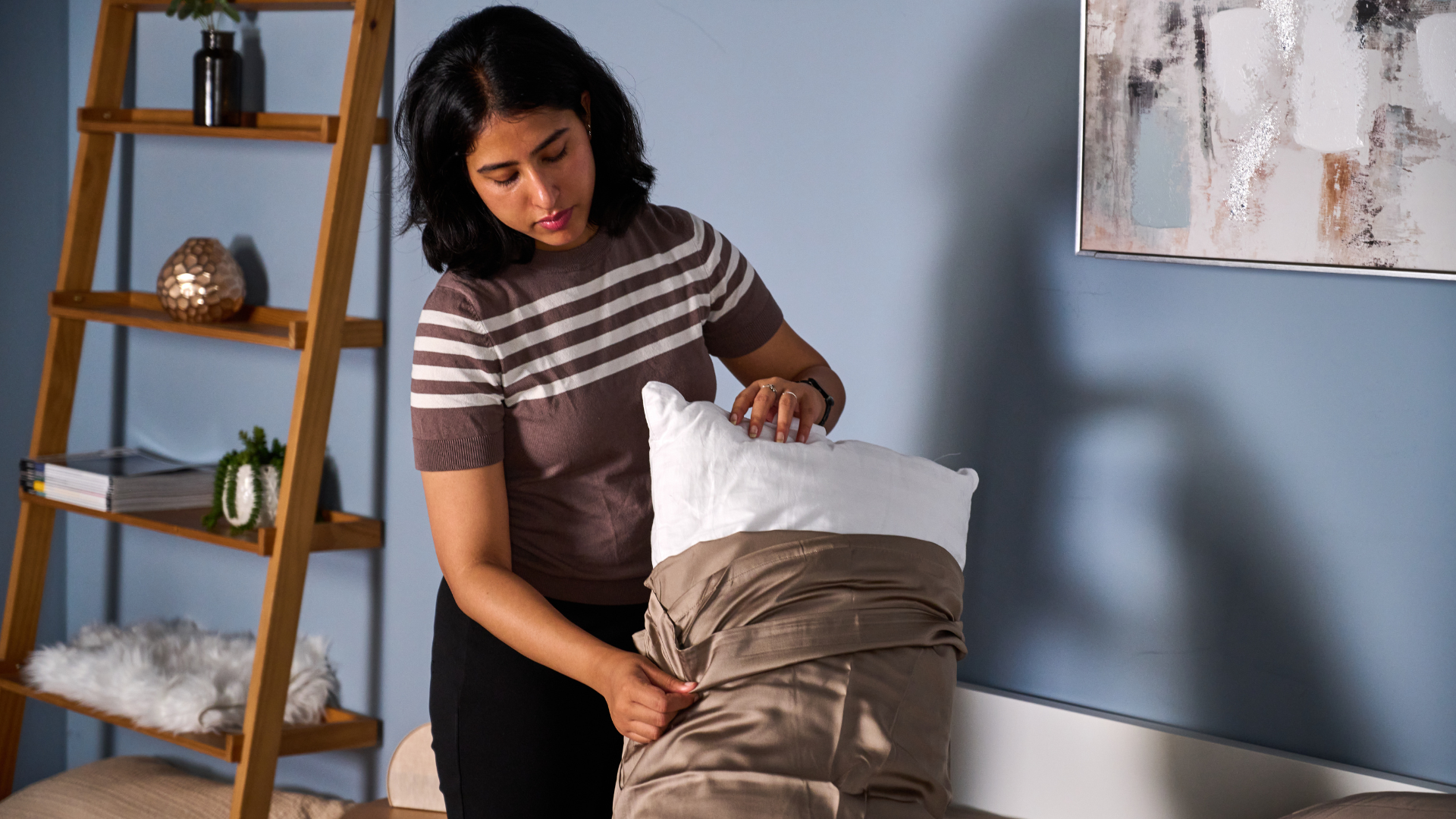
Night sweats and allergens can ruin our sleep during the summer, and not washing your bedding enough can make these issues even worse. Sweat, oil, and allergens can build up if sheets and pillows during heatwaves, but how often (and at what temperature) should we wash our sheets in the summer?While research has found that the average person changes their sheets every 24 days, an infection prevention expert says this is way too long a wait wash your bedding."Bedding collects normal skin bacteria, environmental bacteria, yeasts, mold spores, dust mites, and the allergens that come with all of it," says Dr. Shanina C. Knighton, PhD, RN, CIC, a Research Associate Professor at the Frances Payne Bolton School of Nursing at Case Western Reserve University.So, to set the record straight, I've called on Dr. Knighton to tell us how often we should be washing our sheets and pillows during the summer. She'll also tell us what temperature to wash your bedding at, and three other ways you can prevent summer allergens from piling up and disrupting your sleep.Key takeaways: At a glanceWash your sheets and pillowcases at least once a week: but those with skin conditions, an active lifestyle, or allergies will need to change them more frequently.Duvet covers should be washes at least every two weeks: pillows and comforters can be washed every few months if they aren't visibly soiled or stained.Wash bedding at a temperature of at least 130°F: with 140°F being the optimal for killing dust mites.Make sure bedding is well-ventilated: this prevents moisture from encouraging bacterial growth, and use a waterproof mattress protector.Wear slippers: these stop your feet from picking up floor debris and bringing it into your bed.How often should you wash bed sheets and pillowcases in summer? (Image credit: Future)"Wash your sheets and pillowcases weekly at a minimum during hot weather," advises Dr Knighton.However, the infection expert stresses that many people may need to wash their bedding more frequently depending on their lifestyle, occupation, and conditions."Wash more frequently if you sweat heavily, go to bed without showering, have oily or acne-prone skin, have allergies or eczema, share the bed with pets, or work a high-exposure job such as healthcare, sanitation, childcare, or repair work where you carry the day home with you," she shares.Get instant access to breaking news, the hottest reviews, great deals and helpful tips.How often should other types of bedding be washed in summer? (Image credit: Getty Images)While Dr. Knighton advises pillowcases and sheets be washed frequently, other types of bedding can survive a longer wait."Duvet covers should be washed weekly or every two weeks depending on use," says Dr Knighton. "Pillows and comforters follow the care label, which is usually every few months, and sooner if they become sweaty, stained, musty, or visibly soiled."However, just because pillows, duvet cover, and comforters don't need to be washed as often as sheets and pillowcases, this doesn't mean they aren't immune to allergen and moisture build-up.In fact, Dr. Knighton says that dense pillows and comforter can hold onto moisture far longer than thinner sheets do, trapping heat, sweat, skin oils, and dead cells without airflow.These warm, moist conditions allow bacteria, fungi, and odors to thrive deep inside the fill — even if your sheets look completely clean on the surface."Over time, that same combination is what produces the musty smell, the yellowing, and the staining that will not wash out easily," explains the health specialist.What temperature should bedding be washed at in summer?As for what temperature you should was bedding at, Dr Knighton points to research that found that 140°F (60°C) kills all house dust mites.However, she suggests following the bedding's care labels and opting for the warmest temperature the fabric can stand, with most allergy guidance pointing to 130°F (which is 54.4°C).What happens if you don't wash your bedding often enough in summer?So, we know if we don't wash our bedding often enough, oil, sweat and allergens will start to accumulate in our beds, but what are the consequences of that happening?"The risk is not the same for everyone, and that is the honest answer," Dr. Knighton tells me. "For a healthy person with intact skin, the usual result is odor, breakouts, skin irritation, or allergy and asthma flares."For someone with asthma, mold sensitivity, eczema, broken skin, or a weakened immune system, the picture is more serious, and there is real infection risk for the immunocompromised."3 more ways to keep your bedding clean in summer 1. Wear slippers or socks (Image credit: Future)"Slippers are not optional in my house and serve a purpose beyond just comfort," says Dr Knighton.She says this rule applies especially to those who have pets or allow outdoor shoes indoors, where the floor could be covered in debris,."Walking across it barefoot and then climbing into bed means you have just dragged all of that up onto your sheets with your own feet.," she warns. "A pair of slippers between the floor and the bed breaks that chain."2. Don't bring your phone to bed (Image credit: Getty Images)You may want to skip your nightly doomscrolling session, as a phone's surface are "one of the dirtiest things most people own".The same phone that has been on restaurant tables, in bathrooms, and in their hands all day, and they set it on the pillow or the sheets, " says Dr. Knighton. "My phone does not come to bed with me."The expert also says she doesn't bring the clothes she's been wearing all day to bed either. " Whatever my outdoor clothes and my phone touched during the day stays out of the space where I sleep," she reveals.3. Make sure your bed is dry (Image credit: Future)While washing your bedding is important, keeping it dry also prevents the risk of allergen buildup.To prevent your bedding trapping moisture and encouraging microbial growth, Dr Knighton recommends using one of the best mattress protectors with waterproof protection and ensuring your bedding gets enough ventilation.If excessive sweating at night means you're waking up to a damp bed, the infection prevention expert recommends allowing the bedding to dry before making it."After a sweaty night, throw the covers back, let the bed breathe for a while, and make it later," she advises.For more cleaning advice, see our guide on how to clean a mattress. This is especially important if you've invested in the best mattress for your sleep needs and want it to last as long as possible to get your money's worth. Follow Tom's Guide on Google News and add us as a preferred source to get our up-to-date news, analysis, and reviews in your feeds.
This is how often (and the exact temp) you need to wash your bed sheets and pillowcases this summer, according to an infection prevention expert
Full Article
Original Source
Read the full article at Tomsguide →KhanList aggregates and links to publicly available news content. We do not host full articles from third-party sources. Always verify important information with original sources.