
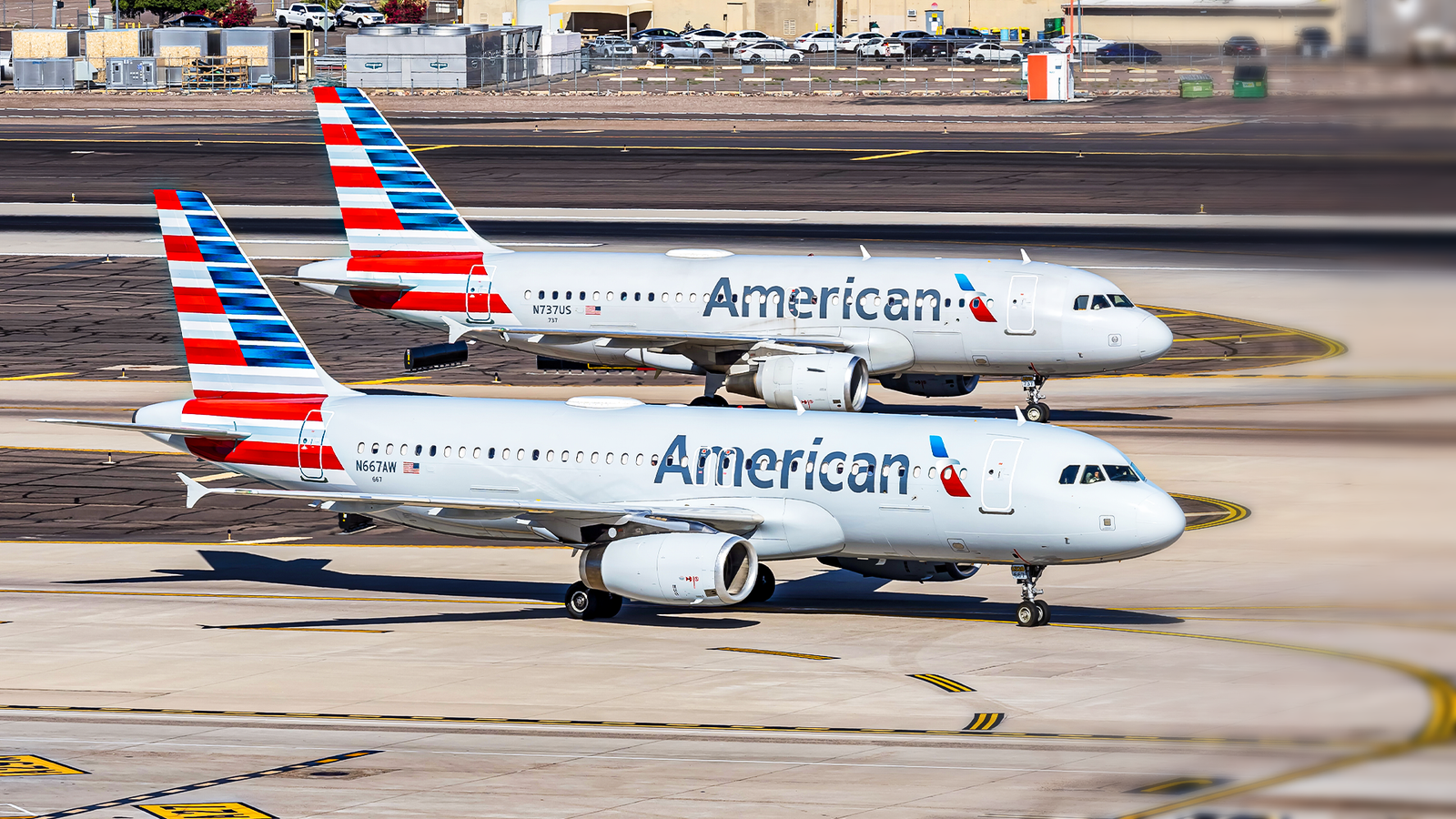
Published Nov 27, 2026, 1:00 AM EST Luke Diaz is a freelance military writer with experience with active duty experience in the US Navy as well as defense and industrial engineering. He is a former Naval Flight Officer who performed tactical air control on the carrier-based E-2 Hawkeye. American Airlines touts its flightline as one of the newest in North America, yet dozens of quarter-century-old narrowbodies still fly daily itineraries at its busiest hubs. That largely comes down to the fact that AA acquired all 48 of its older Airbus A320-200 aircraft. Now averaging around 25.7 years old, according to ch-aviation fleet data, the planes arrived via previous mergers with two defunct carriers. AA plans to retain the 48-aircraft A320 subfleet in service into next year. It even purchased one off lease last year instead of retiring the jets alongside its previous McDonnell Douglas MD-80, Boeing 757-200, and Airbus A330-200. On June 21, the 27-year-old N107US returned from a three-month retrofit as the testbed for an interior overhaul. On June 23, AA Chief Customer Officer Heather Garboden announced that the cabin refresh introduces updated premium seating, expanded overhead bins, and in-seat device power. How America West & US Airways Left American With 48 Mismatched A320s Credit: Markus Mainka | Shutterstock It can be described as something like getting on a flying hand-me-down when you board an American A320 today. The earliest aircraft in that group began in Phoenix in 1990 when Edward Beauvais, the founder of America West Airlines, acquired aircraft abandoned by the insolvent Braniff Airlines. AA still operates all 26 of the single-aisle workhorses that America West eventually assembled. In 1996, US Airways took a desperate risk of its own. US Airways Chairman Stephen Wolf and President Rakesh Gangwal went on an Airbus 'shopping spree' to replace outdated Boeing and Douglas aircraft in an attempt to pull out of a tailspin. "When I came here, it was a very troubled company. People had given up hope of US Airways ever being a force in the marketplace," Gangwal later recalled, according to Wharton Magazine. US Airways started flying its own batch of 22 A320-200s soon after, setting up an awkward snag for passengers and mechanics alike. America West Airlines took over US Airways before the combined group merged into AA in 2015. All that corporate matchmaking dumped two completely separate Airbus fleets onto the same AA schedule. For everyday flyers, that merger left behind 48 mismatched A320s with an expensive quirk under the wings. Because America West and US Airways chose rival engine makers, AA must still stock separate spare parts and run different maintenance playbooks for two tiny subfleets. Those upkeep headaches persisted even as AA executives packed tighter seating rows and leaner amenities onto those aging cabins. Cramped Refits & Factory Delays Kept American's A320s Flying Credit: HASAN AKBAS | Shutterstock Under the 2018 'Project Oasis,' American decided to pack tighter rows onto its A320s. AA opted not to install seatback displays, cut back on galleys, and thinned out seat cushions. Matters were even worse on the 737 and A321s, which saw screens removed and seat pitch reduced. The president of the flight attendants union, Lori Bassani, said the following year, as Fox News reported: "We find that the seats are not only getting smaller, but there's no padding on them anymore. It is a torture chamber for our customers and for us, that also fly on our own airlines." Prior to the 2019 Boeing 737 MAX groundings, the pandemic, and chronic plant delays at Boeing and Airbus, AA had intended to retire the cramped A320s sooner. Instead of easing out of service, those older jets kept flying as many as eight short domestic hops a day on flights under two hours. All those daily takeoffs and landings age an airplane much faster than smooth, long-haul cruising. AA Fleet Statistic A320-214 A320-232 737-800 737 MAX 8 Active Airframes 22 26 303 103 (by year-end) Legacy Origin US Airways America West New Deliveries New Deliveries Engine Model CFM56-5B4/P IAE V2527-A5 CFM56-7B CFM LEAP-1B Fuselage Length 123.3 feet (37.57 m) 123.3 feet (37.57 m) 129.6 feet (39.50 m) 129.6 feet (39.50 m) Cabin Width 12.1 feet (3.70 m) 12.1 feet (3.70 m) 11.6 feet (3.54 m) 11.6 feet (3.54 m) American Seat Count 150 150 172 172 Max Range 3,300 nautical miles (6,112 km) 3,300 nautical miles (6,112 km) 2,935 nautical miles (5,436 km) 2,935 nautical miles (5,436 km) Keeping all 48 A320s flying through busy hubs in Phoenix, Charlotte, and Philadelphia helped AA keep schedules intact whenever new jet deliveries fell behind. Schedulers leaned on those midsize jets to fill routes too big for regional planes yet too small for larger airliners. Even so, running 1990s jets alongside modern single-aisle planes shows clear limits in seat count, flying range, and fuel efficiency. How American Airlines’ Older A320s Stack Up Against Newer Boeing 737s Credit: Victor De Leon | Shutterstock Stepping aboard an aging American Airlines Airbus A320-200 can feel surprisingly roomy compared with American Airlines' newer Boeing narrowbodies. While the spec table shows the older Airbus trailing American's Boeing 737-800 and 737 MAX 8 on capacity, range, and fuel burn, the matchup narrows to a window or middle seat. An A320-200 cabin measures seven inches (18 cm) wider than a 737 cabin, giving flyers in tight 3-3 rows more shoulder room and aisle space. American CEO Robert Isom often spotlights fleet renewal, saying that "over the past decade, we have invested heavily to modernize and simplify our fleet, which is the largest and youngest among US network carriers." Even with a 14.7-year average fleet age beating Delta Air Lines and United Airlines, AA still flies A320-200s daily. They fly out of Dallas/Fort Worth, Phoenix, Charlotte, and Philadelphia on routes like Dallas/Fort Worth–San Antonio, Boston–Philadelphia, and Cabo San Lucas–Phoenix. Unrefurbished A320-200 cabins still show their age with worn trim and cramped overhead bins, though American Airlines is closing that gap. According to aeroLOPA, this year's updated A320-200 cabin layout expands first class to 16 seats alongside 134 Main Cabin seats and adds larger Airbus XL overhead storage. Those larger lockers cut down on gate-check scrambles while preserving the A320-200's wider cabin for passengers. Boeing's newer 737-800 and 737 MAX 8 jets do not automatically deliver a better onboard ride, either. According to View from the Wing, AA's dense 'Oasis' 737 retrofits stripped away seatback screens, packed in extra rows with less room even in first class, and shrank the lavatories. That era without seatback monitors will eventually end for both narrowbody families. AirlineGeeks reports that American doesn't plan to install new seatback entertainment until 2028. For crews and operators, the A320-200 and 737 force clear trade-offs. Flight attendants get more aisle space on the A320-200 and avoid the tightest retrofitted 737 rear lavatories, while pilots trade Boeing's yoke for an Airbus sidestick and tray table on shorter daily runs. Wear & Tear On Aging Airframes Tests AA's A320s Credit: Markus Mainka | Shutterstock Unlike modern carbon fiber planes such as American Boeing 787-8s, the A320-200 still relies on aluminum for 70% to 80% of its structure. Under the wings, AA's two mismatched engine types also behave differently, burning fuel and wearing out parts on separate schedules. Even the A320's digital controls hit an unexpected snag last November, when Airbus linked an uncommanded midair pitch shift to cosmic activity scrambling onboard software. Airbus warned in an urgent global bulletin to airlines in November 2025 that "analysis of a recent event involving an A320 Family aircraft has revealed that intense solar radiation may corrupt data critical to the functioning of flight controls." AA's technicians worked overtime across Thanksgiving weekend to install two-hour software fixes across 209 A320 family narrowbodies. Those emergency patches cleared quickly once crews finished the holiday push. Still, keeping aging Airbus jets flying safely takes far more than quick code updates, as rising airframe repair bills and cabin upgrades push maintenance costs steadily higher. Rising Costs And New Cabins Keep American Airlines' A320s Flying Toward 2030 Credit: GingChen | Shutterstock Keeping 1990s A320s flying is pushing American's repair bills steadily higher. Mainline maintenance and parts spending jumped 7.8% through the first nine months of this year after heavier airframe checks drove costs up last year. Worse, because American Airlines leases 36 of its 48 A320-200 aircraft, delivery delays force costly lease extensions. That prompted American Airlines to add power outlets, larger bins, and four extra first class seats with privacy wings. That A320-200 cabin makeover leaves travelers and flight attendants with less room to move. First class row spacing tightens to 36 inches (91 cm) while standard economy squeezes down to 30 inches (76 cm), forcing cabin crews to serve more premium flyers from compact galleys with unchanged rear bathrooms. Even as American Airlines brings Starlink Wi-Fi across its mainline fleet starting early next year, these 48 retiring A320-200s will miss the 2028 seatback screen rollout. Federal airworthiness recalls are catching up with AA's aging A320s which compounds maintenance intensity even further. An August order for Aero Engines V2500 turbofan compressor blades caught the 26 former America West jets flying for AA in its net. The directive comes alongside other recent recalls and proposals including work on evacuation slides, landing gear doors, and preemptive wing crack checks. Still, A320 family check pilots flew 42 transatlantic training runs last year to prepare line crews for American Airlines' A321-200XLR launch. Retiring all 48 A320-200 jets depends on hundreds of Airbus and Boeing replacements still working through factory backlogs. Although the Boeing 737 MAX 7 and larger MAX 10 cleared FAA certification in August and October, initial deliveries wait until next year. That timeline keeps American Airlines' oldest single-aisle jets flying toward 2030, bridging the gap until incoming 737 MAX, A321XLR, and future widebody aircraft reshape American Airlines' fleet.
This Is American Airlines’ Oldest Aircraft Type Flying In 2026
Full Article
Original Source
Read the full article at Simpleflying →KhanList aggregates and links to publicly available news content. We do not host full articles from third-party sources. Always verify important information with original sources.