
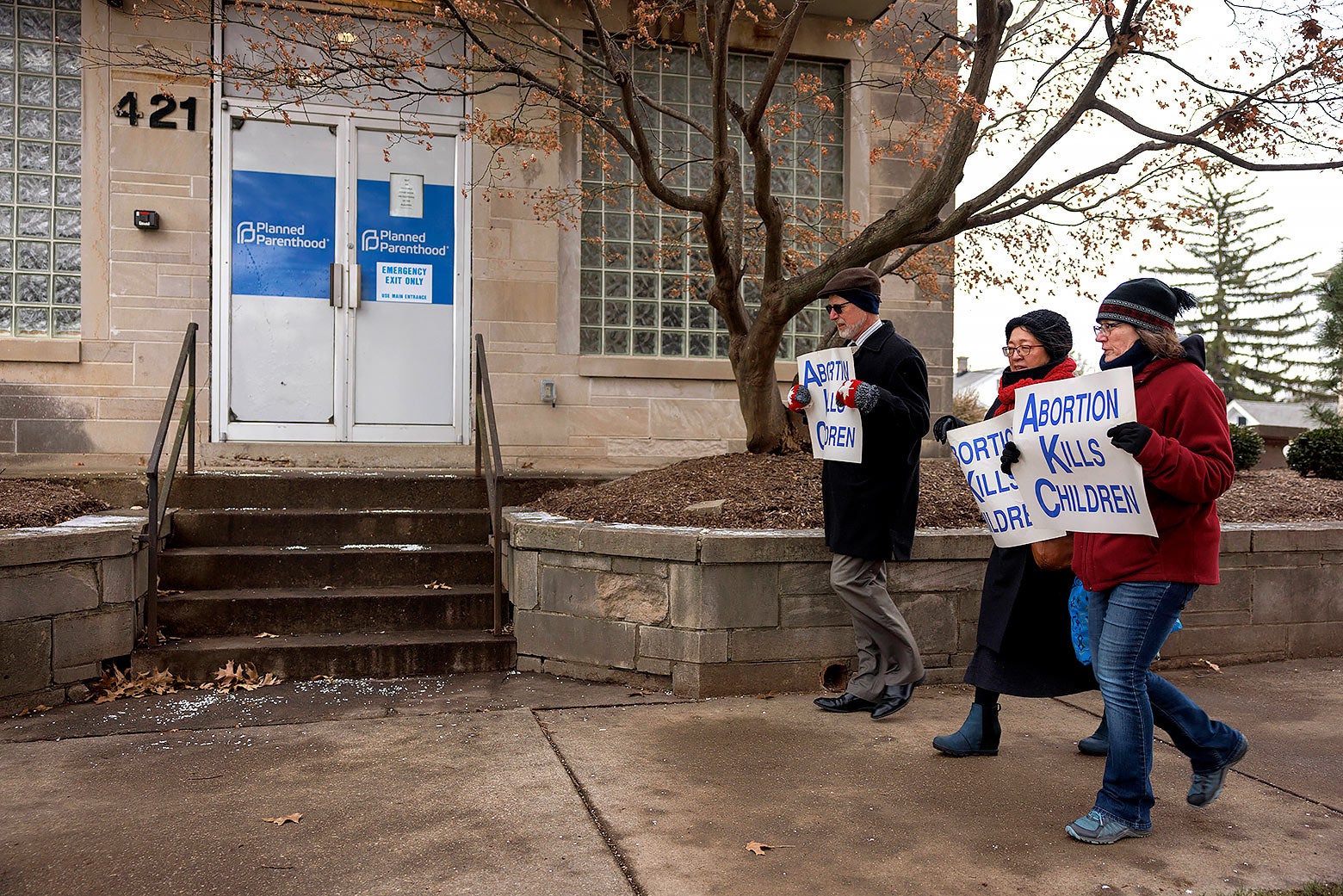
Jurisprudence The fight is Indiana. Jeremy Hogan/SOPA Images/Sipa via Reuters Connect Sign up for Executive Dysfunction, a weekly newsletter that highlights one under-the-radar story about how Trump is changing the law—or how the law is pushing back—and keeps you posted on the latest from Slate’s Jurisprudence team. For a time, after the Supreme Court overturned Roe v. Wade, a civil war between the states on reproductive rights seemed inevitable. Red-state attorneys general threatened out-of-state doctors with criminal charges and lawsuits; blue states responded with shield laws that aimed to protect residents from out-of-state legal consequences. These conflicts appeared to be heading for a reckoning, but then things went quiet. That reckoning, however, is about to come due. Specifically, we should expect things to accelerate quickly after the midterms, when Republicans won’t have to worry that unpopular abortion policies will cost Donald Trump a congressional majority. A major new case shows that the ultimate battleground here may not be over telemedicine abortion but about the freedom of speech. That is the issue at the heart of a major new case called Planned Parenthood Northwest v. Commissioner of the Indiana State Department. The case began when Indiana passed a law in 2017 involving abortion access for minors. Before Roe was overturned, most states applied laws allowing minors to get abortions without parental involvement using a procedure called a judicial bypass. In those hearings, minors could avoid parental involvement requirements if they could show that they were mature enough to make a decision themselves or that an abortion would otherwise be in their best interests. Indiana passed a 2017 law that made it a crime to knowingly or intentionally aid or assist a minor seeking an abortion without getting parental consent or using the bypass procedure, and Planned Parenthood sued, arguing that the law violated the First Amendment. It was clear from the beginning that the case would have national implications. Conservatives across the country have since launched a crackdown on speech about abortion. South Dakota passed a law restricting abortion-related advertising. The attorneys general of Florida and Missouri are seeking hundreds of millions of dollars from Planned Parenthood because the organization points to evidence that the abortion pill mifepristone is safe. When—and whether—red states can criminalize speech about abortion is an issue that is likely to head to the Supreme Court, and the Indiana case—which since the fall of Roe has turned on the question of Planned Parenthood’s informational efforts surrounding out-of-state abortions—may be the reason why. It’s not lost on conservatives that they might be violating the First Amendment, and they have come up with two ways to get around that obstacle. Indiana, for example, argued that speech isn’t protected when it is integral to a crime. The idea is simple: We don’t protect the speech necessary to plan a heist or put out a hit. Indiana insisted that Planned Parenthood’s referrals for out-of-state care fell in the same category. But Planned Parenthood pointed out a key distinction: Robbery and murder are crimes in every state, but in large swaths of the country, abortion is constitutionally protected. That means that Indiana’s law and others like it will force the courts to figure out which state law to apply when a clash arises. The 7th Circuit had to rule on just that question when it came to Indiana’s law. Indiana acknowledged that Planned Parenthood was facilitating legal abortions. What was illegal, the state said, was the speech that took place in Indiana. The court disagreed: It couldn’t be a crime to help someone do something that was legal in the place where it occurs. That conclusion makes sense, but it raises a question that the Supreme Court may have to confront: Which state’s criminal code is the one that counts? Courts here will have to rely on a messy rules governing conflicts of law. The closest thing to a rule of thumb holds that courts should apply the rules of the state that has the most significant relationship to the case. Blue states will have a good argument on that point, as the 7th Circuit recognized: When someone travels to another state for abortion, most of the relevant players and events will be in that jurisdiction. But there is no guarantee the conservative Supreme Court supermajority will see it that way. Red states will argue that both the pregnant patient and her fetus come from within their borders—and that the speech needed to plan an abortion took place there too. Even if conservatives lose on this point, they have a backup plan: arguing that abortion-related speech isn’t speech at all. Courts are sometimes more forgiving of burdens on speech when the real focus of a law is conduct, and when any restriction on speech is minor and incidental. That’s what Indiana said was happening here: Lawmakers were mostly interested in stopping out-of-state travel and abortion, not speech about it. The 7th Circuit didn’t buy it: Indiana’s law applied to doctors who provided information and referrals, and that had everything to do with speech. One of the factors that weighed the most heavily in the court’s decision again was that Indiana was punishing speech about something that was legal and protected in other states. From there, the court had little trouble concluding that Indiana’s law regulated based on the content of Planned Parenthood’s speech—a third rail in free-speech law—and could not satisfy strict scrutiny, the demanding standard applied to that kind of speech regulation. This case is just latest example of federal courts being pulled into interstate conflicts about abortion. So far, judges have generally agreed with the 7th Circuit that red states can’t criminalize speech that facilitates something that blue states protect, but the Supreme Court has so far remained on the sidelines. It is only a matter of time before the cold war between the states on reproductive rights comes to life, and there is no telling what that will mean for the First Amendment. Abortion Indiana Jurisprudence Planned Parenthood Supreme Court Judiciary
This Indiana Lawsuit Against Planned Parenthood Is Ground Zero for Abortion Rights in Blue States
Full Article
Original Source
Read the full article at Slate →KhanList aggregates and links to publicly available news content. We do not host full articles from third-party sources. Always verify important information with original sources.