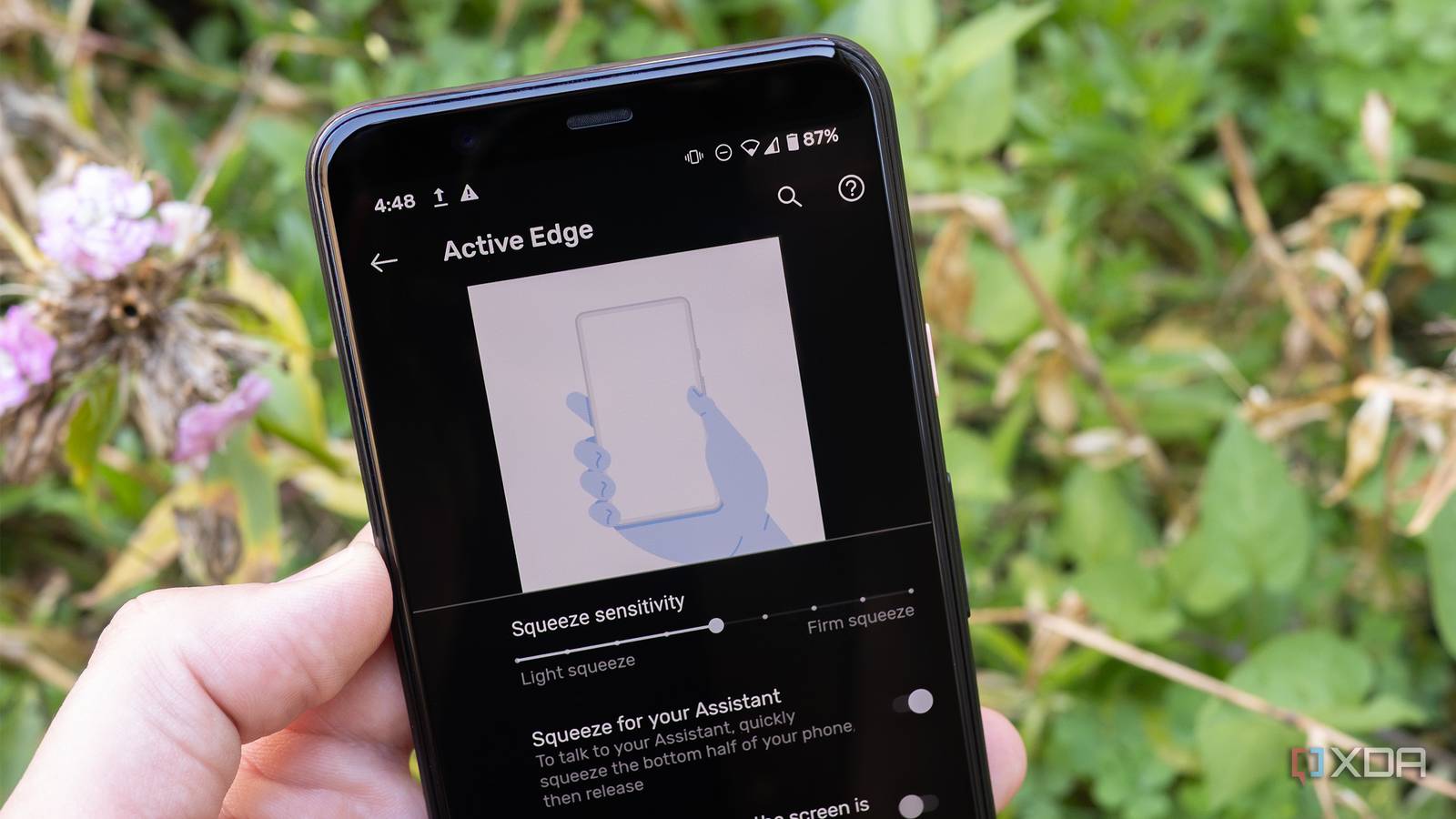
Published Aug 7, 2026, 8:00 PM EDT Patrick O'Rourke is XDA's News Editor and Entertainment Segment Lead. Previously, he was Pocket-lint's Editor-in-Chief, the Editor-in-Chief of Canadian tech publication MobileSyrup, and earlier in his career, he worked as the technology editor at the Financial Post and Postmedia. He's based in Toronto. Over the past 15 years, he's written thousands of articles. Patrick has also interviewed dozens of tech industry executives and covered GDC, E3, Gamescom, WWDC, Apple keynotes, Samsung Unpacked events and more. Patrick has a BA in journalism from Toronto Metropolitan University. When I think back to features I really liked about earlier Pixel smartphones, one key feature always comes to mind: Active Edge. While most modern phones have just a few buttons, including a volume rocker (or individual volume up and down buttons), a power button, and in some cases, an Action button in the case of recent iPhones, back in 2017 with the Pixel 2, Google introduced a feature called Active Edge that at the time, felt like a revolution in smartphone interaction, especially when you used third-party apps to customize it. The closest modern comparison to Active Edge is Quick Tap, which allows you to double-tap the back of the Pixel 5 and up to turn on various features. When the Pixel 5 launched, Google positioned Quick Tap as Active Edge's successor. What did Active Edge actually do? It's time to get squeezing Active Edge wasn't exactly an entirely original idea from Google. The tech giant borrowed the concept from HTC's U11 and its very similar Edge Sense feature, which also launched in 2017. This made even more sense when I remembered that HTC manufactured the Pixel 2, while LG handled the Pixel 2 XL. Unlike Active Edge, which only officially worked with Google Assistant (more on this later), you could set Edge Sense to launch a variety of features, including a Samsung Edge Panel-like side-set app drawer. As is often the case, the Android community took matters into their own hands and created apps that allowed users to remap the Pixel 2's Active Edge squeeze gesture, with the most notable being Edge Sense Plus. To be fair to Google, Active Edge could be used to do other things by default, including silencing incoming calls, notifications, snoozing alarms and dismissing timers, but its functionality was still very limited. Active Edge was featured in every Pixel device from the Pixel 2 all the way up to the Pixel 4 XL, before it was unceremoniously left out of the Pixel 5 series. Given how unpopular the feature was, it's unlikely many Pixel users even noticed its absence, though I'll always argue that they just didn't know what they were missing. Active Edge is the type of feature that once you try it and integrate it into the way you use your device, something just clicks. If you're still clinging to an older Pixel phone and want to try Active Edge, it's really easy to activate. I dusted off my Pixel 4 XL running Android 11 to take the feature for a spin and turned it on by tapping on System > Gestures > Active Edge. I was also surprised to see that there's a Squeeze Sensitivity option, which I don't remember seeing back in 2019. Squeezing my Pixel to launch Google Assistant felt natural A button that isn't a button I'm a bit of a sucker for interacting with smartphones in unconventional ways, so I think that's why Active Edge resonated with me so much when I started using it consistently with my Pixel 4. In fact, my time with that phone was during an era where I used Google Assistant a lot, in part because I found Active Edge so intuitive. We know Active Edge isn't coming back with the Pixel 11 series. This year's marquee feature seems to be HiLight, a Nothing Phone-inspired rear notification light that also indicates Gemini interactions. Still, if it does make a return with a future Pixel device, I hope it's implemented differently. First, I'd like it to be more accurate. As much as I liked using Active Edge with my Pixel 4 back in 2019, it was somewhat inconsistent, and I remember a few instances where it randomly activated Google Assistant in my pocket (maybe adjusting the sensitivity would hav esolved this issue). On top of that, a new take on Active Edge needs to be customizable, just like Quick Tap. Pixel users should be able to set any app and most hardware features to the squeeze gesture. Sure, you could do this before with the help of a third-party app, but if Active Edge makes a comeback with the inevitable Pixel 12 or Pixel 13, however unlikely that is, it needs to be far more versatile. This would make the feature notably more useful and actually result in Pixel owners using it.
This forgotten Pixel feature is the one I want Google to bring back the most
Full Article
Original Source
Read the full article at Xda-developers →KhanList aggregates and links to publicly available news content. We do not host full articles from third-party sources. Always verify important information with original sources.