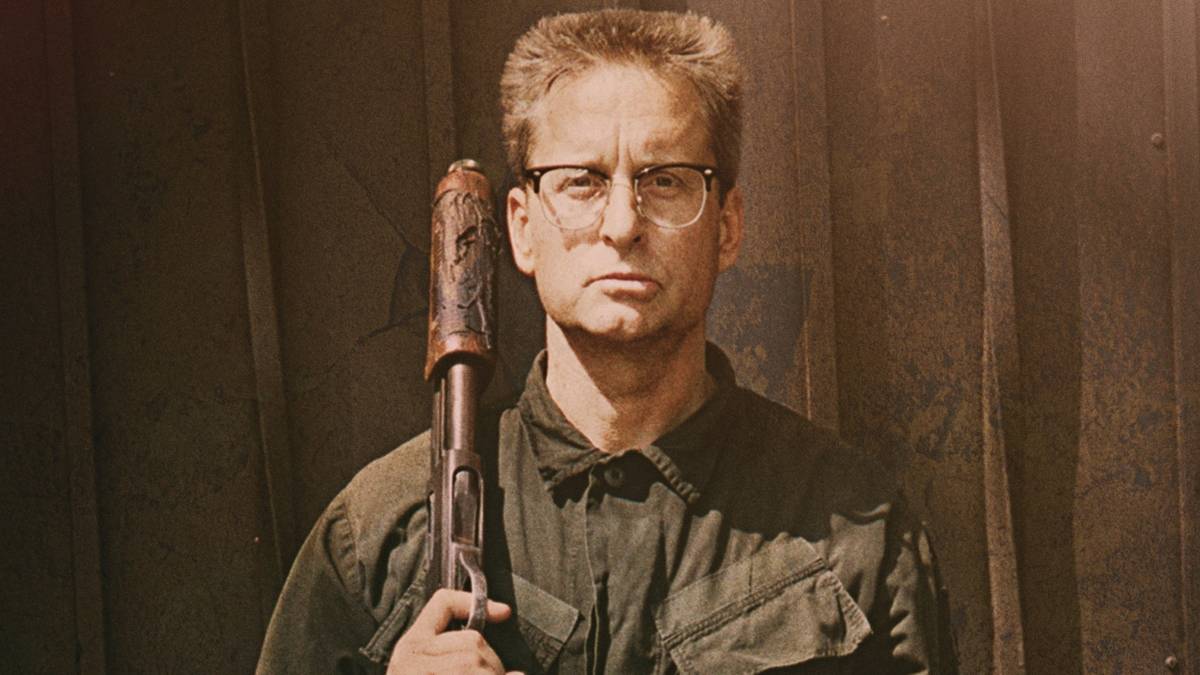
Published Aug 2, 2026, 5:23 PM EDT Maddie Spera is culture, film and entertainment journalist based in Texas with a passion for in-depth analyses and poetic language. She graduated from Sam Houston State University with a degree in English and a minor in communications. She's written for many reputable Texas-based publications including D Magazine, People Newspapers and The Eagle. If you're looking for stories that aren't about the latest Marvel or Star Wars blockbuster, she's your girl. Everybody adores a hero’s journey, and nothing’s made that clearer than the hype surrounding Christopher Nolan’s recently released The Odyssey. We love seeing a buff white guy (like Odysseus, played by Matt Damon) overcoming fantastical hardships. But doesn’t this model feel a little tired? What about an anti-hero’s journey? The 1993 thriller Falling Down explores this in a beautiful, sad, dark, thought-provoking way. It demonstrates a sort of inverse of The Odyssey-type format. The main character, William Foster (Michael Douglas), starts with the same objective as Odysseus: getting home. But instead of conquering the setbacks with courage and nobility, things really just go downhill for Foster. There is no grand victory or happily ever after. That’s what makes it such a masterpiece. Things Get Progressively Worse In 'Falling Down' Image via Warner Bros. The story begins with Foster sitting in standstill traffic on a Downtown Los Angeles highway. Cars are honking, there are ripples of heat waves in the distance, a fly repeatedly lands on Foster’s sweaty neck, and you immediately sense palpable tension. You almost feel suffocated right along with Foster as he desperately tries to get some fresh air by rolling down his car window (which is broken), and especially when he opens the door and walks away, abandoning his car on the highway. When another guy sitting in traffic pops his head out his car window and says, “Hey, where do you think you’re going?” Foster replies, “I’m going home,” a phrase he repeats several times throughout the film. How very Odysseus of him. But unlike Odysseus, Foster’s journey isn’t full of feel-good triumphs. In fact, Foster spends the rest of his day inflicting pain and suffering upon (mostly) innocent people. The next time we see Foster after he leaves the traffic jam on foot, he buys a soda at a convenience store. When the store owner rings him up and tells him the soda is 85 cents, Foster is set off and goes on a tirade about how the store owner is ripping off consumers. They have a brief physical tussle, with Foster eventually wrestling the shop owner to the floor and stealing his baseball bat. Foster then goes through the store smashing various items with the bat that he considers overpriced. As the day goes on, Foster’s actions become more and more malevolent — he wields a gun at a busy fast food restaurant when the cashier tells him they’re no longer serving breakfast. He shoots a bazooka at innocent construction workers. He gets further away from the archetypical hero as his journey goes on, and we become less confident that things will end well for this character. Michael Douglas Plays a Morally Gray Character One aspect of these epic heroes' journeys is the clear lines of division between good and bad — there’s never a doubt who’s the hero and who’s the villain. In Falling Down, things aren’t quite that easy. To some degree, viewers might empathize with Foster and his frustrations with society. As we continue to follow him throughout the film, and even as we watch him become increasingly violent, things pop up here and there that give us a little more insight into his life: we learn he’s recently divorced, unable to see his daughter, has a history of mental illness and he recently lost his job. Even with the egregious things Foster does throughout the movie, it’s hard not to feel bad for someone like him. Something else that contributes to this gray area is how Foster views himself. He seems surprised, even offended, whenever people are afraid of him. In the fast food restaurant scene, people flinch and cower as he walks around wielding a gun. He assures people to keep eating, enjoy their food, he’s not going to hurt them. He seems so sincere, you almost want to believe he’s a regular guy who’s just in a bad place, but would never hurt innocent people. This, of course, isn’t true. In 'Falling Down,' Home Is an Illusion Image via Warner Bros. And what is an epic journey without a grand homecoming? But instead of a loving family welcoming him with open arms, we get something much darker. For Foster, “home” doesn’t really exist, or at least not in the way he’s still hanging onto. Foster doesn’t live in the home he shared with his family anymore, and his ex-wife is terrified of him. Towards the end of the film, when he finally makes it to his old house, it’s empty. Knowing Foster was on his way, his ex-wife and daughter escape to the pier, where Foster eventually finds them. The look on his ex-wife’s face when she sees him is one of paralyzing fear. This is a man who is neither wanted nor welcome. Foster’s sliver of a saving grace is when we see him realize he’s not the hero he’s been insisting he is. When a police officer corners him at the pier and tells him to surrender, Foster looks incredulous and says, “I’m the bad guy?” His tone of surprise is so genuine that some part of you still empathizes with him—we can all relate to the fear and disappointment of becoming something we never thought we’d be. Foster’s journey is not the noble, glittering voyage of Odysseus. There are no great creatures or mystical sirens. There is only the humdrum of modern-day frustrations, the feeling of hopelessness in the face of the powers that be and the realization that you’re not the hero you think you are. This is a much more unique, real portrayal that presents a lot of important questions, starting (or perhaps ending) with: Am I the bad guy? For most of us, to some degree, the answer is yes, and isn’t that much more interesting? Release Date February 26, 1993 Runtime 113 minutes Director Joel Schumacher
This Forgotten Michael Douglas Thriller Is the Saddest Retelling of 'The Odyssey' Ever Made
Full Article
Original Source
Read the full article at Collider →KhanList aggregates and links to publicly available news content. We do not host full articles from third-party sources. Always verify important information with original sources.