
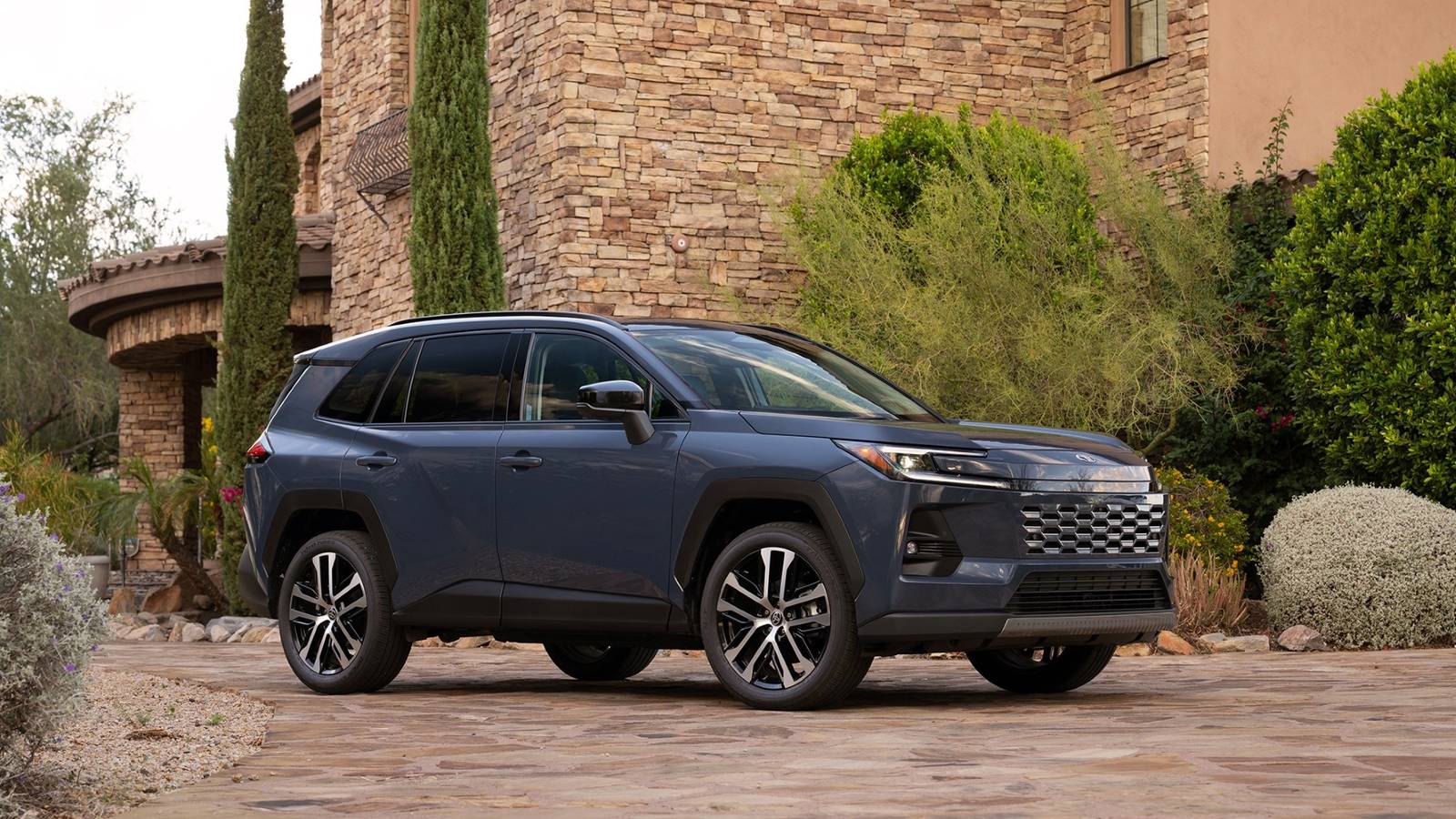
Published Aug 21, 2026, 12:15 PM EDT Adam Gray, a seasoned automotive journalist and content creator from the UK, joined the How-To Geek editorial team in January 2025. As an automotive journalist for How-To Geek, Adam breaks first-to-report news on the latest in automotive tech, as well as penning automotive features and reviews. Adam is also a contributor to one of How-To Geek's sister sites, TopSpeed, where he uses his media accrediation with manufacturers' press offices to gain access to the latest vehicles for subsequent review. Prior to joining How-To Geek, Adam worked on a freelance basis, contributing automotive content to a variety of business and lifestyle publications. His experience also includes time spent serving as senior editorial & auction content manager for SBX Cars, automotive content writer for Supercar Blondie, motoring editor for Portfolio North, and motoring editor - North East for Reach plc. When he's not putting the latest vehicle through its paces or testing out its tech, Adam can be found at his local ice rink playing ice hockey or at the Riverside Stadium supporting his beloved Middlesbrough FC. Adam also enjoys spending quality time with his three children: Ellie, Oscar, and Heidi. The Toyota RAV4 is already an easy SUV to make a case for. It's practical, efficient, and built around the kind of everyday usability that families tend to value, but its biggest advantage might not show up until you've owned it for a few years. That's because the RAV4 doesn't just keep fuel costs in check. Its relatively low maintenance, repair, and depreciation costs can make a meaningful difference to what you actually spend over five years. For families planning to hold onto their SUV rather than swap it out every few years, that's a big deal. The RAV4 may not be the flashiest choice in the segment, but its long-term ownership costs make it much easier to justify. In order to give you the most up-to-date and accurate information possible, the data used to compile this article was sourced from Toyota and other authoritative sources, including CarEdge, Edmunds, J.D. Power, and TopSpeed. The RAV4's fuel economy keeps everyday costs down The hybrid powertrain does the heavy lifting Credit: Toyota The RAV4's fuel economy is one of the biggest reasons its ownership costs stay manageable. The front-wheel-drive version returns 47 mpg city, 40 mpg highway, and 43 mpg combined, while its estimated range reaches 624 miles. Adding all-wheel drive brings the figures down slightly to 45 mpg city, 38 mpg highway, and 41 mpg combined, with a 609-mile range. Even the Woodland and XSE trims return 38 mpg combined, so buyers don't have to give up efficiency entirely when choosing a different version. That efficiency adds up over time. The front-wheel-drive RAV4 is estimated to save about $3,750 in fuel costs over five years compared with the average new vehicle, with annual fuel costs estimated at around $1,450. The RAV4 doesn't cost much to maintain Toyota keeps the long-term ownership bill under control Credit: Toyota Maintenance and repair costs are another reason the RAV4 stands out as a family SUV. CarEdge estimates that the RAV4 will cost $6,005 in maintenance and repairs over its first 10 years, which is a relatively manageable figure for a vehicle that's likely to spend years doing family duty. The five-year numbers look similarly reasonable. Edmunds estimates $4,427 for maintenance and $601 for repairs over five years and 60,000 miles, while CarEdge puts five-year maintenance at $1,938. Toyota also helps keep the early ownership costs predictable. Every 2026 RAV4 gets two years or 25,000 miles of scheduled maintenance through ToyotaCare, along with two years of 24/7 roadside assistance. The RAV4 loses surprisingly little value Depreciation is a big part of the ownership equation Credit: Toyota Fuel and maintenance aren't the only costs that matter when you're keeping an SUV for years. Depreciation can take an even bigger bite out of your wallet, and the RAV4's numbers look pretty good here. Edmunds estimates that depreciation accounts for $11,554 of the base RAV4 LE's five-year ownership cost, while CarEdge puts the figure at $10,377. That helps explain why the RAV4's overall five-year cost stays relatively manageable. The RAV4 also scores 82 out of 100 for resale value in J.D. Power's assessment. That means its strong resale performance can help limit how much value owners lose when it's eventually time to sell or trade it in. The RAV4's ownership costs add up to a surprisingly low total Five years is where the value becomes clear Credit: Toyota The individual costs tell one part of the story, but the five-year total is where the RAV4's advantage really becomes clear. Put fuel, maintenance, repairs, and depreciation together, and the numbers are surprisingly manageable. Edmunds estimates that a base RAV4 LE costs $36,219 to own over five years and 60,000 miles. That includes $7,831 for fuel, $4,427 for maintenance, $601 for repairs, and $11,554 for depreciation. CarEdge comes to a very similar conclusion, estimating five-year ownership costs of $35,894. Its calculation includes $7,700 in fuel, $1,938 in maintenance, and $10,377 in depreciation, reinforcing the idea that the RAV4's advantage is the combination of several manageable costs rather than one unusually cheap expense. The RAV4 comes with useful long-term coverage Toyota takes some of the worry out of ownership Credit: Toyota Toyota also gives RAV4 buyers a fairly comprehensive warranty and maintenance package, which can make the early years of ownership more predictable. Every 2026 RAV4 gets a three-year/36,000-mile basic warranty and a five-year/60,000-mile powertrain warranty. Since the lineup is now entirely hybrid, Toyota also covers the hybrid battery for 10 years or 150,000 miles, while other hybrid system components get eight years or 100,000 miles of coverage. ToyotaCare adds another useful benefit, covering scheduled maintenance for the first two years or 25,000 miles and providing 24/7 roadside assistance during that period. For a family planning to keep its RAV4 for years, that extra coverage helps make the ownership equation even easier to manage. The RAV4 has the safety tech families want Toyota gives the 2026 model a more advanced safety suite Credit: Toyota The 2026 RAV4 gets Toyota Safety Sense 4.0, bringing a broader range of driver-assistance features to the SUV. The system includes an updated pre-collision system, adaptive cruise control, lane-tracing assist, and a new emergency driving stop system designed to bring the vehicle to a controlled stop if the driver becomes unresponsive. Toyota also adds Proactive Driving Assist, which can help manage speed through curves and provide additional steering support in certain situations. The system can even recognize when the RAV4 is passing another vehicle and adjust its behavior accordingly. Other available features include blind-spot monitoring, rear cross-traffic alert, a panoramic view monitor, and Advanced Park. For families, that combination makes the RAV4 more than a low-cost SUV to run; it's also packed with technology designed to make everyday driving easier. The RAV4 gives buyers plenty of choice There's more to the lineup than one basic hybrid Credit: Toyota The 2026 RAV4 lineup isn't limited to a single formula for buyers who want low running costs. Toyota offers several versions, including the more rugged Woodland and sportier XSE trims, while the lineup also expands into plug-in hybrid territory for buyers who want more electric driving capability. That gives families some flexibility without moving away from the RAV4's hybrid-focused approach. Buyers can prioritize efficiency, capability, or a more upscale feel depending on which version fits their needs. Base Trim Engine 2.5L Inline 4 Hybrid Base Trim Transmission CVT Base Trim Drivetrain Front-Wheel Drive Base Trim Horsepower 183 HP @6000 RPM Base Trim Torque 163 lb.-ft. @ 3600 RPM Make Toyota Model RAV4 Segment Compact SUV It also helps explain why the RAV4 remains such a versatile family SUV. You're not locked into one interpretation of what a practical hybrid should be. The RAV4 doesn't feel stripped down Even the base trim gets useful tech The 2026 RAV4's value isn't limited to what it costs to run. Even the entry-level LE gets a 12.3-inch digital instrument cluster and a 10.5-inch Toyota Audio Multimedia touchscreen with wireless Apple CarPlay and Android Auto. Toyota also gives the LE dual-zone automatic climate control and a six-speaker audio system as standard. That means buyers don't have to move into a pricier trim just to get the basic technology and comfort features you'd expect from a modern family SUV. There are still reasons to move up the range, of course. The SE adds 18-inch black sport alloy wheels, blue interior stitching, heated front seats, and a power-adjustable driver's seat, giving buyers more equipment without making the base RAV4 feel like a stripped-down starting point. The RAV4 makes a strong long-term family SUV case Its low running costs make the SUV easier to live with Credit: Toyota The RAV4 doesn't need to be the most exciting SUV in its class to make sense as a family vehicle. Its combination of low running costs, strong resale value, useful technology, and long-term coverage gives buyers plenty of reasons to look beyond the sticker price. That matters even more for families planning to keep their SUV for several years. The RAV4 may not be the flashiest choice, but its ability to remain affordable long after you've driven it off the lot is a pretty compelling reason to choose it.
This family SUV's real advantage only becomes clear after five years
Full Article
Original Source
Read the full article at Howtogeek →KhanList aggregates and links to publicly available news content. We do not host full articles from third-party sources. Always verify important information with original sources.