
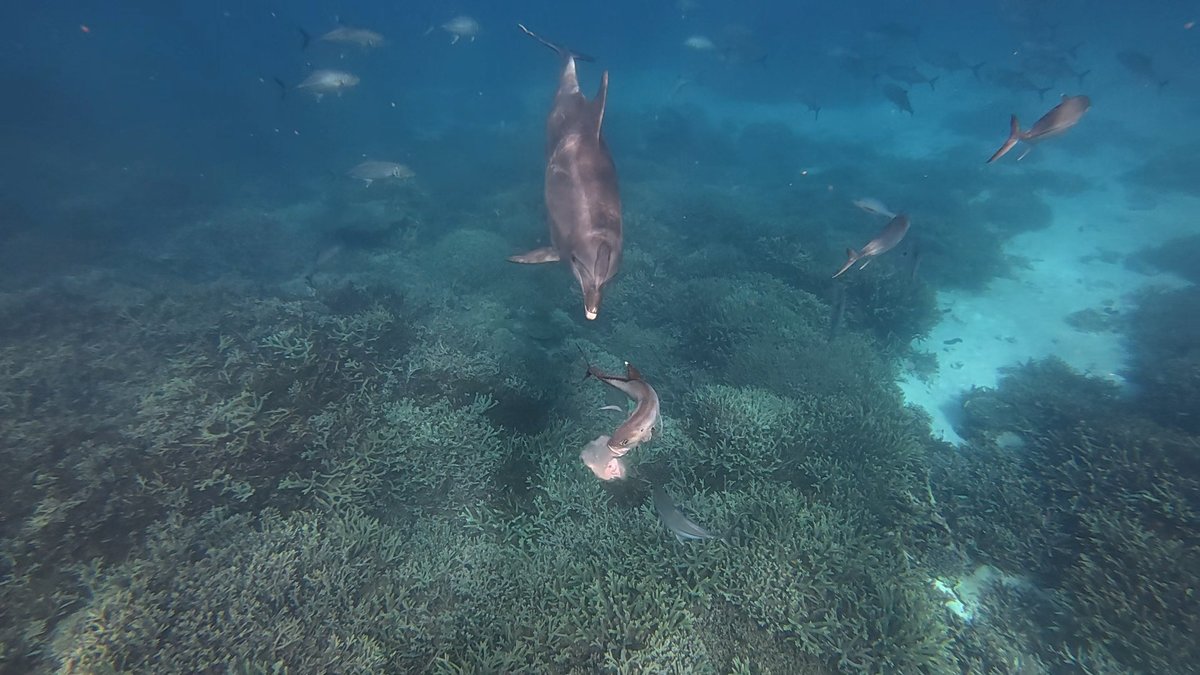
September 18, 20262 min read Add Us On GoogleAdd SciAmDon’t have the energy to catch your own meal? This dolphin has a gross solutionNew videos reveal how a male dolphin has perfected a never-before-seen hunting technique for his species: he terrorizes fish until they vomit—and then feeds on their regurgitated food.The observations, aside from being gross, offer some of the most compelling evidence of kleptoparasitism—the act of stealing food from other animals—in a cetacean.New videos reveal how a male dolphin has perfected a never-before-seen hunting technique for his species.On supporting science journalismIf you're enjoying this article, consider supporting our award-winning journalism by subscribing. By purchasing a subscription you are helping to ensure the future of impactful stories about the discoveries and ideas shaping our world today.While diving off Lady Elliot Island in Australia’s southern Great Barrier Reef between 2021 and 2025, researchers and divers documented 20 occasions when this male individual—a common bottlenose dolphin nicknamed “Bubbles”— hunted for regurgitated food from bigeye trevallies. Bubbles succeeded in his quarry 11 times.The nasty catch goes as follows: The dolphin approaches a school of fish and searches for a specific target. Once he has identified the unlucky fish, he starts chasing it, isolating it from the group. The chase continues until the fish vomits whatever food it has in its belly, and the dolphin quickly snaps up the regurgitated material.Bubbles generally went through this process multiple times in a single sitting, performing up to 10 chases in 30 minutes. As Bubbles hunts, he makes vocalizations that the researchers believe might stress his targeted fish out even more and cause it to vomit—but the echolocations may also help the dolphin pinpoint which fish have the fullest bellies.“Echolocation does allow dolphins to discriminate small differences in their targets’ shape, size and structure, so the dolphin potentially uses echolocation to decide which fish to target to get the best reward,” says Asia Armstrong, a marine scientist at the University of the Sunshine Coast in Australia and a co-author of the study. But more investigation is needed to confirm those hypotheses, she says. The findings were published on September 13 in Ecology and Evolution.Seeing the same dolphin repeatedly perform the behavior over and over is interesting and “makes it compelling evidence that this was more than simply opportunistic feeding,” says Jason Bruck, a dolphin behavioral scientist at Stephen F. Austin State University, who wasn’t involved in the research. “I would be cautious, though, about assigning intention. We can’t yet say the dolphin is pursuing the fish because it expects it to regurgitate.’’It’s also unclear whether Bubbles learned to hunt this way by himself or from other dolphins or whether this kind of kleptoparasitism is widespread among other cetaceans.“It’s very possible that other species use this tactic,” Armstrong says. “Dolphins and whales use a variety of unique foraging tactics, which is reflective of their intelligence, adaptability and ability to learn and pass information to one another socially.”Still, documenting these behaviors underwater is challenging, Bruck says. ‘’A dolphin can perform a complex feeding behavior several meters underwater, and we may never know exactly what happened,” he says.Subscribe to Support Independent JournalismGreat science journalism requires human expertise, time, effort and creativity. And it costs money. That’s why I and the journalists here at Scientific American hope you’ll join our community.When you subscribe, you are supporting staff and freelance journalists who are passionate about telling science stories that are true, important and compelling. Our editors and reporters are often experts in their fields, which means they understand the nuances of big discoveries and can untangle the breakthroughs from the hype. With a subscription, you are also supporting rigorous fact-checking to ensure the words we publish are precise and accurate. And you’re supporting original illustrations, graphics and photos that bring you closer to an advanced laboratory, an ice sheet in Antarctica or a space mission in orbit. You’re helping us craft other types of high-quality journalism as well: Our newsletters are carefully written, edited and curated by staffers you have or will come to know and love. Our Science Quickly podcast is based on original reporting, collaboration with editors and scientists and exacting production.Subscriptions keep this engine running so we can continue to deliver thoughtful, rigorous and independent science journalism to you. In an era of viral misinformation, this work is crucial. If you value what we do, I hope you’ll consider joining us as a subscriber
This dolphin terrifies fish until they puke—and then it eats their upchuck
Full Article
Original Source
Read the full article at Scientificamerican →KhanList aggregates and links to publicly available news content. We do not host full articles from third-party sources. Always verify important information with original sources.