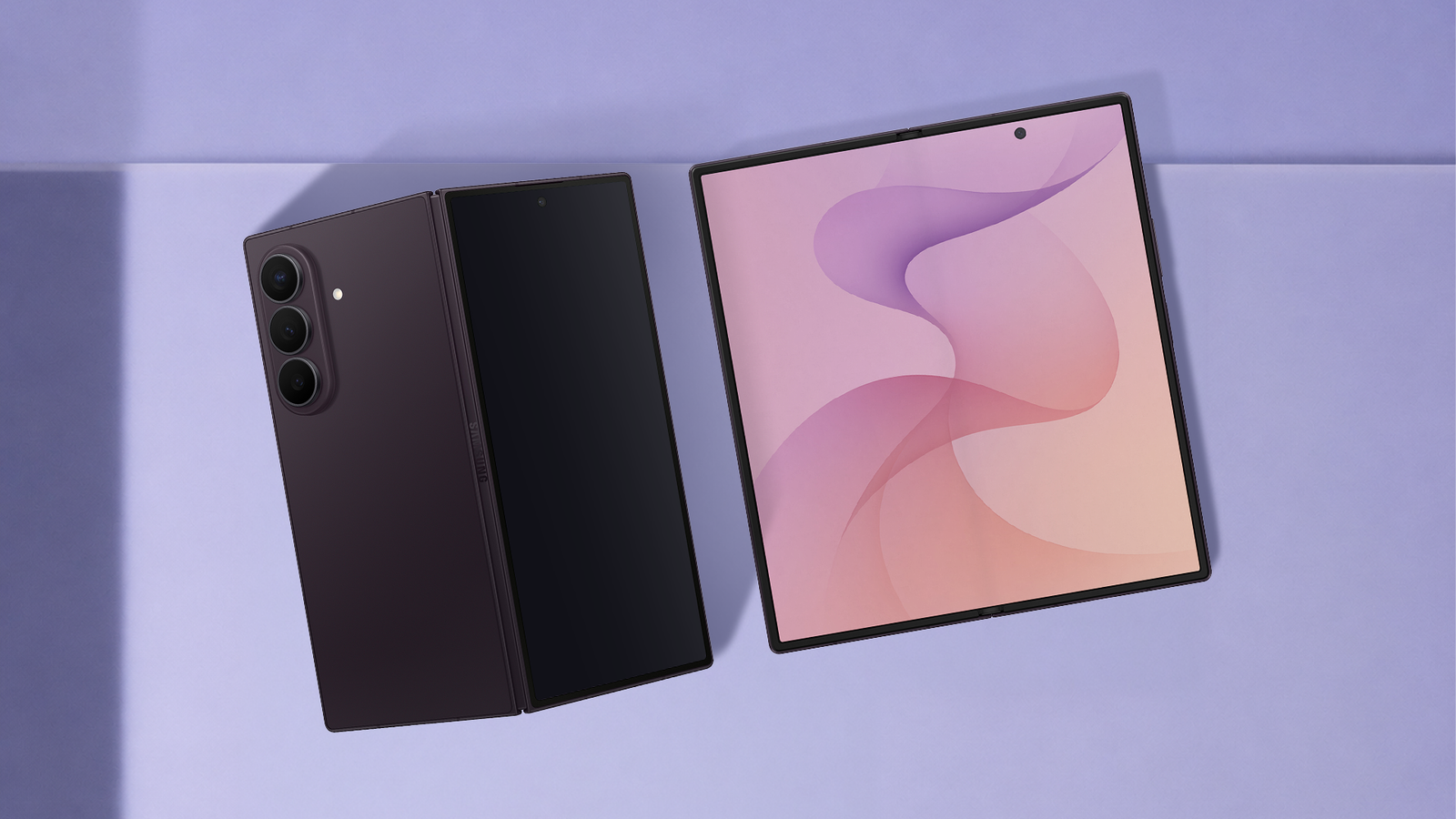
Published Jul 25, 2026, 12:15 PM EDT Jon Gilbert is a Features Writer for Android Police. I've covered Android since 2021, focusing on writing features and guides about Android apps and features that directly affect users. I've attended CES to uncover powerful hardware that isn't dominated by Google like the Mudita Kompakt. I trawl through Android news daily, hunting for stories that have real-world consequences. I hold a BA in History & Classics. When choosing a new Android phone for my personal use, I give most specs only a cursory examination. I can pick up any new Android phone above $500, and its performance, battery life, and cameras will be more than sufficient for my needs. However, the one element I regularly examine closely is the display technology. It's the only area of smartphone hardware that I continue to see notable developments in, which is why I'm fascinated by Samsung's new display technology and considering a Samsung foldable for the first time. Flex Titanium is something every foldable owner should care about An upgrade that brings tangible, real-world benefits The new Galaxy Z Fold 8 and its Ultra big brother feature a new display technology unimaginatively named Flex Titanium (because it uses a flexible titanium alloy). Samsung has been steadily improving its foldable displays since the first Galaxy Z device. It's easy to dismiss Flex Titanium as another marketing gimmick shrouding another step forward. But Flex Titanium isn't a step forward; it's a leap. As we found with our hands-on of the Z Fold 8 and Z Fold 8 Ultra, the crease has almost completely disappeared. This is the technology's most notable boon, but it doesn't stop there. The new display also brings anti-reflective improvements, which make the device a breeze to use outdoors for media (more on that soon). It boasts a peak brightness of 3,000 nits, a significant improvement over the Z Fold 7's 2,600 nits peak. The new display also allows more space for internal components, including a 4,800mAh battery. That's a 400mAh improvement over its predecessor. Charging speeds have also improved to 45W wired and 25W wireless, but I'm not sure this is thanks to Flex Titanium. A hardware upgrade that brings improvements you'll notice every day This is the kind of thing I want to see in a new phone To be worth upgrading, a device should boast improvements you don't need to look for. Performance upgrades are all well and good, but if they don't affect your phone in day-to-day use, do they really matter? A near-invisible crease. A uniform display. Anti-reflective properties. Peak brightness improvements. A bigger battery. These elements make a significant impact on using a foldable phone. Is Flex Titanium necessary for foldables? Technically, no. But it feels like it is. The Galaxy Z Fold 8 is the first book-style foldable I would consider buying A user-friendly design at last The other notable feature of the Galaxy Z Fold 8 (perhaps its defining feature) is its new aspect ratio. It's ditched long in favor of wide, and gosh, it's so much more satisfying to use. The aspect ratio of previous Z Fold devices was always a little awkward to use. But the black bars that plagued videos on the previous phone are lessened. Watching YouTube feels much more natural. The benefits extend beyond videos. I read a lot of books on my phone, perhaps one a week. The experience is fine on my Google Pixel 10 Pro, but it would be stellar on the Z Fold 8 thanks to its book-style size. The strange thing is that this is mostly an illusion. Videos aren't any bigger on the Z Fold 8 than the Z Fold 8 Ultra (which retains the "old" aspect ratio). The black bars are just smaller. Reading is just as easy on a tall screen as a wide one. But the Z Fold 8 feels better. Sure, it's a little awkward to use one-handed, but isn't that every new phone? Samsung Galaxy Z Fold 8 Ultra (left), Samsung Galaxy Z Fold 8, and Samsung Galaxy Z Flip 8 The Z Fold 8 isn't the first "wide" foldable. Huawei's Pura X Max, released earlier this year, boasted a similar design. The rumored iPhone foldable is also said to feature the same format. The Pixel Fold has featured a wider ratio in every iteration. It's a clear shift in what manufacturers consider the "standard" for book-style foldables. The Z Fold 8 is the first foldable I've considered buying, but competition is about to get a lot stronger. Price is still the biggest barrier to owning a foldable It doesn't matter how good its design and features are; the Z Fold 8 Ultra's price starts at $2,100. $2,100. For a phone. If you're paying that much, you've missed out on one of the various deals currently available. For example, my carrier is offering the phone via a payment plan for a total of £1,476. That's a £500 saving. So in a year or so, when the second-hand refurbished devices start filling the market, and Black Friday deals add even bigger discounts, I'll finally be able to enjoy the Z Fold 8 for personal use. But until then, I'll spend my money on fun and useful technology instead.
This display upgrade made me excited about Samsung's foldables again
Full Article
Original Source
Read the full article at Androidpolice →KhanList aggregates and links to publicly available news content. We do not host full articles from third-party sources. Always verify important information with original sources.