
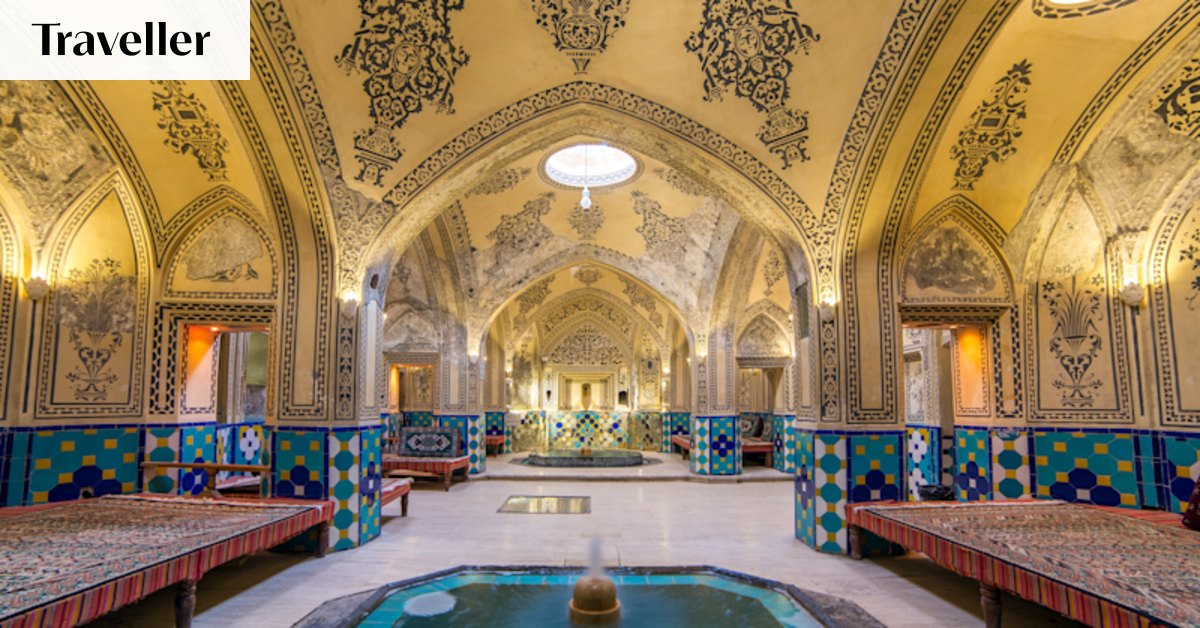
November 5, 2026 — 5:00amUnless you’re attending a private hammam, the first thing you need to know is that you will get very naked in front of other people but rest assured, men and women are segregated.When you do get naked no one will care, but if you’re shy or it’s your first time, it’s going to be disconcerting. Don’t stare and if you’re with friends, don’t chatter, and if you have to speak, do it in hushed tones.The second thing you need to know is that you’ll get very intimate with your bath attendant who will scrub crevices you didn’t know you had, or cradle you like a baby when they’re soaping your hair. Don’t resist any of it. The more jelly-like you are, the more wonderful the result.Sultan Amir Ahmad Bathhouse in Kashan, Iran, was constructed in the 16th century.iStockIn Islamic cultures, a hammam is a steam bath and a place of public bathing. In earlier times, the baths were a way of cleaning the body, an essential ritual in Islam, when there was no private plumbing, but they are also a social gathering place.Most hammams, whether neighbourhood baths or the glammed-up versions for tourists, consist of a series of rooms: a changing room, a cold room, a warmer room and a hot room, filled with steam that is produced in furnaces and cisterns under the floors in traditional bathhouses.Sign up for the Traveller newsletterThe latest travel news, tips and inspiration delivered to your inbox. Sign up now.There’s usually a heated marble slab on which you lie to be massaged – massages are inexpensive and tipping is customary. Water fountains or hoses are used to repeatedly sluice you with water.Each culture has its variation of a bathhouse but the two most familiar styles of hammam are Turkish and Moroccan. The treatments slightly vary from each other, although both will get you steamy, scrubbed, oily and wet.Selimiye Hammam in Istanbul was restored in 2018 and is now used as a library, restaurant and a small museum. iStockThe rituals are similar. You’ll first be shown to a vestiary or “cold” room, where you might be offered a tea or cordial. Then you’ll be asked to change. In Turkey, you might be given a small towel to cover yourself (barely), or a robe and clogs or slippers, depending on how upscale the hammam is.In both styles of treatments, you’ll enter a steamy room and be asked to lie on the hard, warm slab, where you’ll be sluiced with water, left to steam for 15 or 20 minutes, then scrubbed vigorously with an exfoliating glove.In Moroccan hammams, black soap, a buttery soap made from olives, is used for the massage and to get your skin prepped for the vigorous scrub. This always feels dangerous – you’ll slip and slide all over the marble slab until it’s washed off.In Turkey, the massage might involve foaming bubbles that envelop you in pink froth. You might be sitting on a stool rather than lying down.After the vigorous scrub, which may feel like you’ve lost several layers of skin, there’s the moment we all live for: when the hair is gently washed (in Morocco the shampoo is orange-blossom scented), you’re dried carefully, wrapped in towels, and sent back out to the warm “cold” room for mint tea and recovery, like a very clean and happy baby.From our partners
This daunting ancient ritual may be the best thing you do on holiday
Full Article
Original Source
Read the full article at Smh →KhanList aggregates and links to publicly available news content. We do not host full articles from third-party sources. Always verify important information with original sources.