
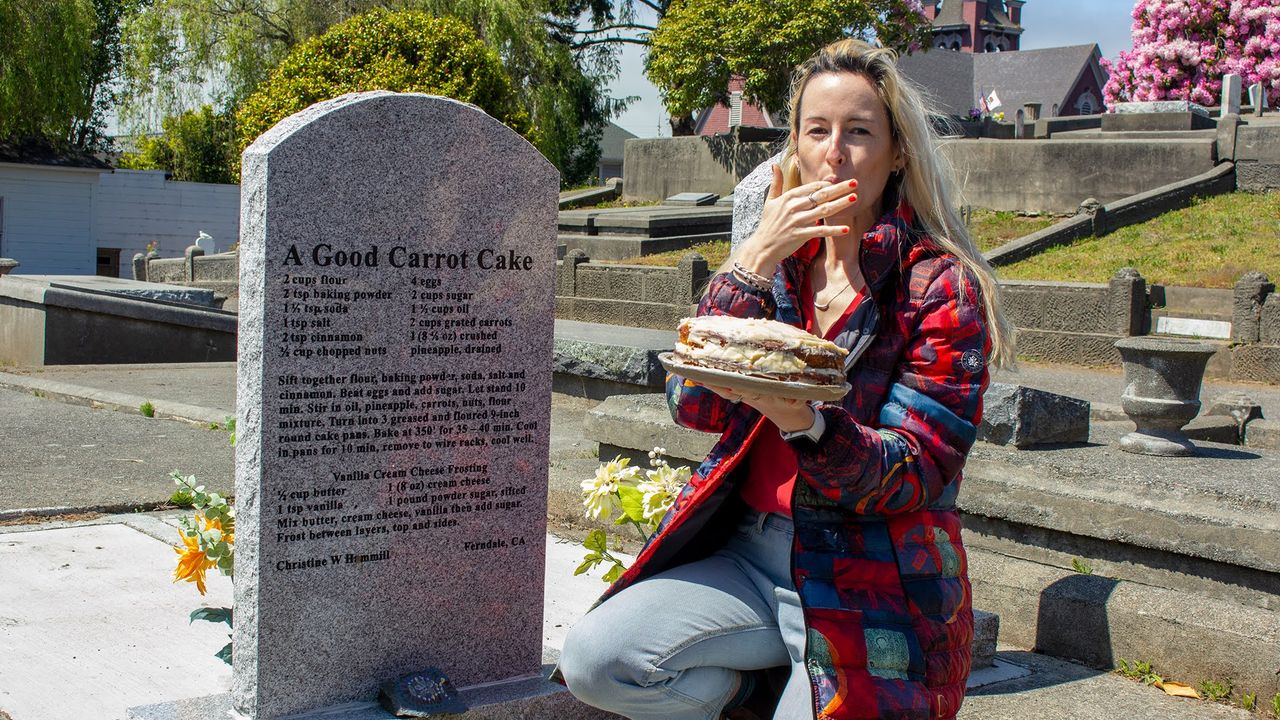
A recipe quite literally taken to the grave?That’s the foundation for creator Rosie Grant’s ongoing archival project-turned-cookbook To Die For. And it’s exactly how it sounds.Apropos for Spooky Season, the book collects “gravestone recipes” so synonymous with departed loved ones they’re immortalized on their headstones. It celebrates the legacies of ordinary folks who did extraordinary things. They were teachers or coaches, the local dentist, the neighbor everybody knew, and they all showed love through cooking for their communities.What began as a light curiosity turned into a larger, more emotional realization around identity, place, and what we leave behind.Over the past five-and-a-half years since starting her TikTok and Instagram accounts under the username ghostly.archive during a digital archives internship at the Congressional Cemetery in Washington, D.C., Grant’s travels have taken her across the United States—as far as Nome, Alaska—as well as Nova Scotia, to visit their final resting places and families to learn their stories.To Die For features many baked goods that yield dozens per batch, evoking comforting funeral foods. Cookies and cakes adapting mostly traditional Americana nostalgia (spritz cookies, brownies, carrot cake) appear alongside more surprising inclusions like a WWII-era guava cobbler; glazed, no-bake blueberry pie; and the little-known true story behind the beloved Irish coffee. Other recipes list ingredients for a Jack Daniel’s marinade, easy cheese and ranch dips, rustic breads, and savories like meatloaf (“Texas’ best,” per the engraving), fried ripe tomato, spaghetti chicken casserole and kasha varnishkes, to name a few.It’s an almost feel-good way to get into the topics of mortality and death, Grant assesses, as sitting around the table to share a meal or stepping into a memory-filled kitchen disintegrates conversational barriers. Though she was raised by parents who gave ghost tours at local cemeteries in Alexandria, Virginia, she says her family was much more comfortable with the idea of hauntings than discussing and planning for the inevitable themselves.“Something like a recipe feels so life-giving,” Grant expresses, adding that these conversations could also encompass music or travel. “[Talking about] these many life-filling moments might be an easier way to talk about tough topics.”Photo by Rosemary GrantThe 40 recipes were all approved by family members of the deceased, whom Grant tracked down mostly through internet sleuthing (obituaries and social media) to ask permission to publish.Richard Dawson and his daughter, Nailah, set the tone for the book when Grant met them two years after she first found out about Dawson’s mother. Naomi Odessa Miller-Dawson’s headstone is outfitted with a recipe book open to her famous spritz cookies atop her epitaph in Brooklyn’s Green-Wood Cemetery. Her fierce-but-quiet passion for baking has been exalted by the family since her passing in 2009, making Naomi’s one of the most well-known gravestone recipes in country through online chats and Reddit threads.Initially Grant tried to separate the recipe from its provider and solely focus on the food itself, but the process didn’t feel quite right.“The way Richard talked about waiting by the oven for the cookies to come out, recalling smells from when he was a little kid, trying to eat them right off the tray even though it’s still a little hot,” Grant recalls. “It really changed the project in the sense that it made the project.”Grant has since cooked with seven families highlighted in To Die For, and has shared her pilgrimages to the gravesites with the goods themselves to pay respect. With her years of research and immersion, Grant notes that burials and grave markers have become so much more personal over the course of time. Granite headstones have allowed for almost any customization after mass-industrialization made the tools to work on it more accessible, and are much more durable compared to the formerly used wood, slate, or marble, making for lasting memorials. Proof cemeteries are beautiful grounds still vibrating with life and knowledge, if you’re open to it.Photo by James JelinHer approach to keeping such individual histories alive has deeply resonated, furthering her relationship to the Death Positive Movement: formed by hospice workers, death doulas and other care workers who advocate that discussions around mortality and afterlife planning make for a healthier society; and establishing a more intimate sense of collectivity amongst strangers across the globe.While she’s gotten her share of detractors for various reasons (mainly self-identified Mediums claiming the deceased, and in one case–one participant still living, didn’t appreciate their culinary secrets being shared), many folks have found inspiration as they consider their own gravestone recipe. Some commenters, meanwhile, express regret around not asking their own loved ones for recipes or helpful tips that most instructions don’t leave nuance for when they had the chance.“I thought I could just have this on socials and do a PDF format online,” Grant says. “[The families] were like ‘We like the idea of a physical book. Something that’s precious.’ Even the visual style of it is meant to be something you’d inherit from a grandparent.”The most underrated section of her book offers a thoughtful list of questions to begin documenting one’s own familial food legacies.“It can feel really morbid to be like ‘Hey mom, can you write down your recipe because you’re gonna die someday?’” Grant says jokingly. “That can look like a lot things. Take pictures of the recipe box and text it to all the cousins or the family group chat and save it to a drive somewhere. Cook with your family member. Teach me how to do it, let’s cook it together. Passing down that knowledge, there’s something very powerful about that shared experience.”Sentiments from both participants in the book and Grant’s audience echo how revisiting these recipes offers sensory catharsis in addition to talking about their grief. What started as a nerdy food adventure manifested into an exploration of what it means to be remembered for how people made us feel when we were with them; highlighting turn-of-the-century attitudes toward heritage, family and home life, and serving as a “rite of passage” or way to pass the torch to the next generation.Grant reminds us of observing and maintaining such rituals. “If we don’t do it, nobody else will.”
This Cookbook Author Explores Cemeteries for Recipes To Die For
Full Article
Original Source
Read the full article at Bonappetit →KhanList aggregates and links to publicly available news content. We do not host full articles from third-party sources. Always verify important information with original sources.