
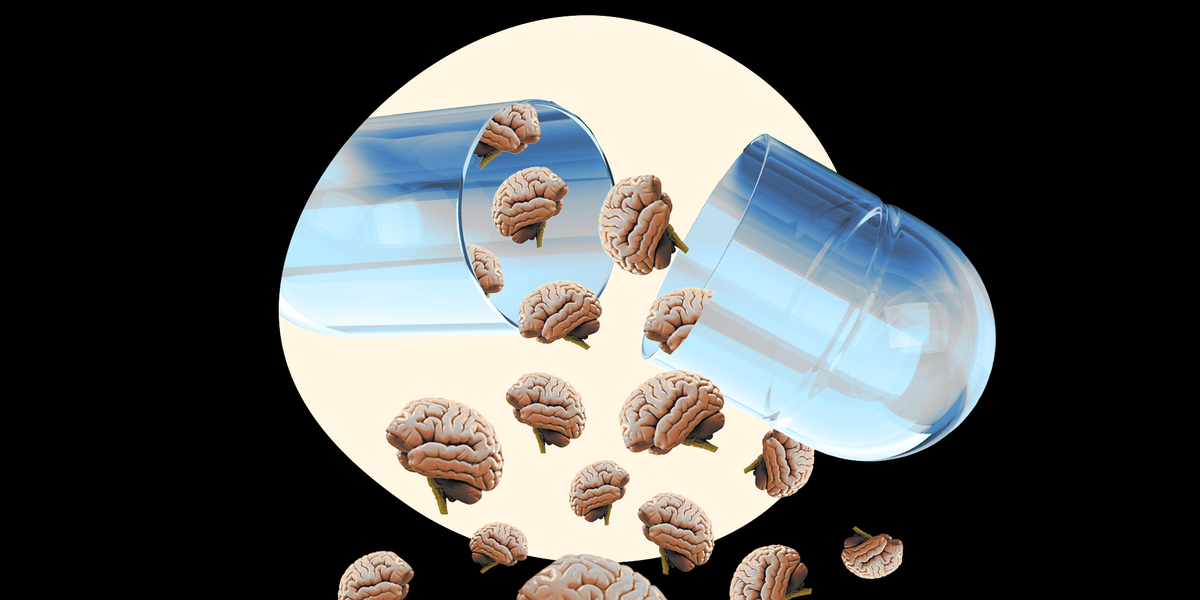
3 min readA medication commonly used to strengthen bones was just linked to a lower risk of dementia—and women were especially impacted. These drugs support bone density and could impact the brain.Doctors say more research is needed.For all of the havoc dementia causes to a person's life, scientists are still trying to figure out exactly how to prevent it. While keeping your brain and body active and following a healthy diet seems to help, there doesn't seem to be a pill you can pop to lower your risk of developing the devastating disease. But new research suggests that a common osteoporosis drug might be worth investigating further.It's a class of medications called nitrogen-containing bisphosphonates (or NBPs). While these are typically used to strengthen bones in people with osteoporosis, NBPs could have the added benefit of supporting brain health as you age, too.It's important to stress this now: The researchers found a link between people who used NBPs and a lower risk of dementia, but they didn't prove that the medications themselves actually dropped the risk. Still, doctors say there could be something to this. "The association is intriguing," says Anna Hohler, MD, director of neurology for Northwell Health's Westchester Region, and chair of neurology at Phelps Hospital and Northern Westchester Hospital.Here's what experts want you to take away from the findings.Meet the experts: Ching-Lung Cheung, PhD, study co-author and associate professor in the Department of Pharmacology and Pharmacy at the University of Hong Kong; Clifford Segil, DO, a neurologist at Providence Saint John's Health Center in Santa Monica, California; and Anna Hohler, MD, director of neurology for Northwell Health's Westchester Region, and chair of neurology at Phelps Hospital and Northern Westchester Hospital.What did the study find?The study, which was published in the journal Alzheimer's & Dementia, analyzed the electronic medical records of more than 120,000 patients aged 60 and older in Hong Kong. All of the participants had osteoporosis or fractures due to fragility (meaning, their bones had weakened).Researchers discovered that people who took NBPs had a 16 percent lower risk of developing Alzheimer's disease and related dementias compared to those who didn't take medication for osteoporosis. But when they compared those who used NBPs to those taking other types of osteoporosis medications, the dementia risk was 24 percent lower.The link seemed to be especially strong in women and patients who had hip fractures.The researchers were inspired to look into NBPs and Alzheimer’s because the drug had been shown to improve cognitive function in previous animal models of neurotoxicity and Alzheimer’s disease, says Ching-Lung Cheung, PhD, study co-author and associate professor in the Department of Pharmacology and Pharmacy at the University of Hong Kong. “These findings led us to investigate whether their use might also be associated with a lower risk of dementia in humans."Why might an osteoporosis drug protect against dementia?While the study didn't prove that NBPs were responsible for the lowered risk, doctors have a few theories on what could be driving this.For one, it’s possible that the link is more indirect, according to Clifford Segil, DO, a neurologist at Providence Saint John's Health Center in Santa Monica, California. NBPs improve bone density over time, which allows people to be more active, Dr. Segil says. "Broken bones do not cause dementia but do decrease activity," he says. (Being sedentary is a risk factor for dementia.)There may also be something about NBPs themselves that could lower the risk of dementia, though. "Some researchers speculate that these medications could influence inflammation, immune pathways, or other biological processes involved in neurodegeneration," Dr. Hoehler says. But, she points out, more research is needed.Where do things go from here?For now, doctors don't plan to prescribe NBPs in an effort to lower dementia risk. But Dr. Cheung says it should make people feel confident about using this class of medication for bone health. "Given the low uptake of osteoporosis treatment, people with osteoporosis should consider appropriate anti-osteoporosis medication, which may offer an additional benefit for brain health," he says. Even though osteoporosis drugs are commonly available, uptake has been historically low—studies have previously estimated that around seven percent of women with osteoporosis actually take medication for it.Ultimately, doctors say that a clinical trial is needed to see if NBPs actually lower the risk of dementia. "If future studies confirm these results, they could open an exciting new avenue for Alzheimer's prevention or treatment," Dr. Hoehler says.Carina Hsieh, MPH, is the deputy features editor of Women’s Health. She has more than a decade’s worth of experience working in media and has covered everything from beauty, fashion, travel, lifestyle, pets, to health. She began her career as an intern in the fashion closet at Cosmopolitan where she worked her way up to Senior Sex & Relationships Editor. While covering women’s health there, she discovered her passion for health service journalism and took a break to get her Masters in Public Health. Post-grad school, she worked as a freelance writer and as The Daily Beast’s first Beauty, Health, and Wellness Reporter. Carina is an alum of the Fashion Institute of Technology and the Yale School of Public Health. She and her French Bulldog, Bao Bao, split their time between Brooklyn and Connecticut. She enjoys reformer Pilates, (slow) running, and smelling the fancy toiletries in boutique fitness class locker rooms.
This Common Drug Was Just Linked to a 24% Lower Risk of Dementia
Full Article
Original Source
Read the full article at Womenshealthmag →KhanList aggregates and links to publicly available news content. We do not host full articles from third-party sources. Always verify important information with original sources.