
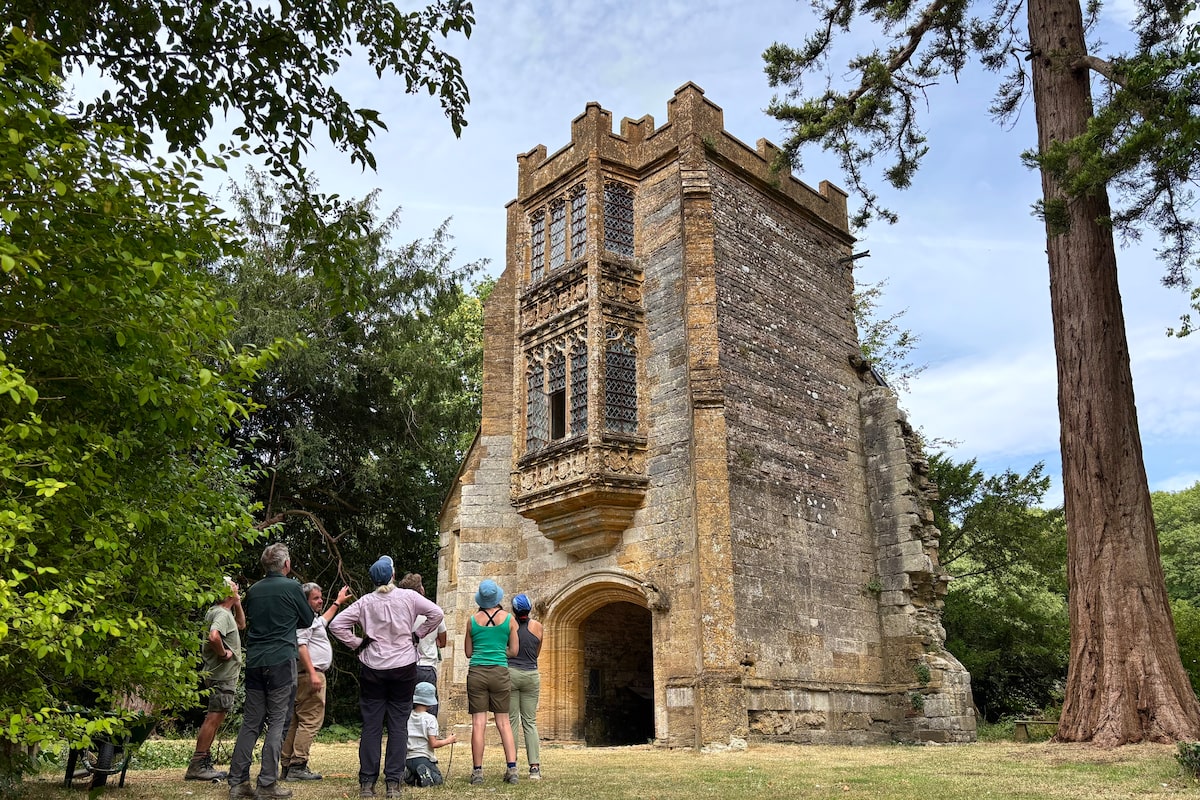
Open this photo in gallery:The Abbot's Porch, constructed around 1500, is one of the few structures remaining of the once-sprawling monastic complex.Irene Galea/The Globe and MailThe hot English sun is starting to cast long shadows over the trenches at Cerne Abbey, and the trays by their edges are overflowing with the day’s finds: animal bones scarred with ancient butchery marks, warped and rusted nails, carved stone, small metal fragments and shards of green-glazed, 14th-century pottery. More than 30 volunteers − students, working professionals and retirees − have travelled from around the world to uncover these treasures, exposing the remnants of a 1,000-year-old monastery that, until recently, had been forgotten beneath metres of Dorset dirt. Now, the amateur archaeologists take sips from their water bottles and pull off their gloves, weary after a day of trowelling.Open this photo in gallery:The Abbot's Porch overlooks the field which once contained the monastery's cloister, outbuildings, and the northern aisle of the monastic church.Irene Galea/The Globe and MailThe volunteers, under the supervision of Hugh Willmott of the University of Sheffield, are more than mere labour. As university budgets have become strained in Britain, leaving little spare cash to support fieldwork, digs like the one at Cerne Abbey increasingly rely on volunteers and the fees they pay to carry on research.Domestic tuition caps have limited university revenues even as costs have grown and international student enrolment has fallen. The result: As at other universities, Prof. Willmott’s own world-renowned archaeology department was combined with the school’s history department four years ago.Open this photo in gallery:On-site, volunteers start their day with a trip to the tool barn, where trowels, shovels and other excavation equipment is stored overnight, along with other finds that have yet to be washed.Irene Galea/The Globe and MailArchaeology programs escaped a 2021 funding cut that saw government grants for other “high-cost” disciplines, valued at £250 per student, reduced by half. But this June, the Department for Education changed tack, ruling that archaeology would lose all its funding through that stream in 2026.And so the fees paid by the volunteers − about $660 per five-day session this year, which includes tent accommodation and all three meals per day − are what fund much of the medieval monastery dig, including the costs to hire the excavating machine and operator (upwards of $1,500 per day) and to run post-excavation lab analysis.Open this photo in gallery:For volunteers, the dig is an opportunity to learn excavation techniques as well as other archeological skills, such as section drawing.Irene Galea/The Globe and MailAlong with the use of some equipment, “the university’s contribution is my salaried time,” said Prof. Willmott, from under the shade of a tree near the open pits. “Everything else comes from crowdsourcing the money.”Despite the funding challenges, Prof. Willmott has returned to the bucolic village of Cerne Abbas for four years now, to piece together the story of medieval monastic life here while searching for the earliest traces of development on the southern English site.Cerne Abbey was founded in 987 by Æthelmær the Stout and quickly became a significant Benedictine monastery, with a church, cloisters and outbuildings. It was destroyed after King Henry VIII gave the order in 1539 to dissolve it, along with 800 other Catholic monasteries across England, Wales and Ireland. Open this photo in gallery:Each excavation at Cerne Abbey adds more to the broader picture of monastic life in England, says medieval archeologist Hugh Willmott, whose team discovered the structure's remains in 2022.Irene Galea/The Globe and MailThe destruction of the abbey was so rapid that just decades after its razing, locals were unsure of its precise former location. It wasn’t until 2022, when Prof. Willmott’s team ran geophysical surveys of the site, that it was rediscovered. A question that lingers alongside the hunt for walls, floor surfaces and artefacts: What is the relationship between the abbey and the nearby chalk hill drawing of the fully naked Cerne Giant, thought to have been created between 700 and 1100 AD?“Each season, we’re adding a little bit to the bigger picture,” Prof. Willmott said. Volunteers start their day at 7 a.m., when they pull on dusty dig clothes, assemble for breakfast in a circle of white plastic chairs and pack their lunches for later: sandwiches, clementines and crisps.Open this photo in gallery:Cerne Abbey, founded in 987, became one of southwest England's most important Benedictine monasteries in the centuries that followed. It was mostly destroyed in the mid-16th century after King Henry VIII ordered its dissolution, along with about 800 other such sites.Irene Galea/The Globe and MailAt the excavation site a few minutes’ walk away, the volunteers carefully extract finds from refuse pits beneath the former kitchen’s floors, reveal hearths and stone walls and uncover layers of burnt material to help establish different periods of building use. Some days, the work is strenuous and can involve heaving out heavy, sharp-edged flints to help identify the purpose of a ditch or taking picks to layers of sun-hardened soil to reveal the different colours beneath. But for volunteers, the physical effort − and the financial contribution − are worth it.“I’m driven by the same sense of wonder and curiosity I had as a kid,” said Andrew Calderwood, an educator from New York State. Mr. Calderwood has volunteered at Cerne for the past three years. Open this photo in gallery:Catherine Rose and her mother Denise Hendrie, who owns a local pub, volunteer at the site cleaning finds – mainly bone, pottery, and other small objects.Irene Galea/The Globe and Mail“I feel I’m directing my resources toward efforts that provide those glimpses − that allow us all a better understanding of the past,” he said.Luckily, the Cerne Abbey dig, now in its fourth year, has something else to help keep it going: the villagers, many of whose homes contain materials removed from the abbey centuries ago. The local historical society has raised funds for the excavation, and residents act as on-site stewards to welcome and inform visitors and tourists. Open this photo in gallery:Experts believe that Cerne Abbey would have closely resembled the church in the nearby town of Sherborne, also originally built as part of a Saxon cathedral and Benedictine monastery. The church was purchased to serve as a parish church for the town in 1539.Irene Galea/The Globe and MailOthers take turns delivering cake for the diggers’ afternoon break or sign up to be “shower families,” allowing dusty volunteers to use their homes every evening to wash up. The village of about 800 residents comes alive during the highly anticipated dig weeks, said local pub owner Denise Hendrie, who spends some afternoons cleaning finds on-site with her daughter Catherine Rose. “Everyone really gets involved,” Ms. Hendrie said, gently scouring an animal bone with a toothbrush. “It’s sparked an interest in archaeology for me, personally. I just love seeing how it all develops.”
This British archaeological dig gets by with a little help from its friends
Full Article
Original Source
Read the full article at Theglobeandmail →KhanList aggregates and links to publicly available news content. We do not host full articles from third-party sources. Always verify important information with original sources.