
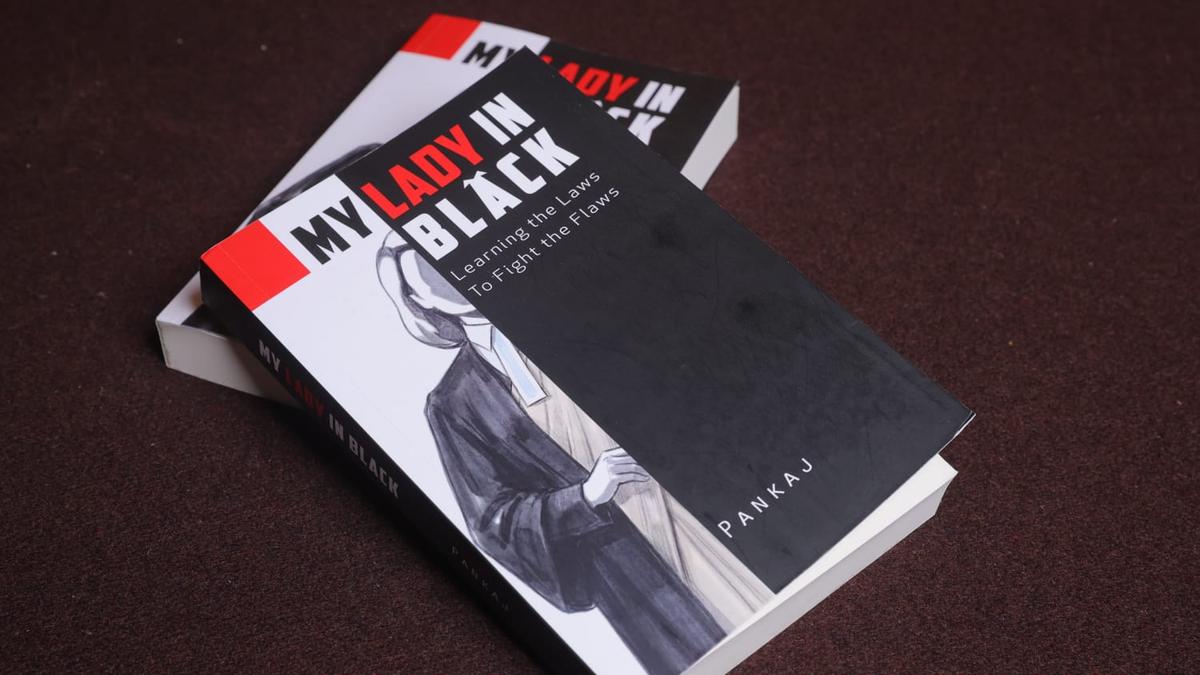
For much of his career, Pankaj was on the other side of the law. When he became the Assistant Provident Fund Commissioner in 1994, his work placed him at the intersection of labour rights and enforcement. Over the years, he led action against employers accused of defaulting on provident fund dues and exploitative practices, including enforcement drives involving factory workers, weavers and daily wage labourers. Some of his operations involved powerful industrialists and corporate houses.Today, as Additional Central Provident Fund Commissioner (HQ), he heads EPFO’s public grievances vertical at the national level. He also spearheads Nidhi Aapke Nikat, EPFO’s nationwide district outreach initiative, and has headed its publicity and communication division.But between those two points in his career lies the experience that became the subject of his book, My Lady in Black: Learning the laws to fight the flaws, published by PenManush, and already picked up for a film adaptation.Two sides of the same coinOn June 22, 2006, Pankaj became the target of what he describes as a conspiracy arising from personal vendetta and carried out through the machinery of law enforcement. What followed was a 14-year legal battle, including two months in Hotwar jail, a chargesheet he says relied on fabricated testimony and a sanction order invoking a provision of law that did not exist. The case eventually ended in his acquittal. “It was very difficult. Once you are trapped, you are condemned,” he says.The book, launched at India Habitat Centre, New Delhi, on August 30, in the presence of senior civil servants, members of the judiciary, and journalists, is based on true incidents, with some creative liberties. “Once you are accused, it is headline material while acquittal is like a footnote,” he adds. The woman behind the titleAt the heart of the book is his wife, Jyotsna, whose role during those years inspired its title. An MBA in Finance who returned to university to study Law, she examined the case closely and pursued its legal complexities as the battle continued. “What my wife did was next to impossible,” says Pankaj. “Studying something that was alien just to get me past this hardship.”He recalls a moment during the trial when the Public Prosecutor kept asking leading questions. Jyotsna pursued the issue, studied it and continued fighting and petitioning. What prison taught himHis two months in prison became another unexpected chapter of the experience. Pankaj describes encountering what he calls the “dark underbelly of society”, meeting undertrials, convicts and people accused of serious crimes.Yet prison also challenged some of his assumptions about those he encountered. He met prisoners who were keen to learn English and others who spoke about aspirations of becoming MPs or MLAs.The experience, he says, made him look at society differently. It also gave him a perspective on people and institutions that he could not have acquired from the other side of the system.The cost of justiceWriting the book became a way of processing those years. “It was cathartic to write the book,” he says.Alongside the personal account, Pankaj examines the functioning of the trial court, including cross-examination, legal procedure and aspects of the process that he believes are not widely understood outside the courtroom. His own experience, he says, became “a big learning”, giving him an understanding of how a case unfolds from the perspective of the accused.But acquittal did not erase the years that preceded it. For Pankaj, that is ultimately what My Lady in Black seeks to preserve: not merely the legal record of a case, but the emotional cost of living under an accusation for years. “Justice wins but costs you a lot,” he says. Published - September 07, 2026 05:34 pm IST
This book by a senior civil servant recounts a 14-year fight for justice
Full Article
Original Source
Read the full article at Thehindu →KhanList aggregates and links to publicly available news content. We do not host full articles from third-party sources. Always verify important information with original sources.