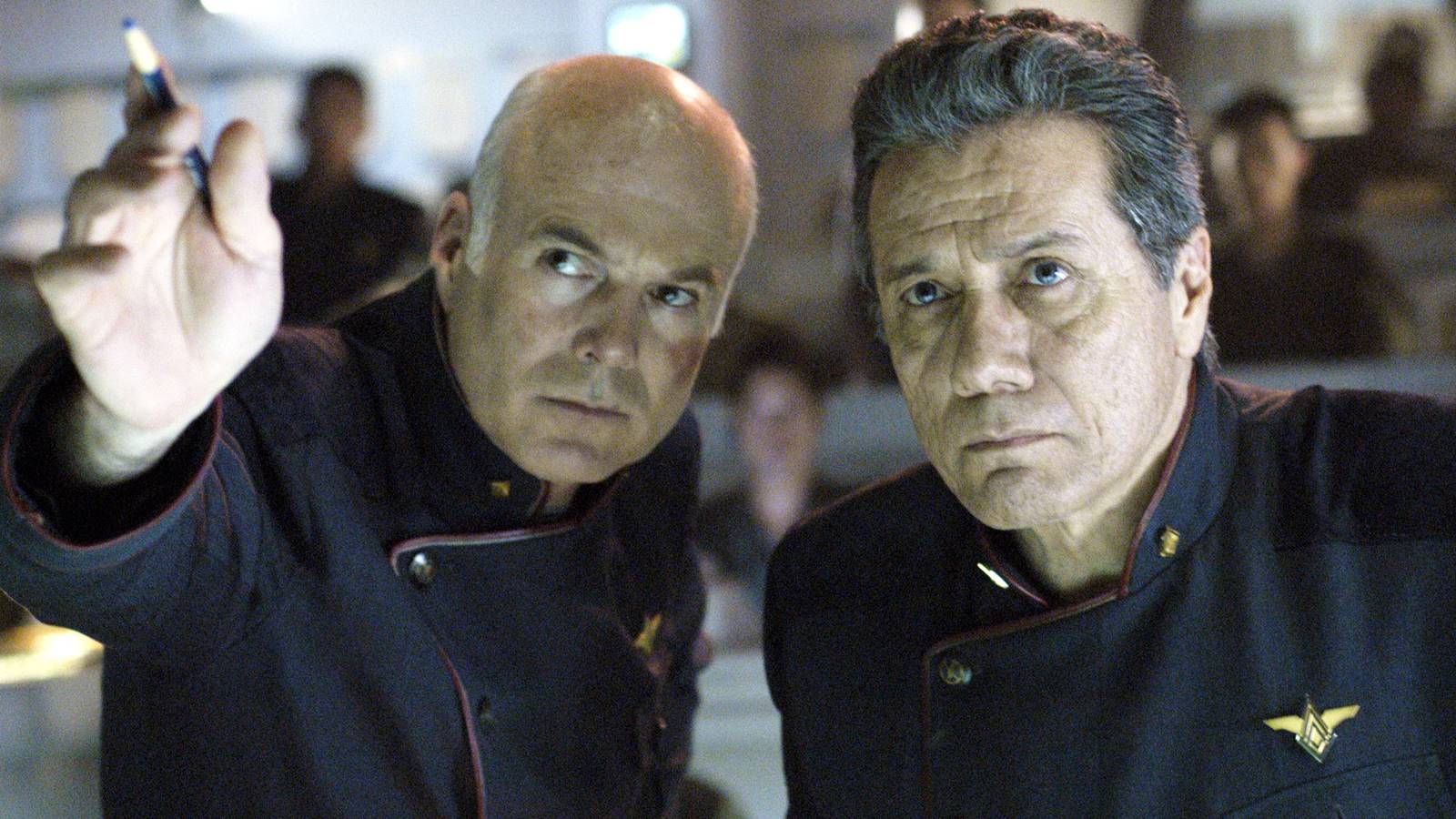
Published Jul 29, 2026, 6:07 AM EDT Amanda M. Castro is a Network TV writer at Collider and a New York–based journalist whose work has appeared in Newsweek, where she is an Associate Editor, and The U.S. Sun, where she previously served as a Senior Consumer Reporter. She specializes in network television coverage, delivering sharp, thoughtful analysis of long-running procedural hits and ambitious new dramas across broadcast TV. At Collider, Amanda explores character arcs, storytelling trends, and the cultural impact of network series that keep audiences tuning in week after week. Born and raised in Puerto Rico, Amanda is bilingual and holds a degree in Communication, Film, and Media Studies from the University of New Haven. Science fiction television has no shortage of shows set in space, but very few capture the same political intrigue, emotional drama, and philosophical ambition that made Battlestar Galactica a modern classic. This is what Apple TV's For All Mankind accomplishes perfectly. It begins as an alternate-history show that portrays the Space Race at first, but eventually becomes a large-scale space opera that explores what happens to humanity as it keeps reaching for the stars. Developed in part by Battlestar Galactica's Ronald D. Moore, the show has maintained some of its predecessor's characteristics while still developing its own identity. Throughout its five seasons, For All Mankind transforms from a traditional NASA series into one of the most ambitious sci-fi stories in television history. This is not surprising, given that it has achieved a superb 91% on Rotten Tomatoes. Like Battlestar Galactica before it, this show demonstrates that the best sci-fi stories are about the people left behind to deal with the consequences of impossible decisions. ‘For All Mankind’ Turns One Historical Twist Into an Epic Space Saga Image via Apple TV In this series' version of history, the Soviet Union lands on the Moon before the United States in 1969. Instead of winding down, the Space Race becomes a decades-long competition that completely reshapes the world. Each season jumps roughly 10 years into the future, letting viewers watch history grow further from our own. NASA never loses momentum, lunar bases become permanent communities, and private space companies arrive years earlier than they did in reality. By the fifth season, Mars is a home to an entire generation that has never known life anywhere else. Every technological breakthrough creates another problem to solve. Every victory opens the door to another conflict. Before long, a show that began as an alternate-history drama has quietly transformed into one of television’s richest space operas. Similar to how Battlestar Galactica’s Cylon invasion and the perils of deep-space living allow the show’s writers to delve into the themes of governance, loss, fear, and moral decay, For All Mankind uses its advancement in space history to expose new human problems as a pilot’s credentials cease to be evident once the space journey becomes political, engineers become unwilling politicians, and families suffer separations that stretch for years because of missions that require sacrifices to bring material gains. It’s One of the Few Modern Sci-Fi Shows That Feels Hopeful Without Being Naive Image via Apple TV While the series presents an alternate reality, many of its ideas resonate with today's world. The show explores automation replacing workers, immigration, economic inequality, corporate influence, environmental questions, nationalism, and the struggle between governments and private industry. Even as humanity establishes thriving settlements beyond Earth, those familiar problems refuse to disappear. Instead, they’re simply carried into space. The ambition to use science fiction to reflect social realities is comparable to that of Battlestar Galactica. Neither show is set in a futuristic setting for its own sake; the speculative elements of both productions seek to shed light on significant issues of power, identity, self-sacrifice, and humanity's future. It’s also why For All Mankind stands apart from many recent sci-fi shows. Rather than presenting space as either a utopia or a dystopia, it offers something far more complex: another place where people carry their ambitions, flaws, and hopes. Both series use science fiction to tell deeply human stories first, allowing the spectacle to amplify the drama rather than replace it. For viewers still searching for a character-driven space epic after Battlestar Galactica, few modern shows come closer to capturing that same sense of scale, intelligence, and emotional payoff.
This 91% Rotten Tomatoes Sci-Fi Epic Is Apple TV’s Answer to ‘Battlestar Galactica’
Full Article
Original Source
Read the full article at Collider →KhanList aggregates and links to publicly available news content. We do not host full articles from third-party sources. Always verify important information with original sources.