
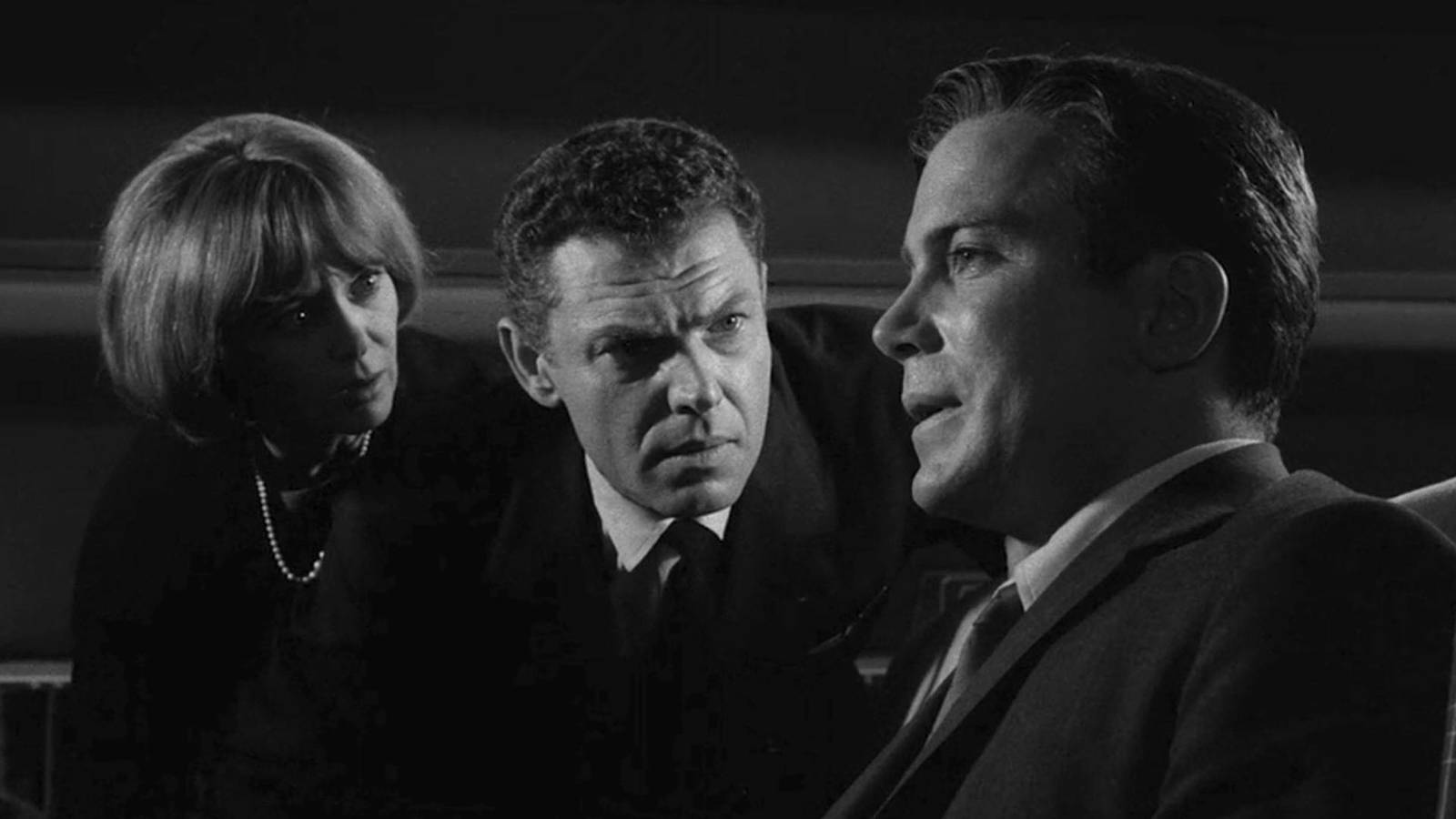
Published Sep 6, 2026, 10:30 AM EDT Adrienne Tyler is a movies & TV features writer, with a focus on horror. She has written for Netflix, FanSided, & more. She was a regular guest on the Netfreaks podcast and was a YouTuber at some point. Guillermo del Toro said “hi” to her once. Sign in to your ScreenRant account The Twilight Zone has many classic episodes that have become part of pop culture, and one of the most popular ones has been remade twice – and, surprisingly, it only got better with every remake. One of the most influential sci-fi and horror shows, as well as one of the best TV shows of all time, is the anthology series The Twilight Zone. Created by Rod Serling, every episode of The Twilight Zone is a different story with a different cast, and they stand out for having plot twists and a moral at the end. The Twilight Zone ran for five seasons from 1959 to 1963, and though it does have some not-so-good episodes, it’s widely remembered and recognized for its overall quality, creativity, and blend of sci-fi, horror, and drama. The Twilight Zone’s impact and legacy are such that the show got a movie adaptation in 1983 and three revivals (1985, 2002, 2019), though none were able to match the quality and success of the original show. Although the revivals of The Twilight Zone mostly had new stories, some of them remade a couple of episodes from the original show, some succeeding and others not so much. However, there’s one episode that is so popular that even those unfamiliar with the show know exactly what it’s about, and it has been remade twice so far, with each version improving on the previous one – and that’s season 5’s “Nightmare at 20,000 Feet.” “Nightmare at 20,000 Feet” Was Brilliantly Remade Two Times Directed by Richard Donner and based on Ricard Matheson’s 1961 short story of the same name, “Nightmare at 20,000 Feet” premiered in 1963 as part of The Twilight Zone’s fifth and final season. “Nightmare at 20,000 Feet” follows Robert Wilson (William Shatner), who is traveling by plane with his wife, Julia. Robert has just been released from a mental hospital after going through a nervous breakdown on a plane six months earlier. Now, Robert is ready to fly again, but, to his surprise and horror, he sees a gremlin on the plane’s wing right outside his window. Richard Donner is the director of The Omen, Superman (1978), and The Goonies, among other classics. Robert panics as he watches the gremlin messing with the engines, but every time he tries to alert someone about the monster, it hides, so those on the plane begin to think that Robert is losing his mind. “Nightmare at 20,000 Feet” has a twist, a gritty ending, and a memorable story, and has become one of the most recognizable episodes of The Twilight Zone, being endlessly parodied and referenced in other media. The first remake was in Twilight Zone: The Movie, in its fourth and final segment. John Lithgow plays John Valentine, an airline passenger recovering from a panic attack due to fear of flying. When he goes back to his seat, he sees a gremlin (different from the original one) on the wing, sending him into another anxiety spiral. John watches the gremlin destroy the engines, but, like Robert, no one believes him. Years later, the episode was remade again, now in the 2019 reboot of The Twilight Zone. Titled “Nightmare at 30,000 Feet”, it follows journalist Justin Sanderson (Adam Scott), who is dealing with PTSD. While on Flight 1015 to Tel Aviv, Justin finds an MP3 player in front of his seat that plays a podcast called Enigmatique. The podcast describes a Flight 1015 that had a tragic fate, with Justin panicking as he notices coincidences and decides to save the flight – but as this is The Twilight Zone, the episode has some shocking twists. Each remake of “Nightmare at 20,000 Feet” improved on the previous version, with the movie fixing some of the flaws of the original episode (such as the gremlin itself), and the reboot version modernizing the story and giving it more layers to make it a more immersive experience. Together, they make an incredible triple feature. Why “Nightmare at 20,000 Feet” Is One Of The Most Enduring Twilight Zone Episodes Robert Falconer/Paramount+/Courtesy Everett Collection As good as most Twilight Zone episodes are, not all of them have aged well or had the same long-lasting impact. “Nightmare at 20,000 Feet” is one of the most enduring episodes of The Twilight Zone, further proven by its remakes, and that’s in large part thanks to its main theme: fear of flying, one of the most common fears and one that will never be eradicated. The story does a great job of gradually increasing suspense and paranoia, making viewers question if what they and the protagonists are experiencing is real or not. Of course, the addition of supernatural elements, whether a gremlin or a mysterious podcast, adds to the greatness of the episode, as neither the protagonist nor the audience knows where these things come from or if they’re even real. “Nightmare at 20,000 Feet” might never stop being parodied and referenced thanks to its cultural impact and endurance, and being the only Twilight Zone episode with multiple successful remakes only makes it even more legendary. Release Date 1959 - 1964-00-00 Network CBS Showrunner Rod Serling Directors John Brahm, Buzz Kulik, Douglas Heyes, Lamont Johnson, Richard L. Bare, James Sheldon, Richard Donner, Don Medford, Montgomery Pittman, Abner Biberman, Alan Crosland, Jr., Alvin Ganzer, Elliot Silverstein, Jack Smight, Joseph M. Newman, Ted Post, William Claxton, Jus Addiss, Mitchell Leisen, Perry Lafferty, Robert Florey, Robert Parrish, Ron Winston, Stuart Rosenberg Writers Charles Beaumont, Richard Matheson, Earl Hamner, Jr., George Clayton Johnson, Jerry Sohl, Henry Slesar, Martin Goldsmith, Anthony Wilson, Bernard C. Schoenfeld, Bill Idelson, E. Jack Neuman, Jerome Bixby, Jerry McNeely, John Collier, John Furia, Jr., John Tomerlin, Lucille Fletcher, Ray Bradbury, Reginald Rose, Sam Rolfe, Adele T. Strassfield Creator(s) Rod Serling
This 63-Year-Old Classic Twilight Zone Episode Was Remade Twice & Only Got Better
Full Article
Original Source
Read the full article at Screenrant →KhanList aggregates and links to publicly available news content. We do not host full articles from third-party sources. Always verify important information with original sources.