
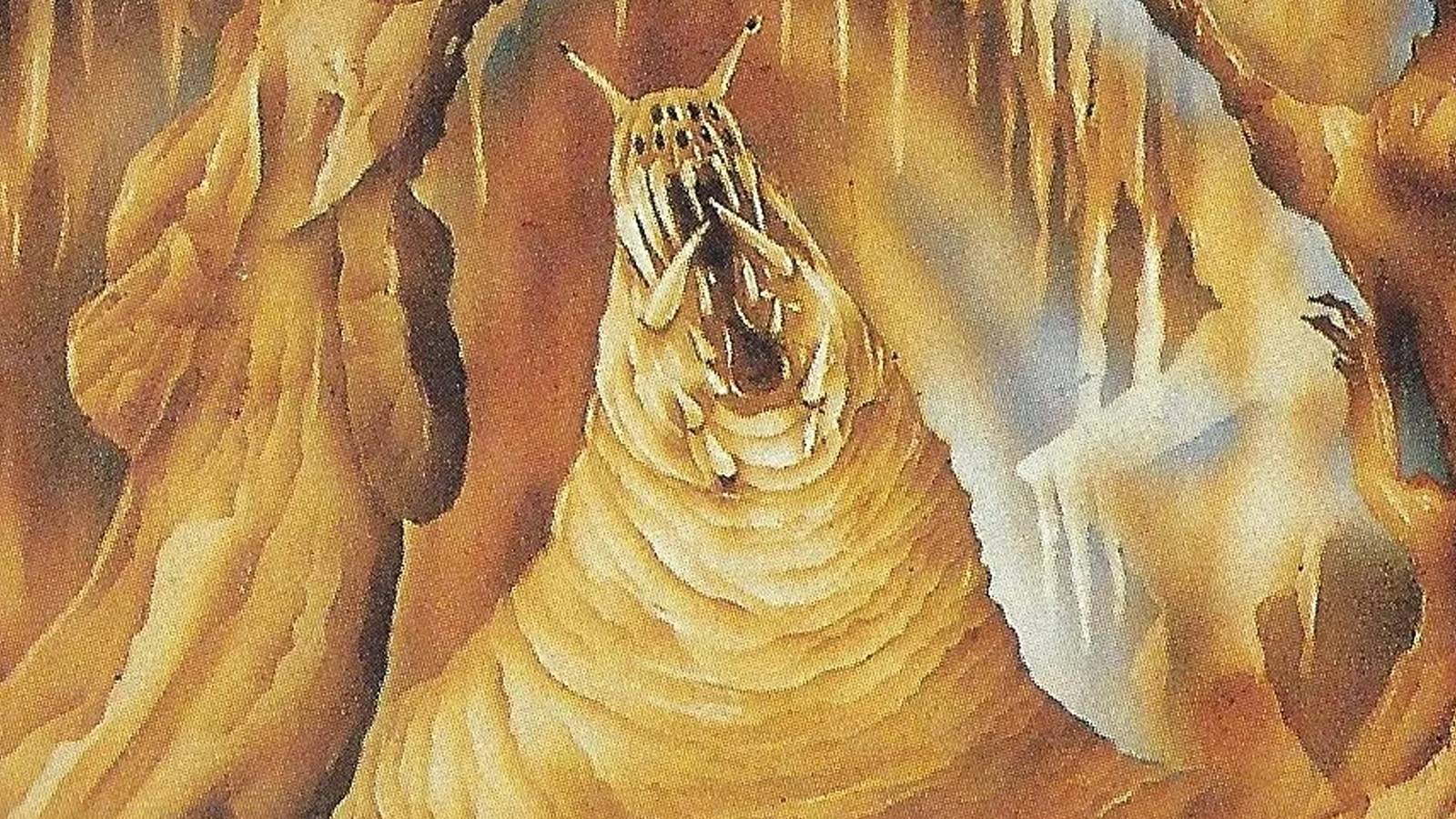
Published Sep 1, 2026, 8:32 PM EDT Born with Autism (formerly classified as Asperger syndrome), Tyler B. Searle has been obsessed with storytelling since he was old enough to speak. He gravitated towards fairy tales, mythology, the fantasy genre, and animated movies and shows aimed at family audiences. When not writing, Tyler enjoys watching more cartoons and reading fantasy books in his home in Ontario, Canada. What would a fantasy story be without monsters? These horrific creatures are as numerous as there are storytellers, and can range from invisible phantoms to titanic beasts of the apocalypse. Yet, while they come in every shape and size imaginable, they are all united by purpose: monsters serve vital roles in stories, primarily as antagonists that represent aspects of the world and ourselves that humanity fears. The Boogeyman who haunts the bedrooms of children represents fear of the dark and what could be hiding in the unknown, while dragons from European mythology are manifestations of avarice and greed. Thus, it's no surprise that fantasy writers go crazy when it comes to creating their monsters. One of the best to do it is Australian author Jennifer Rowe, known by her pen name Emily Rodda. She has written numerous fantasy stories over the years, with her most well-known being the Deltora Quest books released between 2000 and 2004. Set in the titular land, they follow three heroes as they try to retrieve lost gemstones and free their land from the evil Shadow Lord. Monsters were ever present, and Rowe did not hold back in making them creative and terrifying. They ranged from the likes of birds who cultivate orchards of sleeping fruit to paralyze their victims, to bipedal lizards bred to be the ultimate warriors. Yet, none instilled as much fear in her readers as a large, slug-like creature called the Glus, or Death Spinner, a creature so horrifying that it might just be the scariest in all of fantasy. The Origins of the Glus are Ancient and Mysterious Image via Scholastic The Glus is introduced in the sixth book, The Maze of the Beast, as the guardian of the great Amethyst that protagonists Lief, Barda, and Jasmine must overcome to recover the gemstone. Little is revealed of it in this book, however, except for its appearance: a giant, pale blue creature that resembles a slug but with a blood-red maw full of fangs and a stinger on the end of its tail. All of this is beautifully captured by Rowe's longtime illustrator Marc McBride. However, if we want to learn more about its history, we must delve into the companion books released shortly after the main series ended, all of which are meant to be in-universe texts. 2005's Tales of Deltora—a collection of Deltora's myths and history—mentions the Glus as one of the horrors of the primordial sea that crawled onto land in search of food, making its species one of the oldest in the setting. It is well integrated into the culture of the Toran Tribe, who live on Deltora's western coast. As described in 2001's The Deltora Book of Monsters, the Torans have a fable called "Little Enna," about a girl who found a stone that hatched into a "sweet sea-worm," only to be swallowed by a wave when she refused to return it to the sea. It is never specified if the Glus is indeed the "sweet sea-worm," but the final, haunting verse certainly hints at it: "Since that sad day, long years have flown, but still, beneath the seething foam, where Enna sleeps, the sea-worm creeps, and spins its webs of bone-white stone." 2009's Secrets of Deltora, written in-universe several hundred years before the main series, mentions the Glus and the Maze of the Beast in great detail. These details tell us that the Glus is an ancient creature and perhaps one of the oldest living organisms in any of the books. Even with all of these myths and sightings, little else is known about the creature's ecology or how many other members of its species there are. This mystery sets the Glus up as the perfect representation of the primordial past that our heroes must face to complete their quest. The Glus' Home Has Mythological Inspirations Image via Scholastic Often, the lair of a monster is as important as the creature itself, as it can help to enhance its thematic representation. The Maze of the Beast does this by drawing inspiration from various mythological sources. One of the most immediate is the Minotaur's Labyrinth from Greek mythology, which was constructed to keep the bull-headed beast trapped. Young victims would be regularly offered as sacrifices, and they could do nothing but wander the maze until they were caught. Rowe's labyrinth is not a man-made structure, but a dark, desolate cave system constructed from a cement-like webbing that the Glus fires from its mouth. It has no entrance, save for a hole in the ceiling that was used by Secrets of Deltora's in-universe writer to observe the creature. By the time of the main series, the entrance to the Maze has been taken over by a group of pirates, who regularly make sport of tossing their prisoners down the hole. The Glus then incapacitates its prey before sucking the meat off their bones. The protagonist trio avoids this fate, in part thanks to a ball of yarn they used to navigate the winding tunnels, much like how the hero Theseus used one to escape the labyrinth after killing the Minotaur. Another mythological inspiration is catabasis, or the tale of descending into the underworld. Heroes from around the world have been forced to descend deep into the bowels of the earth, sometimes even crossing over to the land of the dead itself. Often, these paths have guardians, such as the three-headed dog Cerberus from Greek mythology or his Indian counterparts, Sharvara and Shyama, who serve Yama, god of the dead. By rooting her monster in the same stories passed down through the generations, Rowe gives the Glus a timeless foundation from which more specialized terrors can be built upon. The Glus Perfectly Embodies Despair and Dread Image via Genco Where Rowe succeeds the most in turning the Glus into a memorable monster is how well she builds it up through her writing. While McBride's artwork is beautifully grotesque, a giant slug does not immediately stand out as something terrifying. But once the heroes are within the Maze of the Beast, it all clicks. The Glus is the inevitable end made flesh. The sound of its movements echoes throughout its cave, acting as an auditory harbinger of its arrival and stoking dread in its victims; if they run, the Glus feels the vibration of their footsteps. The cave's walls also drip with white liquid that hardens quickly into the cement-like substance the Glus spits from its mouth; stand still for too long, and you risk becoming part of the walls. This sense of dread follows the Glus outside the literary world as well. On the Scholastics website, fans used to be able to play a Flash game that took them across Deltora to recover the seven missing gemstones. The Maze of the Beast was one of the locations, and players had to navigate it, find the Amethyst, and get out with nothing but a small torch to light their way. All the while, the sliding sounds of the Glus could be heard, steadily growing closer and closer, while a textbox warned the player about how little time they had left before being jump-scared by McBride's cover image if they could not get out. It is a simple yet effective means of translating the mounting sense of doom Rowe created in her books. The Glus is a truly frightening monster, especially given that it comes from a series aimed at younger audiences. It might not be as flashy as a dragon, but it is a perfect example of how simplicity can often lead to the best results. By drawing from classical mythology, sticking to the theme of dread and inevitability, and keeping things mysterious, Rowe turned a sea slug into the personification of primordial terror that cannot be truly conquered, only evaded for as long as possible.
This 15-Book Series Has the Scariest Monster in All of Fantasy
Full Article
Original Source
Read the full article at Collider →KhanList aggregates and links to publicly available news content. We do not host full articles from third-party sources. Always verify important information with original sources.