
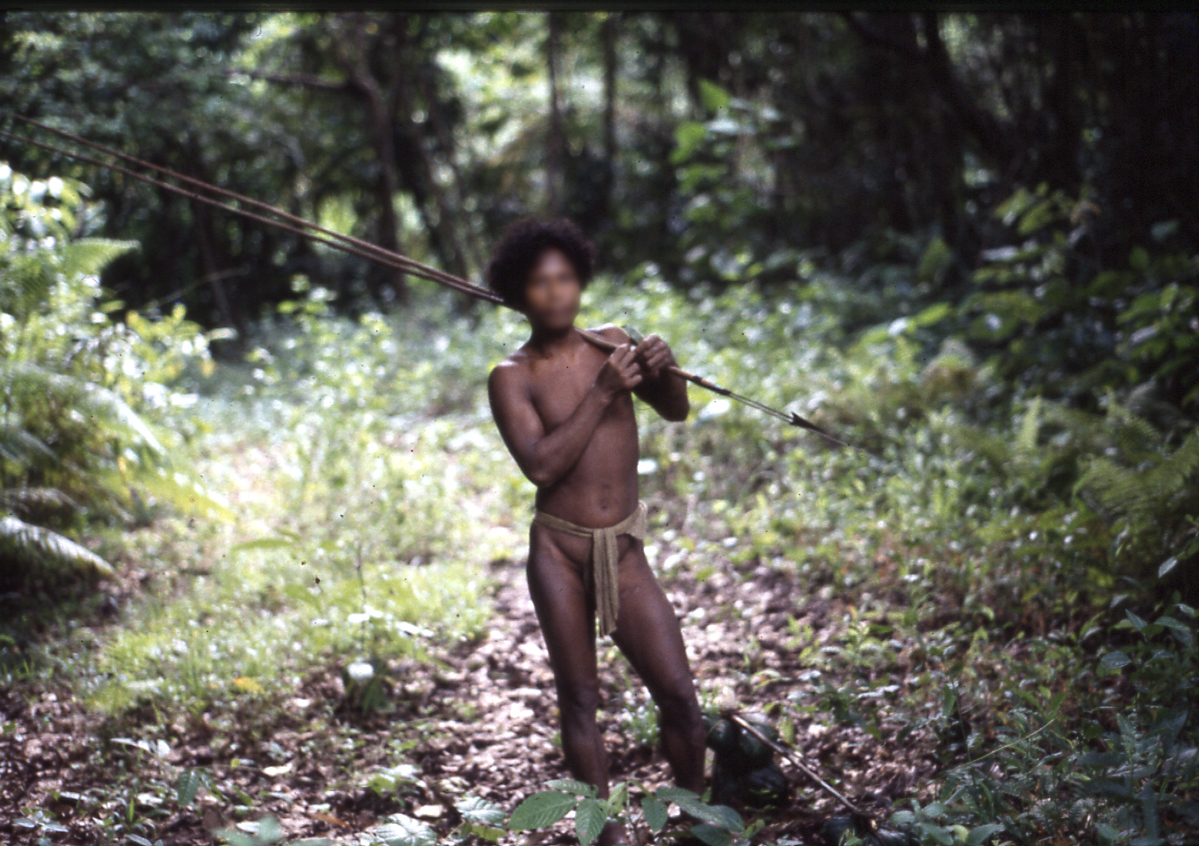
Mongabay interviewed Manish Chandi, a former research scholar who has spent over two decades working on tribal communities, about the latest threats and activities affecting the lives of isolated and contacted tribal peoples living in the Andaman and Nicobar Islands off the southeastern coast of mainland India.Isolated tribes, which maintain little to no contact with outsiders, face threats ranging from trawlers entering buffer waters and development projects planned in hunting grounds, to government perspectives that can limit their independence and capacity to decide their future on their own terms.Chandi discusses the impact of curious outsiders trying to visit isolated tribes, how contact can affect different tribes differently and how to protect isolated peoples’ autonomy.Tribal reserves are large biodiversity hotspots, rivaling protected areas and wildlife sanctuaries in the Andaman and Nicobar Islands, says Chandi. From above, the North Sentinel Island tribal reserve in India’s Andaman and Nicobar archipelago is a thick, unbroken patch of dark green — starkly surrounded by the shimmering coastal blue waters of its buffer zone. On these shores, Sentinelese people, who live in voluntary isolation protected by a strict government no-contact policy, spear fish, hunt turtles and collect mollusks in shallow reefs surrounded by mangroves. The coastal reefs are intact ecosystems rich in fish life, say biologists. “I have seen them [groups of men, women and children] foraging and collecting these food resources during low tide on several occasions,” says Manish Chandi, a tribal expert who has watched the island from afar. “The Sentinelese are aware of these as nutritious and sparsely available resources in such [mangrove] habitats, which are very few on and around the island.” The giant trees of the North Sentinel Island coastline are its first natural defense against storms and which hold its coastal soil together. The shore is lined with sandy beaches and rocky shores, while the foreshore is dotted with coral reefs and mangroves — excellent nurseries for marine biodiversity. Image by Manish Chandi. Like other tribal reserves on the Andaman and Nicobar Islands, in the southeast of mainland India, North Sentinel Island is a biodiversity hotspot; and, like other tribal reserves, the isolated people who live there have attracted influencers and misunderstandings, says Chandi. “Curiosity and ignorance regarding the islanders is quite high and understandably so amongst outsiders and [government] bureaucrats who have little association with the islands,” he tells Mongabay in an interview. There are six recognized tribes living in the reserves and islands of the archipelago — some tribes have experienced full contact while others, such as Sentinelese and Shompen people, live in voluntary isolation. The Shompen in the Great Nicobar tribal reserve maintain minimal contact with officials but prevent outsiders from entering their reserve forests and remain clear on “non-interference and wanting interactions on their terms.” In the Andaman Islands, the Ang people (also known as ‘Jarawa’) in the Jarawa tribal reserve maintain limited contact, while the Onge in the Onge tribal reserve have restricted contact. The Great Andamanese, whose population greatly declined due to disease and colonization, are fully contacted as are the Nicobarese of Great Nicobar Island who are integrated into mainstream Indian society. The isolated tribes, including those with limited contact, are facing potential threats, many of which are outside their control, says Chandi. Swaraj Dweep (also known as Havelock Island) in Andaman Islands, India. Image by Deepak Kumar via Unsplash. Near North Sentinel Island, fishers and trawlers are encroaching inside buffer waters and exploiting sharks, crabs and marine resources that Sentinelese people sell at markets, he says. In Great Nicobar Island, he adds, a planned large-scale development project overlaps with foraging and hunting lands of the Shompen people. According to Chandi, many of the issues tribes face are grounded in social and governmental misunderstanding, through which relatively isolated peoples are viewed as primitive and in need of industrial development and which deny their need to access their land and food resources to maintain self-sufficiency and a capability to decide their future on their own terms. “Some officials in the islands do not see this as a priority and … consider supplies of external food resources as a means to well-being,” he says. “This has actually caused the increased dependence on supplies of food that the communities cannot grow or gather themselves and eventually makes them immensely dependent on governmental mechanisms.” “Resource exploitation by non-tribals makes dependence on governmental schemes of rehabilitation the only possibility: It makes once independent communities who were geographically spread across their own landscapes and territories, sedentary and ensconced within reservations using accommodation built for them, leaving the larger landscape devoid of their presence and use … This has more recently resulted in denotification attempts [state-led removal of a legally protected status], developmental visions and proposals to transform some lands of tribal reserves into tourism or business enclaves.” A board at Jirkatang where the Andaman Trunk Road enters territory legally notified as the Jarawa tribal reserve. This is a picture from the late 1990s. Image by Pankaj Sekhsaria. To further understand the latest threats and activities affecting the lives of tribal peoples living in the Andaman and Nicobar Islands, Mongabay interviewed Chandi, a former research scholar who has spent two and a half decades working on tribal communities with the Andaman Nicobar Environment Team and Nature Conservation Foundation. He was an advisory board member of the Tribal Research Institute, part of the Andaman and Nicobar Administration’s Department of Tribal Welfare, from 2011-2019. Chandi is currently a consultant in social ecology. This interview was edited for length and clarity. Manish Chandi on the far left in orange-red shirt. In 2013, a Tribal Conclave was organized by the then Tribal Welfare Secretary Andaman Administration, involving various tribal councils of the Nicobar archipelago. During this event line departments, scientists and tribal council members met each other and discussed possibilities. Image courtesy of Manish Chandi. Mongabay: You’ve said that tribal reserves in India’s Andaman and Nicobar Islands, such as the North Sentinel Island and the Great Nicobar Island tribal reserves which are home to voluntarily isolated Sentinelese and Shompen people, are among the best biodiversity hotspots as well as culturally unique spaces. Why is that? And what has enabled them to maintain such richness? Manish Chandi: The Andaman and Nicobar Islands have approximately 100-odd declared protected areas, that include wildlife sanctuaries, national parks (marine and terrestrial) and a biosphere reserve as well. Among all these, none of them compare in size, biodiversity, both density and diversity, of flora and fauna on both the island land and nearshore or coral reef habitats to what exists in the tribal reserves of the Andaman and Nicobar Islands. This is primarily because the areas declared as tribal reserves are large and encompass geographical extents of where each tribal community exists. In the case of the Onge tribal reserve on Little Andaman Island, for example, the geography encompasses everywhere the Onge existed during their declaration in 1950. All these tribal reserved areas have not been used for timber extraction and settlement and therefore retain the biodiversity of both various habitats and also species — both endemic and otherwise. Great Nicobar Biosphere Reserve is the only area that has a biosphere reserve that includes a tribal reserve too [home to the Shompen people who live in voluntary isolation], and is the single largest area in the Nicobar archipelago. Meanwhile, the Jarawa tribal reserve [home to the Ang, as the community call themselves, who are not in voluntary isolation] is the single largest tribal reserve in the Andaman, even in comparison to the Nicobar islands. The Jarawa reserve and the Onge reserve are the largest and most important biodiversity repository in the Andaman Islands, which is composed of a range of habitat and species. A picturesque tree fern forest of Great Nicobar Biosphere Reserve, Great Nicobar Island, India. Image by Prasun Goswami – Own work. CC BY-SA 4.0. A crab-eating macaque. Image by Pankaj Sekhsaria. The tribal reserves have remained relatively intact, except that with cultural change and acculturation [the adoption of the cultural traits and values of others], poachers and infiltrators from within the Andaman Islands have begun exploiting the tribal reserves for biological resources including lobsters and crabs, fish, timber, wild pigs, deer and birds from the Onge and Jarawa tribal reserves in particular. It is because of their declaration as tribal reserves and, more importantly, the original hostility of the inhabitants, that poachers took a while to reach and begin exploitation. But they have done some luring and made friends with some inhabitants. Poor enforcement of the Wildlife (Protection Act), 1972; the Forest (Conservation Act), 1980; the Andaman and Nicobar Islands (Protection of Aboriginal Tribes) Regulation; and the Scheduled Castes and the Scheduled Tribes (Prevention of Atrocities) Act, 1989, adds to the problem. Mongabay: Species of mangrove and littoral mangrove species surround the areas of North Sentinel Island where the uncontacted Sentinelese people live. Biologists are unable to conduct studies there, but do you know what species these are exactly? Are these reef patches important to the Sentinelese people? And do these species of mangrove face any threats? Manish Chandi: The island of North Sentinel is devoid of any major saltwater inlets or creeks, there are just a few minor ones. Mangroves are sparsely scattered in patches of the island’s coast. The southeastern shore has a small emergent reef which is like an islet, on which littoral mangrove vegetation has colonized and established (I forget the specific species, but they are not the more common varieties of Rhizophora or Bruguiera). The species I recall are more littoral and those that survive in rocky saltwater habitats rather than mangrove marsh, which is specifically absent on the island. Mangroves along the coast of Katchal Island, one of the Nicobar Islands, India. This is a picture from the late 1990s. Image by Pankaj Sekhsaria. These shallow-water patches and habitat are a very important resource of edible bivalves and mollusks for the Sentinelese islanders. I have seen them, groups of men, women and children, foraging and collecting these food resources during low tide on several occasions. The Sentinelese are aware of these as nutritious and sparsely available resources in a type of habitat that is very scarce on and around the island. Beyond these patches, there are several major coral reefs all around the island. These vary in size, placement and distribution. They include shallows, deep-water reefs and shelves also. These habitats are among the most important food resource for the Sentinelese, as they are rich in fish life. The Sentinelese punt their canoes over these nearshore habitats, as far as their punting poles can still reach the bottom, to hunt fish and turtle. Fishermen from the Andamans also encroach upon these habitats — not just in South Andaman, but nowadays, even those from far away such as Middle Andaman — for sharks and export-value fish, crabs and lobsters. South Andaman fishers have long evaded detection when using these waters as there has been no real patrolling by administrative machinery, except for stray instances when an official would tour the region around North Sentinel, reprimand any fishermen or poachers in the vicinity and let them off. Fishermen from South Andaman lay gillnets around North Sentinel Island, exploiting the rich fishery. This picture in from 1999, and the exploitation has increased to skin diving lobster fishermen, hook & line fishers, trawlers, and also opportunists of various intent and origin, says Manish Chandi. Image courtesy of Manish Chandi. This laxity has emboldened these same resource exploiters to venture further in and closer to the shores to reach the salable marine resources that the Sentinelese depend on and exploit them for their own gain. They bring these to the export markets and sell at fish landing centres in South Andaman, particularly at Wandoor and Guptapara villages. Sea turtles, such as green sea turtles (Chelonia mydas) and hawksbill sea turtles (Eretmochelys imbricata), are found locally in these waters and are exploited by poachers and fishermen who both spear and lay nets in nearshore waters. The Sentinelese, on the other hand, use bow and arrows or harpoons to hunt fish and turtles in their waters for survival. This unequal use and exploitation between non-tribal peoples from the Andaman and the Sentinelese Islanders is very concerning, particularly with the poor implementation of laws and regulations regarding the future of the Indigenous islanders. Moreover, recently, trawler operators from mainland India have obtained some official agreements to fish in the Andaman waters. This will further exacerbate exploitation of marine resources of the Sentinelese, if the exploitation goes unchecked. Even as far back as 20-odd years ago, there were small-scale trawler operators from the islands, visiting, fishing and anchoring off North Sentinel Island. This will increase manifold and the authorities in the islands will need to give due attention and implement the laws to deter and prevent such resource exploitations in the future. A green sea turtle (Chelonia mydas). Image by Michele Roux/Ocean Image Bank. Mongabay: In the past, you’ve underlined the importance of buffer zone waters around island tribal reserves many times. Why is that? Does it have anything to do with trawlers? Manish Chandi: Buffer zones around the tribal reserves are very important to protect coastlines and borders, especially for the natural resources they contain and provide to the tribal communities who have depended on them for centuries. Once food security —in this case, the nutritious and traditional natural resources which are food for the Indigenous islanders — is compromised by exploiters such as poachers from coastal lands and fishermen from the nearshore waters, it will cause the downfall of the Indigenous communities in various ways : such as by making them dependent on sources over which they have little control. Food is a primary agent of survival; it allows for social, economic and cultural self-sufficiency. It can be used as a medium of control by creating dependence on outside sources and changing sources of nutrition and consumption — all which cause socio-cultural change of which the communities are unaware. This is a very insidious and negative consequence that has occurred in various tribal and Indigenous communities. In the islands, the remnant Great Andamanese and Onge tribes have been affected and transformed in this way in the last 50 years. This is why protecting habitat and food resources are a primary requirement for the well-being of the Indigenous people here — and anywhere in the world. This is especially for folk who practice hunting and gathering as an economic means of customized, self-sufficient and self-regulated livelihoods. Aerial photograph showcasing two boats on the turquoise waters near coral formations in the Andaman Sea. South Andaman, AN, India. Image by Sanat Anghan via Pexels. Some officials in the islands do not see this as a priority or consider supplies of external food resources to be a means to well-being. This has actually caused an increased dependence on supplies of food that the communities [tribal communities in the archipelago which have already established contact] cannot grow or gather themselves. Eventually this makes them immensely dependent on the governmental mechanisms that then take shape. This transforms into forms of control and decision-making on their behalf, rather than democratically informed and consensual civic administration. The buffer zones along the seashore of the reserves are breeding grounds and nurseries for a range of marine species that are used by both the fisher folk and for subsistence by the islanders. By protecting these buffer zones from exploitation, sustainable fisheries of various dimensions will be possible, as fish stocks will be allowed to regenerate and recuperate from the extraction further out at sea. The reefs are regions which some fish populations use as nurseries and hunting grounds. They are also a habitat for commensal species which helps balance the health of the marine space around them. Often, to those uninitiated to the Andamanese ways of life (the cultural, economic and linguistic diversity of all Indigenous tribal communities of the Andaman archipelago), the Indigenous islanders are considered to be “primitive” tribal groups. Foraging and hunting are often seen as primitive forms and not civil forms of living. But these uninitiated people do not realize how apt and necessary those economies are and were, to sustain the islanders for centuries. A Shompen person in 2013 with vanaraja chicks from the veterinary department. The idea and understanding of welfare specifically with Indigenous islanders is based on perceiving hunting and gathering as a poor economic livelihood mechanism, says Manish Chandi. He adds that free supply of food and material goods is considered welfare, without considering the insidious implications of such formats which have decimated the Great Andamanese. Learning from the past and experience needs a total overhaul for positive effects for the islands and Indigenous islanders, he concludes. Image courtesy of Manish Chandi. Such biased notions are transferred onto Indigenous communities through the supply of “dole” [government welfare supplies from the market], food and material resources that the Indigenous islands themselves have no way of gathering, but receive only as dependent beneficiaries of various governmental schemes. Once ease of friendship is established, the poacher network silently but surely moves in and establishes a nexus which brings about the majority of material culture and change in the lives of the Indigenous tribal islanders. The Jarawa reserve is a clear and most recent example. About three to four decades ago, there were similar instances in the Onge reserve on Little Andaman Island. All the Onge’s original camps and habitations along the seashore were abandoned by the mid 1990s. The remaining folk moved into sedentary living areas established by the government, opening up spaces for poachers along the western shores. The Onge became totally dependent on the dole supplied by the welfare agency, as wild pig numbers dropped sharply thanks to growing supply and customer demand fueled by poachers supplying markets in Little Andaman and further north in the then Port Blair and parts of South Andaman Island. Such resource exploitation by non-tribals makes dependence on governmental schemes of rehabilitation the only possibility for Indigenous people: It makes these small, once independent communities, who were once geographically spread across their own landscapes and territories, sedentary and ensconced within reservations using accommodation built for them and leaves the larger landscape devoid of their presence and use. Salt packet disposed by Shompen people. Salt was among various commodities supplied as free ration to the Shompen but discarded by them as they have no use for it, says Manish Chandi. Rice that they cannot grow is an article that is supplied to tribal communities such as the Shompen by the government, while poachers supply rice to Ang (also known as Jarawa) communities in return for access to natural resources. The circle of exploitation is spiral and creates dependencies on resources the communities have no access to without outside intervention, says Chandi. Image courtesy of Manish Chandi. This has more recently resulted in denotification attempts, and developmental visions and proposals, such as those on Little Andaman Island, to transform some lands of tribal reserves into tourism or business enclaves. In short, the process of acculturation also reduces the lands that were once available to the Indigenous islanders and future generations, and reconfigures how such habitat and resource-rich lands can be used for commercial interests, rather than for the future of the Indigenous islanders. Autonomy and self-sufficiency are critical indicators of human welfare and well-being; rather than creating dependencies and imposing our ignorance on their community interests, welfare plans for tribal communities should incorporate these perspectives. The third generations of contacted Indigenous communities — those living after acculturation and cultural change have taken a huge demographic and cultural-ecological toll — are now slowly grappling with higher education, employment and being integrated in the larger island society of the Andaman archipelago. Some government departments often enroll a few Indigenous Andamanese as employees on their payroll and though this can empower individuals, it doesn’t result in societal and community empowerment. More recently, two young Great Andamanese students have qualified in competitive exams integrating themselves into modernity. While those achievements are laudable through the dint of their hard work and efforts, the changing identity of their community to very small populations engulfed by mainland Indian communities on the islands of their ancestors makes for a complicated set of notions and perspectives that we are yet to discern. Lush mangroves in the Jarawa tribal reserve, South Andaman Island. Forests in the tribal reserves of the Andaman and Nicobar Islands are highly intact. They are home to much endemic, threatened and even undescribed biodiversity. This is a picture from the early 2000s. Image by Pankaj Sekhsaria. This is positive for extremely small groups such as the Great Andamanese who began as a small bunch of 19 remnant people in 1956, and now number approximately 50 or so. That the younger generation has found means and ways to integrate can be seen in positive light. This same yardstick and phenomenon of acculturation and socio-cultural change is often pushed onto other larger communities such as the Jarawa [who maintain limited contact] or the Shompen [who are in voluntary isolation], who lead their lives pretty much on their own terms and number between 300 to 500 people. Applying the outcomes for small communities, such as the current Great Andamanese, onto others, such as the Shompen or Ang (also known as Jarawa), is a cardinal mistake, which needs a deeper rethink. Mongabay: There is a renowned case of a missionary who tried to visit North Sentinel Island but was killed by the tribe. Have there been other attempts by non-tribal members, for example social media influencers, to visit the voluntarily isolated Sentinelese and Shompen people? And what kind of effects does this have? Manish Chandi: Yes, there was another young American I refer to as the “Coke can influencer” who tried to reach the shores of North Sentinel Island and left a can of Diet Coke to showcase to the Sentinelese people what modernity, in his view, had to offer them … through a can of Diet Coke. He was jailed for a while, released on bail and has uploaded a few clips on YouTube, trying to polish his idiocy. Recent known incursions on North Sentinel Island have been by a missionary adventurer from America, then some months later, the Coke can influencer, also from America. The former was shot dead, the Coke can influencer escaped. Given the poor surveillance in the past, there have been several other tourists and visitors over the years who have hired local boats, trying their luck to peep at the North Sentinelese as much they could — all nosey parkers. Clouds hang over the North Sentinel Island, in India’s southeastern Andaman and Nicobar Islands, Nov. 14, 2005. Image by AP Photo/Gautam Singh. With the Shompen [from Great Nicobar], there was the recent instance of the wife of a coast guard officer who shared her snacks and interacted with the Shompen she came across near the forest edge. She uploaded a video of her excursion and delight on YouTube, but removed it once she realized she didn’t have requisite permissions and that it was not in the long-term interests of the community. In all the years since colonization of the Great Nicobar Island [now also home to settlers, Indigenous Nicobarese who maintain contact and Shompen people who live in voluntary isolation], the Shompen have taken onus and decided who they want to interact with and who they don’t. Location also matters: Outside of the forest, they are in fairly neutral territory; in their forests, they often dissuade and prevent outsiders from entering their habitations, preferring their privacy and sensibility over our curiosity and machinations. Various researchers, including myself and other locals, have encountered Shompen during fieldwork on the island. My reading of the interactions I have had is that they are very clear on non-interference and of wanting the interaction on their terms. That is good to know, but I have my doubts on how long that will last, especially since the Indian Government has proposed plans to bring 300,000 people onto the island, building discotheques, shopping malls, power plants, a transhipment terminal, accommodation, casinos, beach shacks and resorts and such in the place where the Shompen’s food, forests and habitation are. Shompen people in Great Nicobar Island in 1997. The Shompen are the original forest dwellers of the Island. Images courtesy of Manish Chandi. The most unfortunate aspect, I have realized, is that the entire apparatus and plans are taking place without their consent. Since this proposal was tabled, the entire establishment has denied their [the Indigenous islanders] existence in the forested and riverine areas proposed for the project. This is an issue that has two sides: The first is of ignorance and a narrow view of what constitutes economic development. The impetus to transform an island landscape of forests, streams, rivers and beaches into a morass of concrete, crowds and excess, is a very outdated perspective of development. We have the capabilities to think outside the box and move beyond fantasy, but only if the establishment allows and takes on board these visions and perspectives. The other side of the issues is brazen colonialism and the marginalization of peaceful islanders by a blunderbuss juggernaut calling itself development. This rationale has chosen not to make use of knowledge generated over the last few decades regarding the island’s ecology, the islanders’ pragmatic realities, and risk factors that some researchers and scientists, defense experts and administrators have been able to identify in past decades. If the proposed region is deforested, the Shompen of the Galathea National Park and those of the Kokeon regions will be forced to migrate to other regions. This will result in internal conflict over territory, food sources and more. Livelihood security of these Indigenous people will be laid to waste — all for a set of fantasies of tourism and transhipment without a hinterland to provide proximal support services. Until the end of the last century, the Ang (also known as the Jarawa) were a community avoided and feared given their aggression to outsiders within their territory. Here a policeman from Kadamtala Police Station showcases the arrows and a bow recovered from a house in Kadamtala village that was attacked by Ang people in revenge for the act of poaching by the resident. That changed with friendliness and cultural contact. Today, local poachers reside with the Ang, exploiting their natural resources and biodiversity in exchange for alcohol, cannabis, various tools and materials including mobile phones and SIM recharge cards. Image by Manish Chandi. The argument that the project is to enhance defense capacities is not supported by the proposed action plan, which proposes much of the infrastructural development for commercial enterprises. These plans will form a set of liabilities to not just the future of the Indigenous islanders, but also to the country and our defense establishment during war. It is equally clear that augmenting defense capabilities does not require such socially and ecologically destructive propositions. Further north and back in the Andaman Islands, there have been many people over the years who have made forays into the Jarawa reserve area to film and sate their curiosity, sharing the results with others worldwide too. Currently there are local poachers who today live amidst the Jarawa [now called the Ang], who have fathered children with women from the tribe, introduced intoxicants, made sexual escapades, and dealt in unequal transactions. From what I have learnt and know of the interactions, little enforcement and policing to root out these scoundrels has taken place over the past three decades. There are a few good officers, who eventually get pushed out, as the rot is deeper than one can imagine. The current situation vis-à-vis the Ang and illegal entrants into their reserve is what will also shape up in its own way with the Shompen, and others, if they are not allowed to choose their own destinies. That in some ways seems a pipe dream, especially when some officials have gone on record to say: “How long will they remain in the jungle as primitive people? They need to evolve like us.” A board along the Andaman Trunk Road on Middle Andaman Island, leading up to the Jarawa tribal reserve. Image by Pankaj Sekhsaria. In 2018, while we were conducting fieldwork for the government, there was also a senior bureaucrat from a central planning body, who asked a former senior colleague of mine if the Shompen were actually Homo sapiens. Such is the ignorance regarding these communities and the primitive mindsets that often take decisions on behalf of the people who have survived on their own for centuries and evolved forms of livelihood in their ecosystems. Curiosity and ignorance regarding the islanders is quite high, understandably so amongst outsiders and such bureaucrats who have little association with the islands. But what is of significance — and a huge gap to me — is the lack of awareness of the island public [who settled on the islands] at large. This has unfortunately happened as for a long time, a tight grip was held over the settlers by the establishment, in its attempt to preserve and separate the settlers from the Indigenous islanders. This gray space of education and awareness was least attended to and led to imaginations, curiosities, hierarchies and ignorance. The reluctance of the establishment to make ethically positive and scientifically genuine efforts to understand the tribal communities and to share that information with the island settlers is a festering wound that needs serious attention. There’s so much to learn of the Indigenous communities, to comprehend their space and perspectives their world and ours, and to share that with others. That will help assuage people’s curiosities and misadventures, and positively inform and influence their perspectives, rather than events of interference, ignorant intervention, resource conflicts, exploitation and colonization of their living spaces, which have no positive contribution to the Indigenous islanders’ futures nor humanity. Great Nicobar landscape and biodiversity. Image by Rama Narayanan H – Own work. CC BY-SA 4.0. Mongabay: As you’ve mentioned, there’s a planned development project on Great Nicobar island where isolated Shompen live, which includes much infrastructure and industry. There’s a lot of back-and-forth and legal proceedings about the exact impacts of the project. The tribal council and environmentalists say the project could destroy coral reefs and turtle and megapod habitats — and around 84 square kilometers (32 square miles) will fall in the tribal reserve that will be de-notified. Some bodies, including the National Centre for Sustainable Coastal Management (NCSCM) and the National Green Tribunal (NGT) ruled in favor of the Great Nicobar Island project, with the latter citing that “adequate safeguards” have been provided. Litigation is underway as of August 2026. What is your opinion on the potential impacts of this project? If it impacts tribal peoples in the reserve, what will that look like? Manish Chandi: This is a contentious issue that’s been and continues to be deliberated on with some frequency in the Indian media and some international press as well. In my opinion, yes, the proposed project will have severe, negative results on the Shompen tribal people and the Nicobarese islanders of Great Nicobar. Firstly, none of them have consented to the project. They have, in fact, asked for their lands (forested, coastal and streams) to be left out of the agenda and scope of the project. They have no interest in the transhipment or commercial enterprises proposed. What has emerged despite these requests are obfuscations to on-the-ground and spoken realities, and deviations from responding to requests to rehabilitate the displaced and marginalized Nicobarese back in their ancestral lands on the southern east and entire west coasts. They too wish for development and change, but on their terms and in their ancestral lands. Similarly, various reports from consultants and the government do not acknowledge the presence of Shompen habitations within the forested and riverine landscape proposed to be cleared and developed for this project. It is a fact that three to four Shompen habitations and their entire foraging and hunting territories are within the forested area demarcated for this project. Despite this factual reality, the official voice of governmental machinery denies their existence, the habitations and the use of natural resources in the said region. Galathia bay, Great Nicobar. Image by Rama Narayanan H – Own work. CC BY-SA 4.0. Even the former administrative head of the Andaman Nicobar Administration has gone on record saying that there will be no displaced tribal communities on the island. However, all the Great Nicobarese and a few Shompen live in accommodation that was set up in the vicinity of Campbell Bay in 2010 by the government after they were displaced from their ancestral lands and homes by the tsunami of December 2004. They are an internally displaced people who are only requesting to return to their ancestral homelands in which they had lived for eons until the tsunami of 2004 displaced them. But the proposed uses of their ancestral lands include beach tourism, casinos, shopping malls and various other enhancements for tourists and outsiders — all while they currently remain in shanties and small clusters without any land of their own on their own island. In the pre-tsunami years, what stood out in the administration of the Indigenous communities was ensuring self-sufficiency and the practice of autonomy, with the least interference in internal, socio-cultural and economic affairs. That was the general principle on which interaction for administration took place. Currently, it is evident that the administrative machinery is fast tracked, resulting in fleeting interaction and poor understanding of the communities in question. It is also important to note, that not a single person from the administrative machinery can speak the Shompen language and communicate logically with them. Despite this, you can read articles that express excitement at the administrative machinery getting a few men from the community to supposedly cast a vote during the general elections; men who supposedly expressed their agreement to the denotification of their food forests so that they can be converted into a township for mainlanders. It’s an extremely sad and vicious set of events that have taken place over the past eight years. Great Nicobar landscape. Image by Rama Narayanan H – Own work. CC BY-SA 4.0. There’s a whole series of problems associated with the project and the Indigenous islanders. These have been written about to seemingly little effect. There are fundamental rights and requirements of the communities that can be very well addressed, rather than skirting and twisting them into various narratives which are untrue and not representative of the progressive vision of the Nicobarese and Shompen communities at large. Mongabay: In your opinion, what are the prospects for the protections of these tribal reserves, home to voluntarily isolated people? What more needs to be done? Manish Chandi: The administrative machinery needs to take a step back and assess the situations with each of the Indigenous islander communities and consider the range of issues — a few of which I have deliberated upon. There’s much to learn, share and do to make other islanders on the archipelagos aware of the Indigeneity of the island communities. Similarly, mainland visitors and others need a change of perspective from vain curiosity to appreciation, respect and dignity when it comes to how these communities are perceived and attended to. This is a huge requirement for everyone’s benefit. Conserving their lands and resources on their terms using our means and policing resources is a paramount need for future generations to thrive and evolve. We have the science and technology to develop better understandings and mechanisms which can help protect livelihood resources of these communities: These resources can be better employed for the protection of such people. Imposition has never worked. Participation, respect, consensus and appreciation over time are what can make a huge difference to the positive future of the islanders, both Indigenous and settled. Fishermen returning from their trip at sunset. Andaman Islands, India. Image by Jakub Michankow – Back from fishing trip. CC BY 2.0. Banner image: A Shompen man at in Great Nicobar Island in 1997. The Shompen are the original forest dwellers of the island. Images courtesy of Manish Chandi. Tribal council calls recognition of forest rights on Great Nicobar Island ‘false’ Latest Mongabay podcast episode: A health crisis for Peru’s recently contacted people brings planetary health to the fore. Listen here: FEEDBACK: Use this form to send a message to the author of this post. If you want to post a public comment, you can do that at the bottom of the page. Credits Topics
‘They should choose their own destinies’: Manish Chandi on India’s isolated tribes
Full Article
Original Source
Read the full article at News →KhanList aggregates and links to publicly available news content. We do not host full articles from third-party sources. Always verify important information with original sources.