
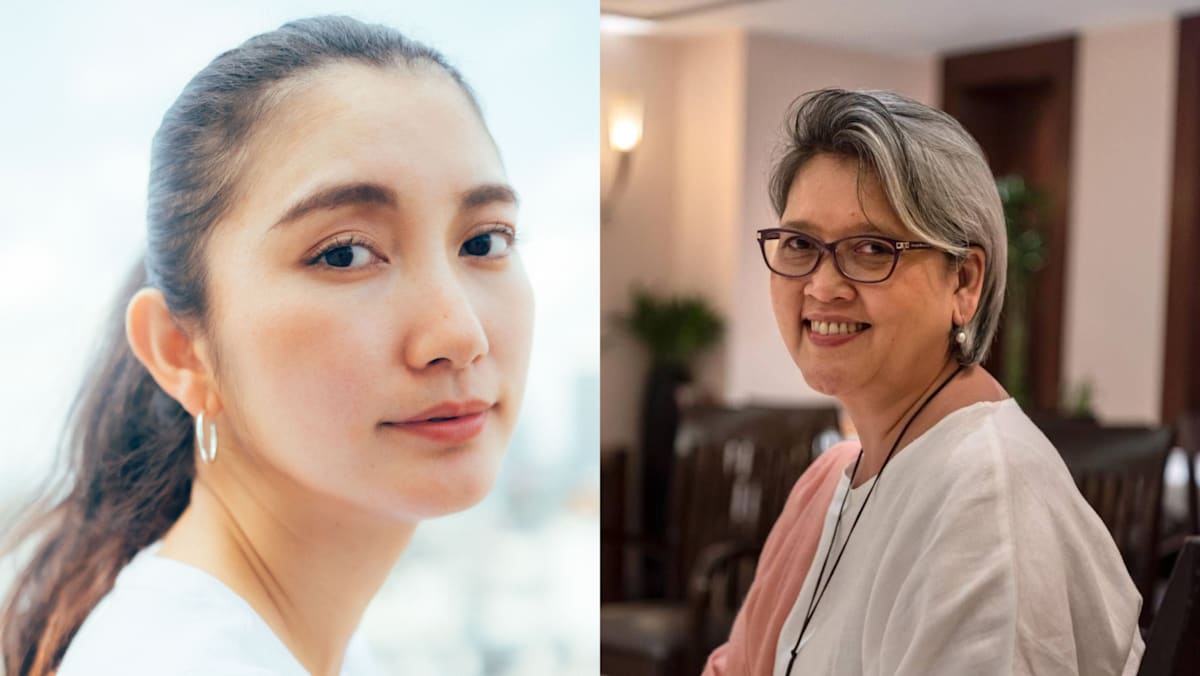
The Singapore Writers Festival (SWF) kicks off on Friday (Nov 13) with two headliners: award-winning Japanese filmmaker Shiori Ito and Indonesian human rights activist Kamala Chandrakirana.Through storytelling, both women challenge the systems that perpetuate violence against women and amplify the voices of survivors.Ito, 37, publicly pursued justice after accusing prominent Japanese journalist Noriyuki Yamaguchi of raping her in 2015. She recounted her harrowing experience in her 2017 book Black Box, a reference to the opaque justice system that leaves sexual assault survivors struggling for answers and accountability.She later chronicled her fight for justice in her Japanese and English documentary Black Box Diaries, which was nominated for Best Documentary Feature Film at the 2025 Academy Awards.Chandrakirana, 66, documented accounts of sexual violence committed during Indonesia's May 1998 riots, work that helped establish the country's National Commission on Violence Against Women, or Komnas Perempuan.On Saturday, Chandrakirana will deliver a festival keynote at 7.30pm. On Sunday, she will participate in a panel discussion about the impact of women’s stories at 8pm.Ito will participate in a panel discussion about truth and the pursuit of justice on Saturday at 11.30am, followed by a post-screening discussion of Black Box Diaries at 3.30pm. She will also join a panel discussion on investigative journalism on Sunday at 11.30am.KAMALA CHANDRAKIRANA: DOCUMENTING ACCOUNTS OF INDONESIAN SEXUAL ASSAULT VICTIMS Kamala Chandrakirana (left) during a Komnas Perempuan meeting. (Photo: Komnas Perempuan) Chandrakirana has spent decades researching and advocating for women's rights, including improving rural women’s access to healthcare and social services.But Indonesia’s May 1998 riots, sparked by the 1997 Asian financial crisis that led to the fall of then-President Suharto, diverted the course of her work."That day totally redefined the women's movement in Indonesia and the lives of many activists, including my personal life," she told CNA Women.During the national unrest, she said that hundreds of women, the majority of whom were Chinese-Indonesian women from impoverished backgrounds, were sexually assaulted.While the riots made headlines, Chandrakirana said that the sexual assaults received little to no local media attention."It only came to me in whispers, rumours from the victims’ relatives or villages, not official news or documents," she said. "Eventually, I realised so many women were assaulted, yet nothing was said about the tragedies."When the authorities and perpetrators denied the sexual assaults, Chandrakirana joined volunteer activists in recording the rape survivors’ accounts."We didn’t want to be researchers who only collected testimonies and left to write in some big journal; we knew we had to be there for the victims, too," she said.This approach encouraged more women to come forward, she added. Activists holding up signs to protest the denial of the May 1998 mass rapes, in July 2025. (Photo: Amnesty International Indonesia) "The struggle wasn’t just in seeking accountability but in proving that sexual violence had taken place at all," Chandrakirana said. "Even if we couldn’t promise justice, just having them tell their story, and us holding their hands while they did so, was comfort and catharsis for the victims."The volunteers documented over 85 sexual attacks, although Chandrakirana believes the actual number was much higher, as most victims remained silent out of shame, stigma and the fear of retaliation."We came together to put the trauma in writing, to prove that what happened was real, that it wasn’t just a nightmare – that was the first crucial step to the women’s healing," she said.Their work helped establish Indonesia's National Commission on Violence Against Women, known as Komnas Perempuan, in October 1998. Chandrakirana served as its secretary general from 1998 to 2003 and chairperson from 2003 to 2009.The commission subsequently expanded its work beyond the May 1998 riots, documenting gender-based violence across Indonesia and advocating for stronger legal protections for women.In 2001, the commission began publishing an annual report on violence against women. In 2004, it succeeded in advocating for a change in the definition of domestic abuse in Indonesia from a private matter between spouses to a state-recognised crime. Kamala Chandrakirana (second from left) holding up a policy recommendation to address discrimination against women, crafted by Komnas Perempuan in 2023. (Photo: Komnas Perempuan) "All these started with documenting victims’ stories," Chandrakirana said. "It’s all a huge feat, even if challenges remain in implementing the law and ensuring survivors can access justice."Chandrakirana believes the struggle is far from over. Nearly three decades after the riots, she said some Indonesian officials continue to deny the sexual attacks took place."The healing has not reached a point of true, true healing for those who've been assaulted, even after all these years," said Chandrakirana, who still keeps in touch with the survivors and activists."Violence against women is unfortunately a forever problem," she added. "The problem is forever, and the struggle is forever – but that does not mean the work is without hope. We do what we can now to provide the groundwork for the next generation to continue the struggle."What’s important is that we’re always with the vulnerable, and that we must make room for joy and appreciate one another, even when progress is slow."Holding on to one another, showing that we are here and we are listening, is one of the most underrated forms of activism against violence there is. Hope cannot be separated from care," she said.SHIORI ITO: THE JOURNALIST WHO BECAME A FACE OF JAPAN'S #METOO MOVEMENT Shiori Ito is the filmmaker of Black Box Diaries, a documentary that has received numerous prestigious awards and nominations, including an Oscar nomination and a BAFTA nomination. (Photo: Takashi Homma) For Ito, speaking publicly about her sexual assault was not a decision she made lightly."Telling my story – no matter how painful it was – was the way for me to survive my past and what had happened to me," she told CNA Women. "It was also the way to hold on to my identity as a journalist and storyteller."Ito faced intense public scrutiny after pursuing legal action against prominent Japanese journalist Noriyuki Yamaguchi, whom she accused of raping her in 2015.Despite evidence that included hotel security footage and witness accounts, prosecutors decided not to indict Yamaguchi in 2016.The investigation itself was deeply distressing for Ito. She said that at one point, local police asked her to recreate the assault using a life-sized doll while officers photographed the reenactment.After prosecutors decided not to indict Yamaguchi, she decided that "the only way for me to be taken seriously is to go public, and let the truth speak for itself".In May 2017, she held a press conference at the Tokyo District Court, publicly identifying herself as she challenged the prosecutors' decision not to indict Yamaguchi.Her pursuit of justice exposed the legal and social barriers faced by sexual assault survivors in Japan. At the time of her assault, Japan’s rape laws had remained largely unchanged for over a century, requiring proof of force or intimidation rather than lack of consent, Ito said. Ito (centre) at the Taiwan premiere of Black Box Diaries in December 2024. (Photo: Instagram/@shiori_ito.films) "What kept me going despite constantly being belittled was knowing that there was no alternative to speaking out," she said."I knew that going public and showing my face comes with its risks – not just to me but to my family – but as a journalist, the most important thing was for the truth to be revealed. And whenever I talk about my own truth, I feel stronger."Ito became a prominent figure in Japan’s #MeToo movement, which gained worldwide attention in 2017 following a series of sexual assault allegations against Hollywood producer Harvey Weinstein.In 2019, a Tokyo court found Yamaguchi liable for sexual assault and ordered him to pay damages to Ito.As a journalist, Ito wanted to examine the evidence in her case, question whether laws and institutions were adequately protecting survivors, and let readers draw their own conclusions."The role of a storyteller, journalist, is to question and examine everything," she said. "Is the current system working for everyone? Is it working for me? Is it working for you?"Her 2017 book Black Box took that investigative approach, while her 2024 documentary Black Box Diaries explored the personal toll of surviving sexual assault."Writing the book allowed me to approach the case through investigative journalism, but making the documentary was a more personal undertaking – it was an emotional examination of what it’s like to live as a survivor," she said. Ito holding up a sign that says “victory” outside the Tokyo District Court on Dec 18, 2019, after she won her civil lawsuit against Noriyuki Yamaguchi. (Photo: Reuters/Kyodo) The documentary, which won several awards, including a 2024 Peabody Award, explores how sexual violence affects a survivor's everyday life, relationships and sense of self.Despite choosing to make her own experience public, she is careful not to suggest that every survivor should follow the same path."There are so many ways to survive – and survival is the most important thing," she said.In some Asian societies, she added, the shame surrounding sexual violence can be compounded by concerns about family reputation and the relationships survivors have with those around them."If you feel dangerous by sharing, don't do it," she said. “I think rather than expecting survivors to speak out, society should create more safe environments where victims can seek help and decide for themselves whether, when and how to share their experiences."She also encouraged people to show their support for survivors, particularly online."Even leaving a supportive message can help counter the hostility survivors encounter and reassure us that we are not alone," Ito said.Despite the passage of time and the recognition her work has received, speaking about her experience in interviews means revisiting painful memories."I'm still living and facing my own trauma," she said. "But I still believe in the importance of telling difficult stories, no matter how we do it."Singapore Writers Festival 2026 runs from Nov 13 to 22. Themed Hidden in Plain Sight, the 10-day festival features panel discussions, talks, readings, workshops and presentations. More information can be found on the official SWF website. CNA Women is a section on CNA Lifestyle that seeks to inform, empower and inspire the modern woman. If you have women-related news, issues and ideas to share with us, email CNAWomen [at] mediacorp.com.sg.
They refused to be silent: How a filmmaker and a human rights activist fight sexual violence through stories
Full Article
Original Source
Read the full article at Cnalifestyle →KhanList aggregates and links to publicly available news content. We do not host full articles from third-party sources. Always verify important information with original sources.