
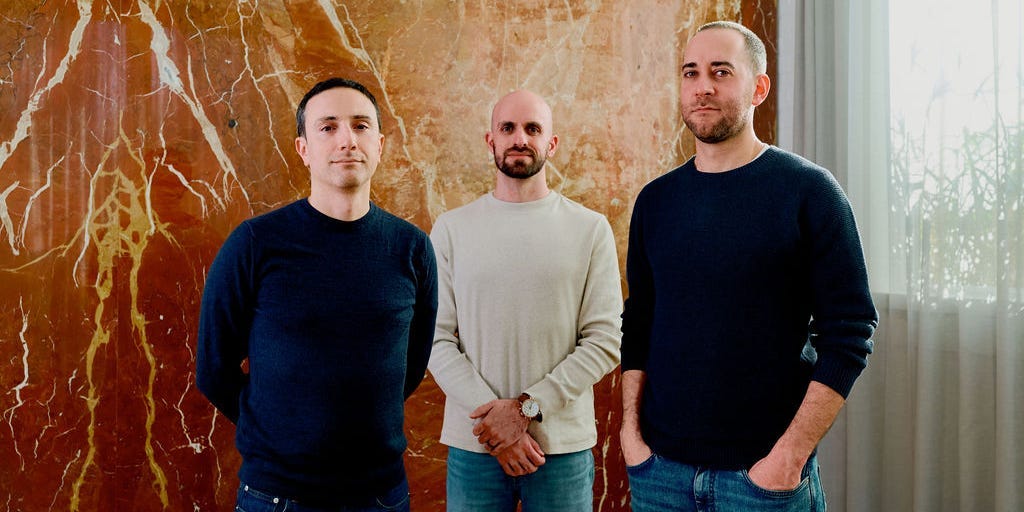
They quit Cohere to go into law. They say their new firm can avoid Weil's fate. Blackletter founders Avi Brudner, David Stewart, and Jonathan Rosenbluth. Blackletter Artificial intelligence has forced Big Law to rethink how legal work gets done and how clients pay for it. The collapse of law firm Weil Gotshal shows how quickly the traditional model can come apart.The founders of Blackletter, a new Canadian neofirm, say artificial intelligence offers a way to build something sturdier.Blackletter has raised a $6 million seed round led by Lerer Hippeau, its cofounder and chief executive, Jonathan Rosenbluth, told Business Insider. The firm combines technology and lawyers to offer businesses legal services for flat fees.The investment marks Lerer Hippeau's first check in legal, a firm spokesperson said. Other Blackletter backers include Seven Stars, Maple VC, Garage Ventures, and Ripple Ventures, as well as Cohere's founders, Aidan Gomez, Nick Frosst, and Ivan Zhang.Rosenbluth saw Weil as a reminder of the existential risk facing legacy firms. Rainmakers can walk at any time. Clients can follow. And a partnership can collapse with the speed of a bank run.Blackletter is betting its clients will come back not because of the relationship with one partner, but because Blackletter understands their business and does the work well.Its lawyers use software built on large language models to draft and negotiate routine corporate contracts and guide transactions from term sheet through diligence and signing. The firm says it has more than 75 clients, including Fanatics, TwelveLabs, and Ada, which has just agreed to merge with fellow customer service agent company Dialpad in a $600 million deal.The lessons from each matter Blackletter works on are meant to inform the next, Rosenbluth said. Lawyers refine how they use the tools, while engineers adapt the technology to help them get better results.Rosenbluth spent a summer during law school at Skadden, where he watched associates a decade his senior grind through menial work. He felt drawn to the legal industry, he said, but the experience convinced him that traditional practice was not the career for him. Before starting Blackletter, he rose through the ranks at Cohere, the fast-growing artificial intelligence model maker, where he led partnerships and product teams. The Canadian government said recently it's taking an equity stake of up to $1.6 billion in the Toronto-based company.Rosenbluth founded Blackletter with another ex-Cohere executive, David Stewart, who led a team that worked with Cohere's customers and prospective buyers to shape its products around their needs. A third cofounder, Avi Brudner, was previously chief operating officer of Blue J, a tax-data company, and a former attorney at the law firm Fried Frank.They're now hiring lawyers. The team includes former associates at Latham & Watkins, Goodwin, Dentons, and Canadian law firm Osler, Hoskin & Harcourt.Blackletter's model is similar to one popularized by the law firm Crosby, which builds software for its own lawyers, and was most recently valued at $400 million. The bet is that in-house legal teams don't want another tool to manage; they want the work done faster.Just don't call Blackletter an "AI-native law firm." Rosenbluth said the label connotes something "fast and cheap." Rather, he wants to build one of the best and biggest law firms of the 2030s."The number one law firm in the world" by then, he said, "is going to have a technical advantage over the other law firms."Have a tip? Contact the reporter Melia Robinson at mrobinson@businessinsider.com or via Signal or WhatsApp or Signal at +1 (603) 913-3085. Sign up for her newsletter, Legal AI Insider. Read next Business Insider tells the innovative stories you want to know Business Insider tells the innovative stories you want to know Business Insider tells the innovative stories you want to know Business Insider tells the innovative stories you want to know Melia Robinson is a reporter at Business Insider covering how lawyers are changing how they work and bill in the age of artificial intelligence — and about the tech companies racing to serve them.Melia first joined Business Insider in 2013. She lives in New York City. Investing Exclusive
They quit Cohere to go into law. They say their new firm can avoid Weil's fate.
Full Article
Original Source
Read the full article at Businessinsider →KhanList aggregates and links to publicly available news content. We do not host full articles from third-party sources. Always verify important information with original sources.