
When Ai Weiwei was a child, he helped his father to burn all his art books. Having studied painting in Paris, Ai Qing had been condemned as a “rightist” during the Cultural Revolution and the family had been exiled to the remote province of Xinjiang.“Those books were considered anti-revolution, so I tore them up page by page and threw them in the flames – those pages, that paper made so well, some handmade papers and very hard to tear, printed so nicely, the colours beautiful,” Ai remembers. “Renaissance paintings with gold leaf, all the Impressionists – Monet, Degas, Manet, Seurat – I know all those names because I burned them.”Ai Qing was by then a poet. He couldn’t get art materials in Xinjiang, but he could write. He also told stories of his life in Paris in the 1920s, but his son wasn’t interested. “I was 10. I don’t care,” Ai says. “I only know the winter is so cold, the summer is so hot, we don’t have enough food, we don’t have water or light.” They lived in a dugout; their only light source was a kerosene lamp.“You burn the oil and it’s black. In the morning, my nose is black. These were very poor conditions. When I saw Manet’s lady standing in a bar, flowers pinned to her chest, so beautiful, I tried to imagine this other world. But I never thought I would be an artist because artists were cursed.”Ai Weiwei’s Mushrooms outside the Museum of Contemporary Art Australia.Courtesy Ai Weiwei Studio, MCA Australia, Anna KučeraHis path to becoming, in fact, one of the world’s best-known and most celebrated artists – if that is what he is, which remains an open question as far as he is concerned – was determined largely by chance. Nineteen years after his trial and exile, Ai Qing was rehabilitated and elevated as a leading representative of Chinese literature. Ai Weiwei went briefly to film school in Beijing, then to the United States. In New York, he dropped out of study and lived through odd jobs. At night, he walked the city “alone, like a wolf”. Meanwhile, he painted in a succession of different styles, educating himself.“I did the whole of art history. I’m like a soldier training for battle. I never lost my confidence; I was convinced I could do anything. My problem is that I never want to do anything!”This is hard to imagine: at 69, Ai’s sense of mission means he never seems to stop. His most famous projects are his large public artworks, often involving multiples: thousands of sunflower seeds on the floor of the Turbine Hall in London’s Tate Modern in 2010; a wall of lifejackets representing refugees risking their lives in Quebec City in 2022; an assemblage of bicycles in 2003. “I did many small works people would not even notice, too many,” he says. “I don’t know why people are impacted by the bigger image. I think they should be impacted by concept and meaning, the content. But it seems not so.” In the end, his imperative is to communicate.Last week, the Museum of Contemporary Art in Sydney opened the installation Mushrooms, a collection of 500 identical cast iron helmets, modelled on German helmets from World War II. Immediately after Russia invaded Ukraine, says Ai, Germany offered the Ukrainians 5000 helmets. He was living in Berlin then. “I think – is that a joke? Because you know, 5000 helmets. That shows Germans think the war won’t last too long. But it also shows Europe’s uncertainty in these kinds of conflicts. It’s funny, but it’s also very serious.” From that starting point, the piece took on multiple meanings.Ai Weiwei’s monumental, 40-metre work, Mushrooms, has been installed on Tallawoladah Lawn overlooking Sydney Harbour. Jessica Hromas“I’m concentrated on myself,” he says. “I am a very selfish and self-centred person. So I always think as an artist that what affects me also affects millions of people because I am just an ordinary person. So that’s how I make the work, trying to generate the emotion and curiosity I felt. What is this helmet made for? Why do we need a helmet? Of course, it is first protecting life. We need a helmet because we are in a war. We will kill each other. Then the next question is, who is going to [be] sacrificed, and for what? I think those are crucial questions. It is necessary to ask them of the public.”In 1993, Ai returned to China from New York. He had been away for 12 years; his father was ill and died in 1996. “And I stayed in China for another 22 years. Time passed fast. I had nothing to do. I never wanted to become an artist because it was such a heavily censored authoritarian state, I never thought I would enjoy or fit into the landscape. So I made underground books to try to help local artists to communicate. I made a gallery for them, but I never showed my own work.”In that role, he became an adviser to an emerging cohort of international collectors of new Chinese art. One was the Swiss ambassador Uli Sigg, who spotted one of Ai’s works – a “modified” Han vase painted up with a Coca-Cola logo – and said it interested him. “I would not even call it work,” says Ai dismissively. He told Sigg he could have it.That was the lucky beginning of a friendship that opened many doors. “In 1999, before I even had a gallery show, I was in Venice Biennale. I showed 72 photos of a lunar eclipse, the moon covered by earth and sun, Eclipse. It was just for fun, I never thought it was art.”Not making art became something of an Ai trademark. In 2007, he was invited to Documenta in Kassel, Germany, the most important contemporary art show in Europe. “And I didn’t make any work. I brought 1001 Chinese to see the show. For me, it was the best thing I could do.” Just getting them passports was a huge project. “Some lived in the mountains and had to create a name before they could apply for one. The ladies were only called Someone’s Wife, or Someone’s Mother, so they had to have a name. Those things are interesting and meaningful for me.”Still from Ai Weiwei’s documentary “Human Flow”.As his star rose in China’s burgeoning cultural scene, Ai’s compulsion to ask crucial questions inevitably led to trouble with the authorities, especially once the internet arrived. Ai spent hours every day tweeting to an engaged public; he also made a succession of documentaries about injustice, using his public forum to solicit evidence for a revelatory investigation of official negligence in Sichuan, where an earthquake in 2008 had killed 69,000 people. As the online research gathered steam, Ai was arrested, tortured and beaten so badly he required brain surgery. After years of house arrest, he regained his passport in 2015 and went straight to Lesbos, Greece, where boatloads of refugees were arriving from Syria. He was aghast.“Standing on the shore, I saw an unbelievable situation I would never imagine in Europe. I stood there with my iPhone and started to film. Nobody cares for these refugees. In my mind, this is the human rights I was always defending in China and I would not believe it would happen in Europe.”He threw himself into documenting the refugee crisis, travelling to 20 countries and 40 camps, interviewing hundreds of refugees; they became his landmark film Human Flow, shown at the Venice Film Festival in 2017. “The oldest Palestinian refugee camp in Lebanon is 60 years old. I wanted to know what would make someone leave their home, to give up everything. The problem suddenly is not my problem with the Chinese government, but my deeper understanding of humanity in today’s much larger map.”He still travels on his Chinese passport. “From the start I’ve been Chinese, consciously or unconsciously. I speak Chinese languages and habit drags me to Chinese food very often, even though the nation does not accept me. It’s a strange relationship.” Mention his name on the Chinese internet, he says, and a message flashes up suggesting you talk about something else. Defying the possibility of arrest, he went back to China this year to see his mother, who is 93.“Whenever I see her, she feels so happy. Not me. I am a little bit of an emotionally detached person. I grew up in very tough situation and to set up close emotions with anybody, even your dear ones, can be very dangerous, so I grew up as a cold person. Still, rationally I know that before she leaves, I should make her happy. So that is my relationship with China.”He trusted that he would not be arrested or detained – correctly, as it turned out. China is not Russia, he insists. “Anything can happen there, but China will not do anything too extreme.”Ai Weiwei stands with protesters outside the Old Bailey, London, in support of Julian Assange’s bid for freedom in 2020.APEqually, the West is not China, but he points to the ways inconvenient opinions are suppressed in democracies. Ai has been a vocal supporter of Julian Assange; he has also fallen foul of art’s gatekeepers tweeting about Gaza.“In China it is up-down. The upper power class will say maybe 100 things you cannot mention in the newspaper today and next day it will be another 100, there are daily regulations on which words cannot be used. The West is different. The government has no right to tell people what they can do, as long as they behave within the law, but there is always … certain things you should not say or not do because then it will affect you.”A late-night tweet in 2023 observing Israel’s influence in the United States was branded antisemitic; the fallout was instant. “I’m not antisemitic; I didn’t even know the word,” he says. “So then my shows were postponed, not just one but four at the same time! In Germany, the US, England and France. How can they care what an artist says in the middle of the night on Twitter? One sentence. In China, that would not happen. The government may not let you say something, but the gallery would support you. Here, no. They are so self-censored. So scared. Scared of what? Surviving?”All this Ai delivers in a soft, even tone; he looks quite cheerful as he describes his tumultuous life and the horrors he is committed to recording, commemorating or evoking in his work, his books – the most recent, On Censorship, came out earlier this year – and his determined social media presence. There goes a happy man, you might think. Yes, he agrees; he is very happy “because I am defending the human condition”.“I’m very happy because the human is a precious miracle. We are living on this planet; we enjoy; we make so many advances scientifically; you have interviews that can be published; people are writing and reading and understanding each other and it is only human beings who do these things. I’m so happy to live every moment! It is only because I am so happy that I try to protect that happiness. I try to protect freedom of speech, human rights because I cannot live one day without these things. But I can live perfectly well without being an artist.”Mushrooms is at MCA Australia until April 2027.More stories from SpectrumAfter a one-night stand, this comedian was told he’d be a dad. But not all was as it seemedHas period romance replaced the real thing?Zach Gregger’s Resident Evil goes back to the sourceThe role that pushed Brad Pitt to the edgeAnyone else think Radiohead suck?
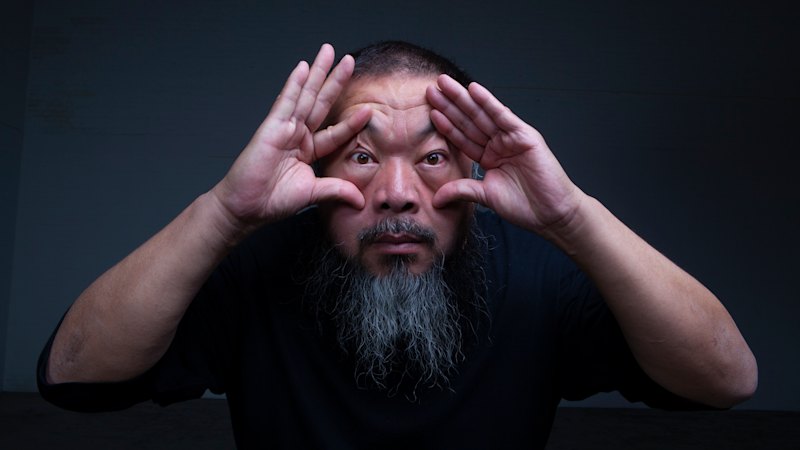
‘They are so scared’: how a late-night tweet made Ai Weiwei understand the West
Full Article
Original Source
Read the full article at Smh →KhanList aggregates and links to publicly available news content. We do not host full articles from third-party sources. Always verify important information with original sources.