
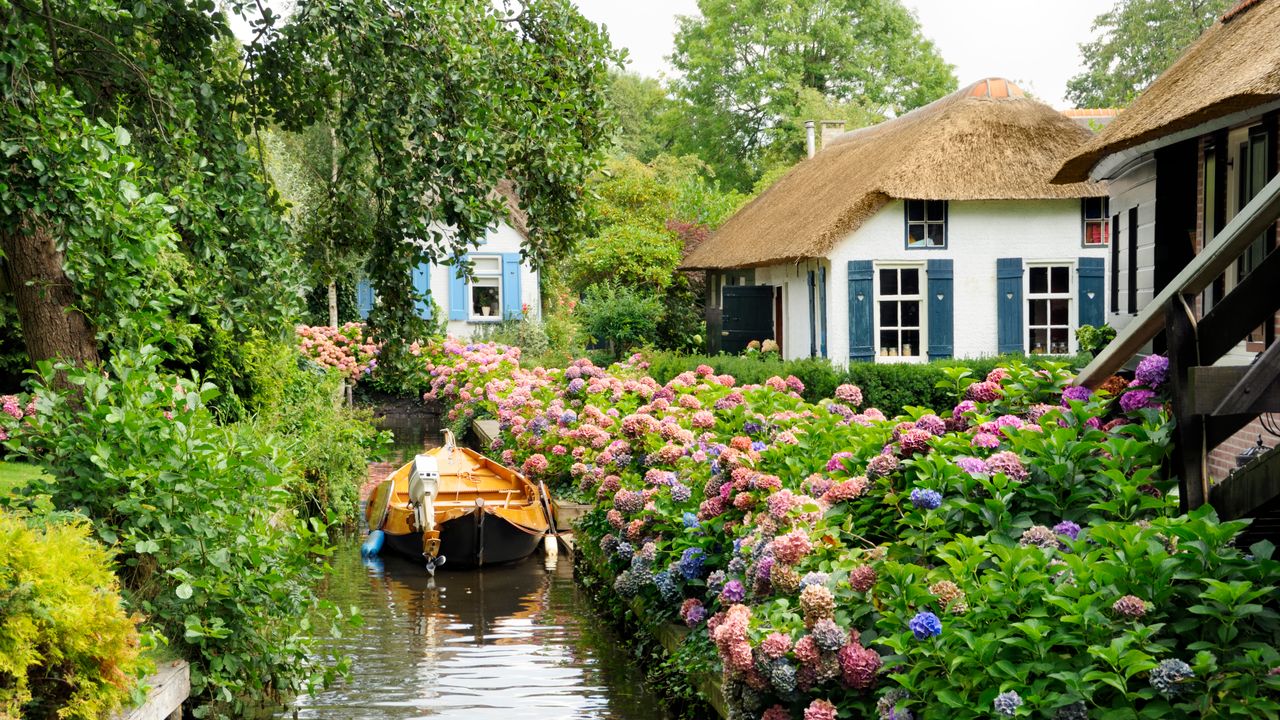
The ancient technique using reeds, straw and dried plants have created some of the most picturesque rural retreats from Chile to JapanPhoto: Getty ImagesIf you think of a storybook village, there’s a good chance that vision includes cozy cottages with a thatched roof. But these charming dwellings aren’t just found in the worlds of soon-to-be princesses or daring adventurers. Travelers can discover villages around the world that still feature homes with traditional thatched roofs, which are crafted using dried vegetation such as straw, palm branches, rushes, or water reeds. These roofs are weather- and pest-resistant, provide natural insulation, and can last decades, depending on the material used. While they’ve fallen out of favor (and are even outlawed in certain areas), some villages pride themselves on keeping the style alive, relying on master thatchers to care for these unique roofs. From Japan to Chile to the Cotswolds of England, discover 14 thatched roof villages that celebrate the historic building method.Photo: imageBROKER/Siegfried Kuttig/Getty ImagesNieblum, GermanyLocated on the southern shore of the German island of Föhr, Nieblum is a charming village home to historic thatched-roofed captain’s cottages. The area was home to Vikings from the 8th to 10th centuries and later was a whaling center during the 17th and 18th centuries. Today, Nieblum has a population of over 500 people. Visit the island’s largest church, St. Johannis-Kirche, also known as the Frisian Cathedral, and its historic cemetery with unique, carved tombstones that tell the life stories of the sailors they commemorate.Photo: Education Images/Universal Images Group/Getty ImagesMilton Abbas, EnglandThe village of Milton Abbas in Dorset boasts 36 nearly identical thatched-roof cottages built of cob, a mixture of subsoil, organic material such as straw, and water. Milton Abbas was designed as a planned community in the late 18th century after Joseph Damer, the 1st Earl of Dorchester, decided the existing town of Middleton was disturbing his quiet country life and wanted a more picturesque village. Architect William Chambers, known for Somerset House and the Great Pagoda in Kew Gardens, and famed landscape architect Capability Brown, who developed the English landscape style, designed the settlement. Each of the homes, which were initially painted yellow and landscaped with a lawn and a horse chestnut tree, was intended to house two families. Visitors can step back in time during the 18th-century street fair, which is held every two years.Photo: Chris Hill/Getty Images*Adare, IrelandIt’s easy to see why Adare is considered one of Ireland’s prettiest villages. Located in County Limerick, the village was founded in the 13th century overlooking the River Maigue and is now one of Ireland’s Heritage Towns, designated settlements recognized for their cultural importance. You’ll find plenty of opportunities to explore the village’s thatched-roof buildings, some of which now house shops and restaurants, such as 1826 Adare, a Michelin Guide Bib Gourmand award winner. Adare is also a destination for golf, with over 20 courses, and will host the 2027 Ryder Cup.Photo: Getty ImagesBroad Campden, EnglandThatched roofs and honey-hued Cotswold stone are the hallmarks of homes in Broad Campden, a charming village in Gloucestershire, England. The small community is surrounded by rolling hills and is on the Monarch’s Way walking path—the escape route Charles II took in 1651 following defeat in the Battle of Worcester. Broad Camden also boasts a 17th-century Quaker meeting house and the 12th-century Norman Chapel house, which was renovated in the early 20th century by Charles Robert Ashbee, the famed architect and influential force in the Arts and Crafts movement. For more historic beauty, take a short drive to Chipping Campden, where you’ll find more thatched-roof homes.Photo: Getty ImagesOgimachi, Shirakawa-go, JapanNestled in Japan’s Shogawa River Valley, Ogimachi in the Shirakawa-go region of the Gifu Prefecture is known for its Gassho-style farmhouses, which feature steeply slanted thatched roofs resembling hands in prayer. The steep roofs help shed the area’s abundant winter snow easily and create spacious attics, which were traditionally used for the cultivation of silkworms. Shirakawa-go, along with the neighboring region of Gokayama, was named a UNESCO World Heritage Site in 1995—and the farmhouses, some of which are over 250 years old, have become a popular attraction.Photo: Getty ImagesSønderho, Fanø, DenmarkNamed Denmark’s most beautiful village, Sønderho is set on the island of Fanø off the southwestern coast of Denmark. The village was a major shipping town during the 18th and 19th centuries, and today, visitors can stroll the village’s crooked streets and take in the 19th-century homes topped with thatched roofs and surrounded by small gardens. The village is also home to Hannes Hus, the preserved home of a 19th-century sailor’s widow, which showcases the Dutch wall tiles that were incorporated into traditional Fano homes.Photo: Getty ImagesZambezi Strip, NamibiaIf you travel through the Zambezi Strip of Namibia, you’ll see villages of round mud huts topped with conical thatched roofs. These examples of vernacular architecture are found throughout the continent and utilize readily available materials. Many of the river lodges in the area, which cater to tourists on river safaris or exploring nearby game parks, also feature thatched roofs.Photo: Getty ImagesSantana, Madeira, PortugalSantana, a village on the Portuguese island of Madeira, is known for its casinhas de Santana—triangular houses with thatched roofs. The traditional homes are made of wood with roofs of local crops, such as wheat and rye. The exteriors are painted in white, red, and blue. Inside there’s a main residential space and an attic, which was used for agricultural storage. Visitors can tour several restored houses at Parque Temático da Madeira.Photo: Getty ImagesThôn Tha, VietnamHome to the Tay people, Thôn Tha is a picturesque village in the Hà Giang province of northern Vietnam. Due to the proximity to the local rice fields, the village’s homes are built on stilts and feature thatched roofs. Villagers open their homes for homestays, where travelers can experience the culture and help support the local traditions.Photo: Getty Images/René LorenzMachuca, ChileMachuca is a small village near San Pedro de Atacama in the Andes of northeastern Chile. The village consists of a small number of homes and a white-washed church, and thatched roofs help insulate the buildings from the desert temperatures. Machuca is known for its llamas—which residents have bred for generations—and the flamingos in the nearby lagoon.Photo: Getty ImagesGearrannan Blackhouse Village, ScotlandScotland’s Isle of Lewis is home to Gearrannan Blackhouse Village, a coastal crofting village with late-18th-century cottages with double dry stone walls and thatched roofs. The final residents moved out of the village in the early 1970s, and in 1989, Urras nan Gearrannan (the local trust) began restoring the cottages and surrounding land. The cottages are now available for rent as vacation accommodations.Photo: Getty ImagesKerhinet, FranceFrance’s Parc naturel régional de Brière is known for its charming thatched-roof villages, and the most beautiful may be Kerhinet. Set in the park’s marshland, Kerhinet is an open-air museum with 18 restored stone cottages. Visitors can stay in a cottage or at the local inn. The pedestrian village also showcases local products such as honey, cider, and salt.Photo: Getty ImagesNaganeupseong, South KoreaNaganeupseong Folk Village is a historic, well-preserved village in the Suncheon-si area of South Korea. Encircled by fortress walls, the village was an administrative town during the Joseon Dynasty, and the customs and lifestyle of the period live on today. Homes in Naganeupseong feature thatched roofs and traditional three-bay, Southwest-facing layouts. The national heritage site includes 231 homes in their original condition, and nine are considered “important folklore materials.”Photo: Getty ImagesGiethoorn, the NetherlandsSet in the Dutch province of Overijssel, Geithoorn feels like something out of a fairytale. The roadless village is nicknamed the Venice of the Netherlands for its hand-dug canals that wind around the small islands that are topped with 18th- and 19th-century thatched-roof farmhouses. Visitors can sail the canals on whisper boats, and stroll or bike along the foot and cycling paths and 176 bridges that connect the islands to the mainland.Elizabeth Stamp is a freelance lifestyle and design writer and editor based in Los Angeles. For AD, she reports on everything from cutting-edge architecture to far-flung destinations to the homes of the royal family. She previously worked on staff at Architectural Digest and ELLE DECOR and has contributed to CNN ... Read More
These Thatched Roof Villages Are Among the Most Beautiful in the World
Full Article
Original Source
Read the full article at Architecturaldigest →KhanList aggregates and links to publicly available news content. We do not host full articles from third-party sources. Always verify important information with original sources.