
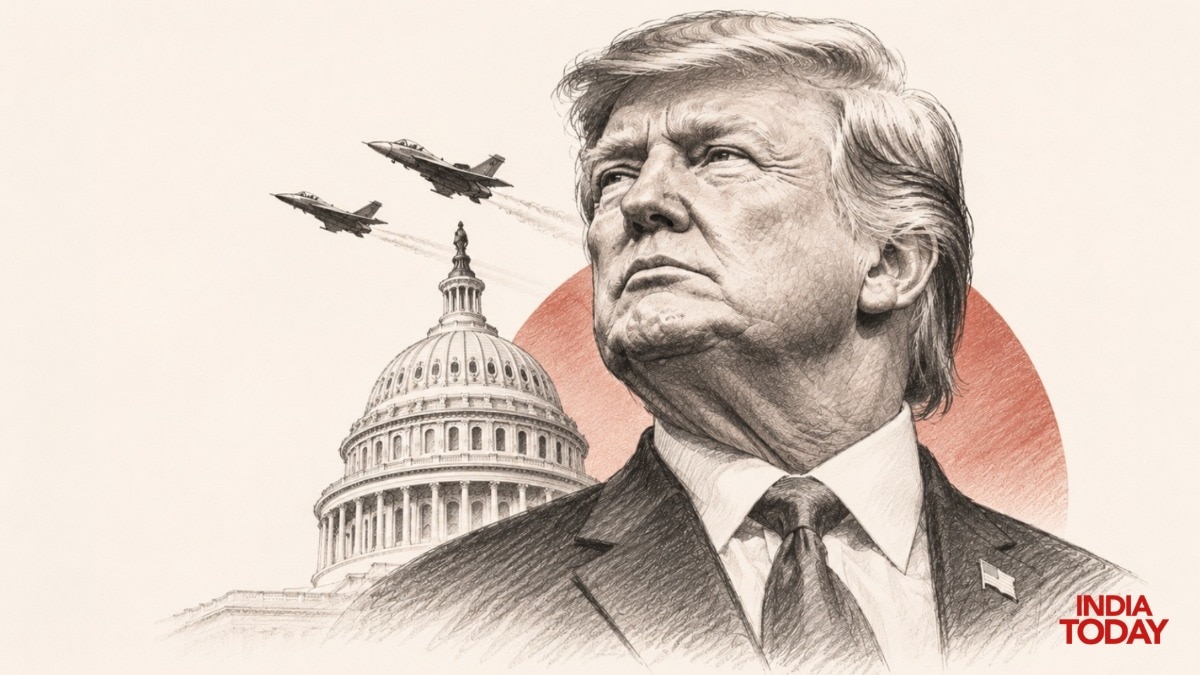
Donald Trump, the 47th US president and a Republican, has lost both chambers of Congress. But he is showing little sign of backing off the Iran war.Trump blamed the Republican defeat on his absence from the ballot, writing “I wasn’t on the Ballot”. He also posted an image of a red cap with one word, “VETO”, signalling that he is ready to take on the incoming Democratic-controlled Congress. A look at five US presidents who launched or expanded military operations within a year of midterm setbacks, alongside the losses their parties suffered in Congress History suggests a defeat at the polls rarely slows a president down. Trump is not the first to lose at home and keep fighting abroad. Many have launched or expanded military action within a year of a midterm loss.Take Ronald Reagan, the 40th US president and a Republican, who faced a setback in the November 1982 midterms. Less than a year later, on October 25, 1983, Reagan sent nearly 1,900 American troops into the Caribbean island of Grenada under Operation Urgent Fury. He told Congress the aim was to “restore order and protect the lives of Americans” on the island. George HW Bush, the 41st US president and a Republican, also faced a midterm setback in 1990. The Gulf crisis was already underway after Iraq invaded Kuwait in August, and Bush had deployed American troops to Saudi Arabia before the election. But the US-led military offensive against Iraq, Operation Desert Storm, began on January 17, 1991.Bill Clinton, the 42nd US president and a Democrat, suffered a much bigger defeat in the 1994 midterms. His party lost and handed Republicans control of both chambers. Less than a year later, on August 30, 1995, NATO launched Operation Deliberate Force, a major air campaign against Bosnian Serb military positions. George W. Bush’s response was more direct. After Republicans lost both chambers in the 2006 midterms, Bush announced a surge of troops in Iraq in January 2007. In his January 10 address to the nation, Bush said, “I’ve committed more than 20,000 additional American troops to Iraq.”Barack Obama, the 44th US president and a Democrat, faced a major setback in the 2010 midterms, when Democrats lost 63 House seats and six Senate seats. Four months later, on March 19, 2011, Obama authorised US military strikes in Libya as part of an international intervention backed by a UN Security Council resolution. In June that year, he also announced a gradual drawdown of US troops in Afghanistan, a mix of force and retreat.Trump’s first term offers a different example. Republicans lost 41 House seats in the 2018 midterms, although they gained two Senate seats. Six weeks later, on December 19, Trump announced a US troop withdrawal from Syria, saying “ISIS had been defeated.”The record is mixed, but it leans one way. In four of the six cases, the president launched or widened military action within a year of the defeat. Obama did both. Only Trump simply pulled back in his first term. But for now, Bush is the closest parallel: a second-term Republican president with an arguably unpopular war who chose to escalate.Trump now faces a similar test in his second term. With Democrats set to take charge in January 2027, they will have greater power to investigate his Iran policy, hold hearings, and scrutinise military funding. Trump retains his veto power, however, and Congress can override it only with a two-thirds majority in both chambers.- Ends
These presidents launched military ops after midterm losses. Will Trump follow?
Full Article
Original Source
Read the full article at Indiatoday →KhanList aggregates and links to publicly available news content. We do not host full articles from third-party sources. Always verify important information with original sources.