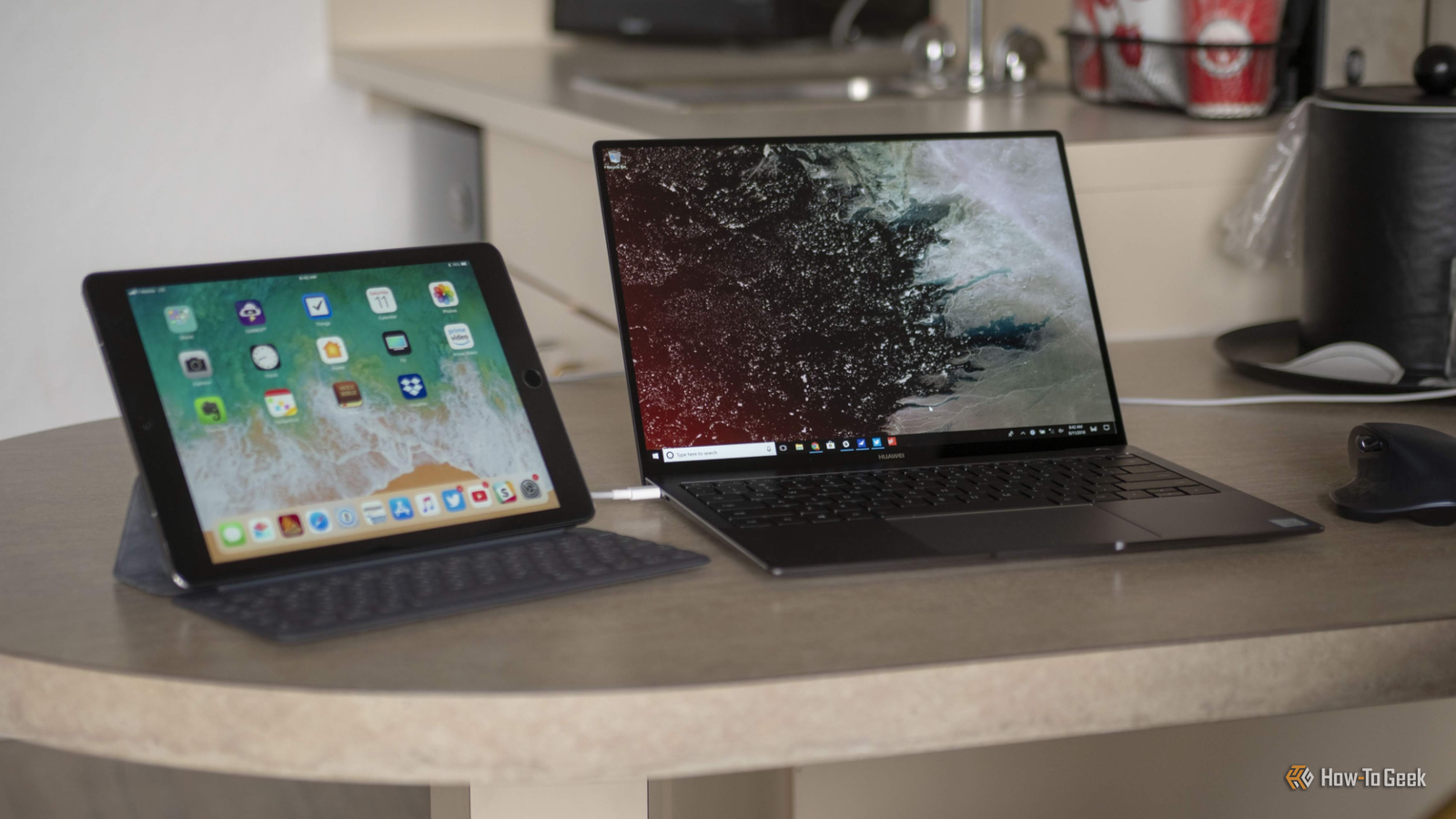
Published Aug 10, 2026, 9:45 AM EDT Sydney Butler is a technology writer with over 20 years of experience as a freelance PC technician and system builder and over a decade as a professional writer. He's worked for more than a decade in user education. On How-To Geek, he writes commerce content, guides, opinions, and specializes in editing hardware and cutting edge technology articles. Sydney started working as a freelance computer technician around the age of 13, before which he was in charge of running the computer center for his school. (He also ran LAN gaming tournaments when the teachers weren't looking!) His interests include VR, PC, Mac, gaming, 3D printing, consumer electronics, the web, and privacy. He holds a Master of Arts degree in Research Psychology with a minor in media and technology studies. His masters dissertation examined the potential for social media to spread misinformation. Outside of How-To Geek, he hosts the Online Tech Tips YouTube Channel, and writes for Online Tech Tips, Switching to Mac, and Helpdesk Geek. Sydney also writes for Expert Reviews UK. He also has bylines at 9to5Mac, 9to5Google, 9to5Toys, Tom's Hardware, MakeTechEasier, and Laptop Mag. The relationship between the U.S. and China has been interesting to say the least. Politically, the two countries could not be more different, but economically there has been little choice but to engage in trade and business. There's a very good chance that the gadgets or other manufactured objects in your home were made in China. They may have been designed and patented in the U.S., but the factories and workers who can make the item for a reasonable price are no longer within the borders of America. Those products are needed, but sometimes they represent a risk. A ban abruptly froze one of the industry's most promising competitors Just as it was on a roll When a product is designed and made by a Chinese company, the fear exists that the Chinese government may install surveillance or other problematic software and hardware capabilities in these devices. In China, the line between government and private business is blurry, to say the least. Since Huawei makes so much telecommunications gear, it's always been under scrutiny, and eventually, in 2019, the company was placed on the Entities List, which severely restricted what business Huawei could do with U.S. companies. This didn't mean that people who owned Huawei products had to destroy them, or that those already on store shelves had to be removed, but it cut off future trade. And since companies like Google could no longer do business with Huawei, it also meant certain software services could not ship with Huawei products anywhere in the world. Huawei accidentally found the perfect laptop formula Simple, yet effective Huawei wasn't a company with a rich history designing computers. It was a telecoms company that made decent Android handsets. So it entered the laptop market from a different direction than Dell, Apple, HP, Lenovo, and the rest. Its MateBook series of machines looked and felt expensive, but weren't. Huawei also didn't just try to copy the MacBook design formula, but came up with original engineering and design touches. The higher-end models had an aluminum chassis, extremely thin display bezels, a large 3:2 touchscreen and a massive glass trackpad. The display had a 3,000 × 2,000 resolution, which was outrageous for a mainstream Windows laptop at the time. The 3:2 aspect ratio also gave you substantially more vertical space than the panels that dominated Windows laptops. This was nothing like all the 16:10 MacBook clones Windows laptop makers kept pushing out, and the price of this laptop wasn't far from a MacBook Air at the time. Keep in mind that this was also before Apple Silicon, and the MateBook X Pro came with a discrete GPU, and up to a Core i7 Intel CPU. So it wasn't just cheap, it was also actually good. Reviewers at the time praised it, and people who owned one loved it. Then, the U.S. government pulled the rug, and, in short order, Huawei had basically no presence in the country. Nobody has really replaced the value proposition There's no reason to compete Credit: Patrick Campanale / How-To Geek It feels a little silly to talk about "value" given the pricing madness in the computer component market as I write this. However, between Huawei’s exit and the start of the pricing crisis, no other Windows laptop maker ever managed to offer similar quality and pricing. If you had $1,000 to spend on a laptop, and you wanted it to have great build quality, excellent sound and visuals, with a great trackpad and keyboard, your only realistic option was a MacBook. Even at that price level, typical Windows laptops would fail hard on at least one of those criteria. When Apple recently released the MacBook Neo for $600, it lit a fire under Windows laptop makers, who suddenly showed that with the right motivation they could do better for a grand or less, but even so, these laptops can't shake the perception of cheapness that Huawei managed to avoid with its more affordable MateBooks. MacBook Neo (A18 Pro) Operating System macOS CPU A18 Pro The MacBook Neo with the A18 Pro chip is Apple's most affordable laptop yet, with all-day battery life and buttery-smooth performance in a thin and light profile. Huawei pushed the whole Windows laptop market forward But sadly not enough Credit: Lucas Gouveia/How-To Geek But I still have to give credit where it's due. I honestly think that the arrival of the MateBook in the late 2010s as a real Windows alternative to MacBooks did create shifts in the Windows laptop market. It didn't do it alone. Apple also had a part to play, but Huawei showed that thin bezels, a good keyboard, and large accurate trackpads did not have to be locked to Apple's business and cost model. If MateBooks were allowed to stay in the U.S. market, and other Windows laptop makers were forced to compete, we might have been in a much better place than we are today for those who don't want to step into the macOS walled garden. Huawei is still going strong overseas Huawei's laptop business has kept going in the rest of the world, though being excluded from the U.S. has steered its decisions. Interestingly, Huawei now offers Arm-based laptops running HarmonyOS, which is an in-house OS developed by Huawei with a closed-source kernel, and only some open-source components. The company's latest laptops offer features like bendable OLED screens, and it continues to make affordable traditional laptops that look and feel premium. The only real difference is that you can't buy them inside the USA.
These laptops were effectively banned 7 years ago, and nothing's really matched them since
Full Article
Original Source
Read the full article at Howtogeek →KhanList aggregates and links to publicly available news content. We do not host full articles from third-party sources. Always verify important information with original sources.