
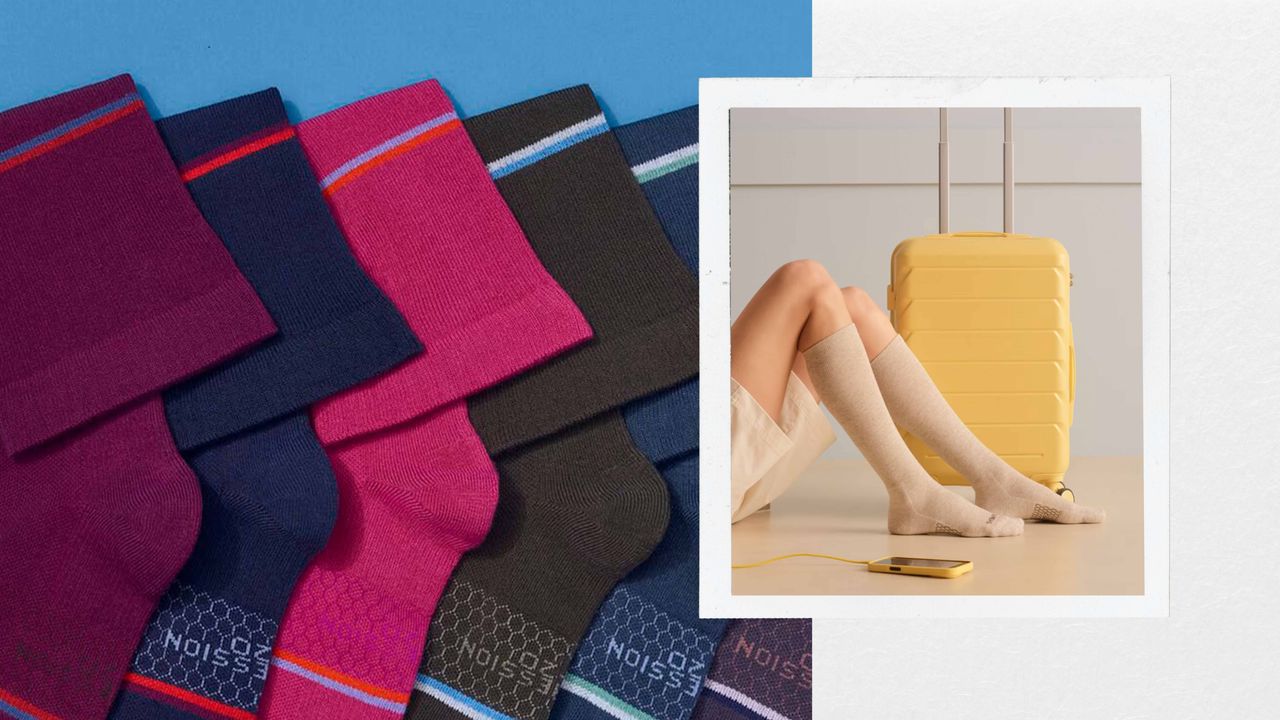
Frequent fliers understand the importance of a trusty pair of compression socks, especially on a long-haul flight. This simple travel accessory offers a slew of benefits, especially to those who are stationary for hours at a time, like when you're seated on a plane, train, or in a car for a long road trip. These tighter-than-normal socks apply pressure and squeeze the veins in your legs and ankles, which in turn helps improve blood circulation, reduce swelling, and relieve discomfort. If you've ever experienced that awful pins-and-needles feeling after being stuck in the middle seat on a 10+ hour flight, you might want to slip on a pair of compression socks before takeoff. The best compression socks for travel are the right amount of snug, easy to slip on and off, and soft on the skin. Ahead, I've gathered the pairs our editors regularly turn to on long travel days.Editor-tested compression socksFrequently asked questionsBombasEveryday compression socksWith a medium compression level, the Bombas Everyday compression socks are perfect for travelers who want something effective and supportive, but not so tight to the point of potential discomfort. My rule is if I'm headed on a flight that is five hours or longer, I'm wearing them. You have to fight a bit to pull them on, which is probably why mine finally got a hole at the back of the calf after years of wear. I don't recommend these for anyone with long nails, as you really need to grip and yank them on—but overall they have stood up to the test of time. The way they increase circulation is supposed to help with jet lag, puffiness, and just feeling better after a long journey, and I swear they’ve helped me arrive feeling fresher than I used to. —Megan Spurrell, associate articles director Compression level: 15-20 mmHg ProsMedium compression level is ideal for everyday wear and travelMade with breathable, thermoregulating Merino woolAvailable in packs and in various color combinationsConsExpensiveThese socks carried me through pregnancy—some time around the seven-month mark (with twins, no less) when I was measuring full-term and basically unable to reach my poor, swollen feet anymore, the compression socks I'd been using to prevent swelling became a complete necessity. Enter Comrad, which are stretchy in a way where they retain a broader shape before you even put them on; this meant my husband, sister, mom—whoever was around, really—could help me get them on so much more easily than with any of the other brands I owned, and I even finagled getting them on myself a few times when I was in a pinch (which is truly an Olympic-level feat when you're the size of someone nine months pregnant). They've held up well and have yet to let me down. —Shannon McMahon, senior destinations editor Compression level: 15-25 mmHg ProsMade with moisture-wicking nylonOdor-controlPinch-free cuffContoured design is easy to pull onConsMaterial is not the softestCharmkingCompression socksI've worn these compression socks on countless flights, including trips to Rome, Venice, Barcelona, and home to New York. I love that you’re able to purchase them in a set of three with multiple colors depending on which goes best with your airport outfit—and when my travel companions both forgot their pairs, I was happy to share! By the end of a flight, the socks usually have me feeling a bit constrained and uncomfortable (as compression socks tend to do when they’re working correctly), but I appreciate that they aren't so restrictive that I was in pain or have ever had to take them off immediately. The fabric is comfortable, durable, and easy to pull on without being too tight. Plus, they're a great budget-friendly option. —Jamie Spain, travel bookings editor Compression level: 15-20 mmHg ProsAffordableCome in a pack of threeSoft materialConsNot the highest quality2XUVectr full-length compression socksI love my Bombas for how effective they are, but this pair from 2XU is my new favorite because they feel the most user-friendly. While other compression socks I've tried can be insanely tight and difficult to get on, these slide on more easily. I also love the sleek, streamlined design—some compression socks look like they're medically issued, but these have a more subtle look to them that can go undetected. I have a tall pair I wear for longer flights, in addition to a mid-calf pair for hikes, and even a low-rise pair for runs (I feel like they offer better arch support, as a high-arch girlie). I never expected to be a I've-got-a-collection-of-compression-socks kinda person, but here we are—I'm converted. —M.S. Compression level: 15-20 mmHgProsGood for runningNot as difficult to slide on as other compression socksAnti-blister designQuick-dry fabricConsNot as intense of compression as othersLalapapaCompression socks (two-pack)I used to be a little intimidated by compression socks: For a long time, I thought they would squeeze and pinch my legs, so I steered clear of them. On a flight last fall to Alberta, Canada, I gave these under-$30 compression socks a shot. They offer a medium level of support and feel just right—tight enough without being too much to wear for hours. My favorite thing about them, besides the cute colors, is their super-soft material. They're gentle on the skin, kept me warm on the cold plane, and left my legs pain-free. I've worn them on a few other trips since then, and they've held up well. Given how cozy they are, they're best for cold climates or fall or winter travel. —Meaghan Kenny, commerce editor Compression level: 15-20 mmHg ProsSuper soft and warmEasy to slide onPretty colorwaysConsLighter compression levelPaka is one of my new favorite brands—its super-soft and technical fabrics are designed with blends of traceable baby alpaca fiber, pima cotton, plant-derived tencel, and recycled materials, all made in Peru. In my experience, the softest items in my closet are rarely the ones I trust for long, rugged days of trekking and camping, but Paka gear has found the center of the Venn diagram. These socks use a touch of compression around the center of the foot for arch support, which makes them ideal for long days on your feet—whether you're trekking to Machu Picchu or simply stomping around a new city from morning to night. —M.S.ProsMore comfortable and less restrictive than others on the listOdor-resistantRibbed arch supportConsThese are not full knee-length socksFigsArchTek compression socksWhen a doctor friend recommended compression socks from Figs, I was immediately intrigued since the brand specializes in medical clothing, designed for nurses and doctors who spend long hours on their feet. There's a simplicity to the design, which looks like a dress sock, but the fit is comfortable and snug, without being overbearing. I wore these both ways on one of the world's longest flights—the 17-hour Air New Zealand journey from New York to Auckland—and my legs felt great afterwards! —Rachel Chang, contributor Compression level: 15-20 mmHg ProsFive-layer arch supportMoisture-wicking materialAnti-cramp calf weaveConsThese medical-grade socks might be too much for travelers looking for light compressionCopper FitCompression socksThe Copper Fit socks are my favorite for long-haul flights. I never feel as comfortable getting off a 15+ hour flight as I do when I wear them. Like any compression socks, these fit snugly, but getting into and adjusting them is easy—no wrestling out stubborn wrinkles necessary. I’ve had mine for four years now, and the weave feels as secure as when I first got them, even after dozens of washes in the laundry, weekend runs, and long-distance trips. Family members who have the same pair, though in different sizes, tell me the guidance on the sizing chart is accurate and that these socks have really gone the distance for them as well. —Kat Chen, editorial assistant Compression level: 10-20 mmHg ProsAffordableFully cushioned foot bedSnug while still being easy to slip on and offConsLimited colors availableFAQ:What are the benefits of wearing compression socks?Compression socks can help improve circulation, reduce swelling, and alleviate discomfort or pain in the legs that may result from sitting in the same position for an extended period of time, like on a long flight. By promoting blood flow, compression socks can also help prevent blood clots, including deep vein thrombosis (or DVT), a very rare and dangerous condition in which a blood clot forms in a deep vein in your body and travels to your lungs. Compression socks can also aid in muscle recovery, making them a nice option for athletes too.Who are compression socks best for?Talk to your doctor about your pain points to see if compression socks might be beneficial to you. The right pair can help travelers, as well as pregnant women, athletes, and anyone prone to swelling in the legs or feet. Compression socks can also help relieve swelling and pain caused by varicose veins.What compression level should I look for?To benefit from compression socks, it's important to find a pair that fits well and offers the right millimeters of mercury, or mmHg, for you. The mmHg measurement calculates how much pressure is being exerted. Medical-grade socks sit in the 20-30 mmHg range, while most casual compression socks are still tight enough to encourage circulation at 15-25 mmHg. For reference, socks that are 30 mmHg are extra tight, while pairs that are 10 mmHg are relatively loose.What are graduated compression socks?While shopping for a pair of compression socks, you might notice that some are labeled as graduated compression socks. These pairs apply the greatest amount of pressure at the ankle and gradually decrease in tightness towards the top of the sock, helping blood flow back up towards the heart more effectively. Graduated compression socks are a comfortable choice for travelers who prefer a pair that aren't extremely restrictive all the way through.This article has been updated with new information since its original publish date.
These Compression Socks Help Increase Blood Flow and Reduce Swelling at 30,000 Feet
Full Article
Original Source
Read the full article at Cntraveler →KhanList aggregates and links to publicly available news content. We do not host full articles from third-party sources. Always verify important information with original sources.