
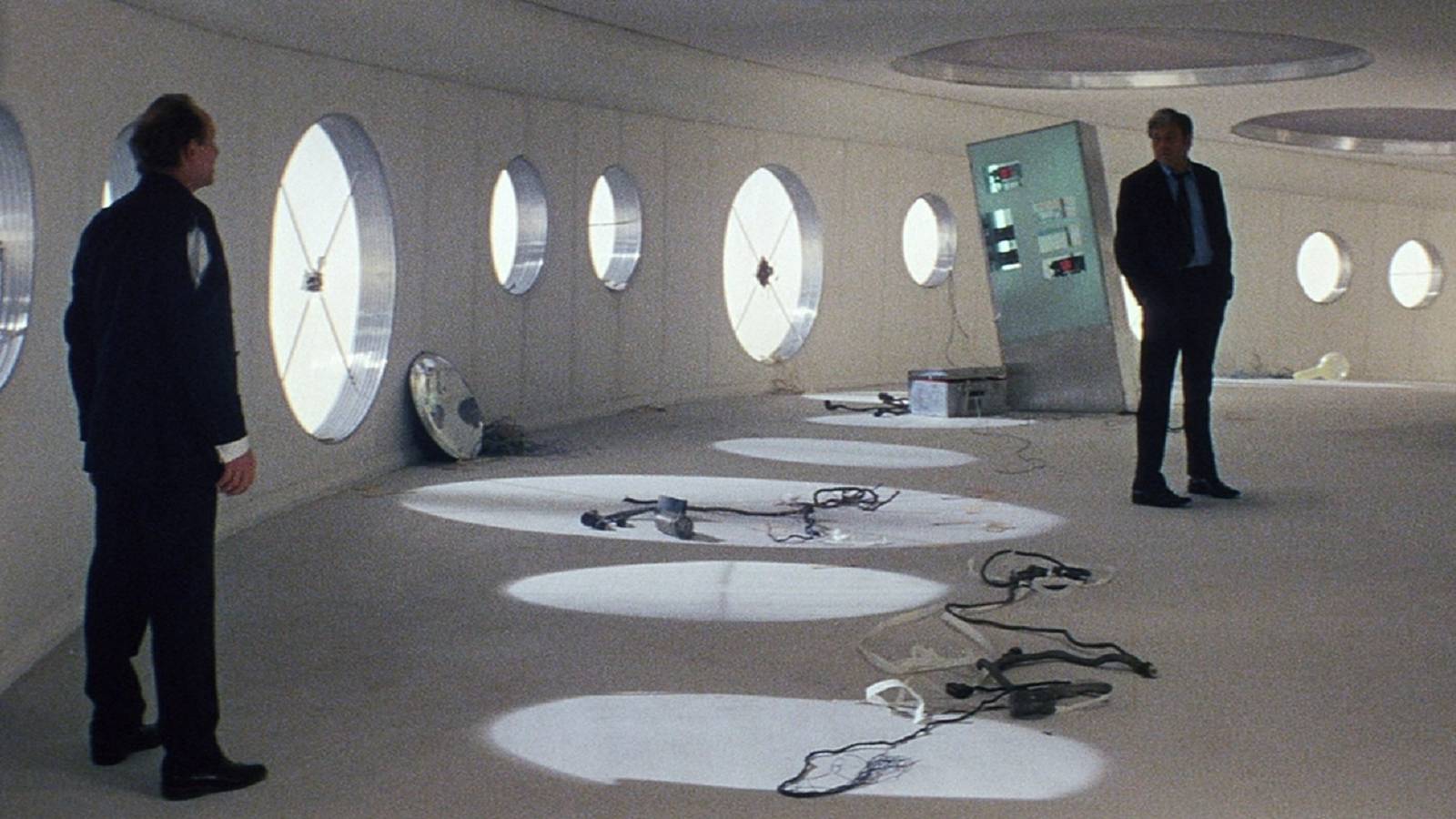
Image via Mosfilm Published Oct 2, 2026, 6:38 AM EDT Diego Pineda has been a devout storyteller his whole life. He has self-published a fantasy novel and a book of short stories, and is actively working on publishing his second novel. A lifelong fan of watching movies and talking about them endlessly, he writes reviews and analyses on his Instagram page dedicated to cinema, and occasionally on his blog. His favorite filmmakers are Andrei Tarkovsky and Charlie Chaplin. He loves modern Mexican cinema and thinks it's tragically underappreciated. Other interests of Diego's include reading, gaming, roller coasters, writing reviews on his Letterboxd account (username: DPP_reviews), and going down rabbit holes of whatever topic he's interested in at any given point. Sign in to your Collider account Broadly speaking, there are two categories of science fiction: Soft sci-fi is mostly character-driven and focused on "soft" sciences, such as sociology and politics, with no particularly big concern for realism and leaning more heavily toward "fiction" than "science." Hard sci-fi, on the other hand, is more so driven by "hard" sciences like physics and biology. This is science fiction that emphasizes scientific realism, logic, and plausible technology. There is, of course, pretty much no true objectivity when it comes to analyzing art—sci-fi cinema being no exception. However, throughout history, there have been eight particular hard sci-fi movies so universally acclaimed, so heavily awarded, and so notoriously timeless that they're worthy of being "officially" considered the very best that this subgenre of sci-fi has ever had to offer. 8 'Arrival' (2016) Image via Paramount Pictures It was Arrival that saw Denis Villeneuve's first-ever venture into the realm of sci-fi cinema, and there has been no going back from there, because this is such a masterpiece that it immediately and firmly established Villeneuve's as one of Hollywood's leading sci-fi auteurs. Before his work in big-franchise titles like Blade Runner and Dune, there was Arrival, one of the most perfect sci-fi movies released since 2010. The film was a substantial commercial success, pleased almost all critics around the world, and made its way to eight Oscar nominations and one win (for Best Sound Editing). Part of what makes it so special is the brilliant way in which it blends hard and soft sci-fi elements, grounding a clearly metaphysical and character-driven premise in meticulous, real-world scientific methodology. This way, people who love either side of the sci-fi coin should be equally pleased. 7 'Children of Men' (2006) Image via Universal Pictures Based on the P. D. James novel of the same name, Children of Men further cemented Alfonso Cuarón's reputation as one of the greatest Mexican filmmakers of the 21st century. We're talking about one of those dystopian movies that are perfect from the first scene to the last, an action thriller that's unlike anything else Hollywood has offered over the course of the last couple of decades. Though the movie was a hit with critics, it was a financial flop upon release. With the years' passage, however, it has become one of the biggest cult classics in the history of dystopian sci-fi, praised for its exceptional writing, its standout performances, and Cuarón's direction. Its high-concept premise is treated with rigorous logistical, scientific, and even sociopolitical plausibility, making for some of the most engrossingly realistic world-building that a futuristic sci-fi movie has ever seen. 6 'Primer' (2004) Image via THINKFilm Director, writer, producer, editor, composer, and star Shane Carruth wanted to see a hyper-realistic, grounded sci-fi movie that relied on its own wits and intelligence rather than special effects and hand-waving exposition. Enter Primer, a film so committed to realism that Carruth actually studied physics in order to make the story, dialogue, and production design as plausible and accurate as possible. The result is one of those hard sci-fi movies that are perfect throughout, a love letter to micro-budget filmmaking that's still among the best low-budget sci-fi movies the big screen has ever seen. It's time travel storytelling stripped down to its rawest, most uncompromising technological and mathematical core, treating the tropes of the subgenre with the utmost care and attention. That kind of respect for the audience's intelligence makes Primer a must-see for anyone who loves hard science fiction. 5 'Solaris' (1972) Image via Mosfilm Polish author Stanisław Lem's Solaris is one of the greatest science fiction books of the '60s, and it was a novel that Soviet auteur Andrei Tarkovsky greatly admired. Tarkovsky, who felt that the sci-fi genre in particular lacked emotional depth, decided to take the book and adapt it into 1972's film of the same name. In the end, he made a film with such tremendous emotional complexity that it's arguably one of the most poetic sci-fi movies of all time. There are those who may take a look at Solaris' narrative focus on emotion, poetic pacing, and philosophical themes and decide that they're enough to make its variety of sci-fi soft. However, in its scathing critique of scientific hubris, its psychological realism, and the focus on scientific plausibility rather than outer-space spectacle, Solaris ended up becoming one of the greatest hard sci-fi films the world has ever seen. Collider Exclusive · Sci-Fi Survival Quiz Which Sci-Fi World Would You Survive? The Matrix · Mad Max · Blade Runner · Dune · Star Wars Five universes. Five completely different ways the future went wrong — or sideways, or up in flames. Only one of them is the world your instincts were built for. Eight questions will figure out which dystopia, galaxy, or desert wasteland you'd actually make it out of alive. 💊The Matrix 🔥Mad Max 🌧️Blade Runner 🏜️Dune 🚀Star Wars TEST YOUR SURVIVAL → 01 You sense something is deeply wrong with the world around you. What do you do? The first instinct is often the truest one. APull on every thread until I understand the system — then figure out how to break it. BStop asking questions and start stockpiling — food, fuel, weapons. Questions don't keep you alive. CKeep my head down, observe carefully, and trust no one until I know who's pulling the strings. DStudy the patterns. Every system has a rhythm — learn it, and you learn how to survive it. EFind the people fighting back and join them. You can't fix a broken galaxy alone. NEXT QUESTION → 02 In a world of scarcity, what resource do you guard most fiercely? What we protect reveals what we believe survival actually requires. AKnowledge. If you understand the system, you don't need resources — you can generate them. BFuel. Everything else — movement, power, escape — runs on it. CTrust. In a world of fakes and informants, a truly reliable ally is rarer than any commodity. DWater. And after water, information — the two things empires are truly built on. EShips and credits. The galaxy is big — you survive it by being able to move through it freely. NEXT QUESTION → 03 What kind of threat keeps you up at night? Fear is useful data — if you're honest about what you're actually afraid of. AThat reality itself is a lie — that everything I experience has been constructed to keep me compliant. BA raid. No warning, no mercy — just the roar of engines and then nothing left. CBeing identified. Once someone with power decides you're a problem, you're already out of time. DBeing outmanoeuvred — losing a political game I didn't even know I was playing. EThe Empire tightening its grip until there's nowhere left to run. NEXT QUESTION → 04 How do you deal with authority you don't trust? Every dystopia has a power structure. Your approach to it determines everything. ASubvert it from the inside — learn its rules well enough to weaponise them against it. BIgnore it and stay out of its reach. The further from any power structure, the better. CAppear to comply while doing exactly what I need to do. Visibility is the enemy. DManoeuvre within it carefully. You can't beat a system you refuse to understand. EResist openly when I have to. Some things are worth the risk of being seen. NEXT QUESTION → 05 Which environment could you actually endure long-term? Survival isn't just tactical — it's physical, psychological, and very much about where you are. AUnderground bunkers and server rooms — cramped, artificial, but with access to everything that matters. BOpen wasteland — brutal sun, no shelter, constant movement. At least the threat is honest. CA dense, rain-soaked city where you can disappear into the crowd and nobody asks questions. DMerciless desert — extreme heat, no water, and something enormous living beneath the sand. EThe fringe — backwater planets and busy spaceports where the Empire's attention rarely reaches. NEXT QUESTION → 06 Who do you want in your corner when things fall apart? The company you keep is the clearest signal of who you actually are. AA tight crew of believers who've seen behind the curtain and have nothing left to lose. BOne or two people I'd trust with my life. Any more than that and someone talks. CNobody, ideally. Alliances are liabilities. I work alone unless I have no choice. DA community bound by shared hardship and mutual survival — people who need each other to last. EA ragtag team with wildly different skills and total commitment when it counts. NEXT QUESTION → 07 Where do you draw the line — if you draw one at all? Every survivor eventually faces a moment that tests what they're actually made of. AI won't harm the innocent — even the ones who'd report me without hesitation. BI do what I have to to protect the people I've chosen. Everything else is negotiable. CThe line shifts depending on who's asking and what's at stake. DI draw a long-term line — nothing that compromises my people's future, even if it'd help now. ESome lines, once crossed, can't be uncrossed. I know which ones they are. NEXT QUESTION → 08 What would actually make survival worth it? Staying alive is one thing. Having a reason to is another. AWaking others up — dismantling the illusion so no one else has to live inside it. BFinding somewhere — or someone — worth protecting. A reason to keep moving. CAnswers. Understanding what I am, what any of this means, before time runs out. DLegacy — shaping the future in a way that outlasts me by generations. EFreedom — for myself, for others, for every world still living under someone else's boot. REVEAL MY WORLD → Your Fate Has Been Calculated You'd Survive In…Your answers point to the world your instincts were built for. This is the universe your temperament, your survival instincts, and your particular brand of stubbornness were made for. The MatrixYou took the red pill a long time ago — probably before anyone offered it to you. You're a systems thinker who can't help but notice the seams in things. You're drawn to understanding how the system works before figuring out how to break it. You'd find the Resistance, or it would find you — your instinct for spotting constructed realities is the machines' worst nightmare. You function best when you have access to information and the freedom to act on it. The Matrix built an airtight prison. You'd be the one probing the walls for the door. Mad MaxThe wasteland doesn't reward the clever or the well-connected — it rewards those who are hard to kill and harder to break. That's you. You don't need comfort, community, or a cause larger than the next horizon. You need a vehicle, a clear threat, and enough fuel to outrun it — and you're good at all three. You are unsentimental enough to survive that world, and decent enough — just barely — to be something more than another raider. In the wasteland, that distinction is everything. Blade RunnerYou'd survive here because you know how to exist in moral grey areas without losing yourself completely. You read people accurately, keep your circle small, and ask the questions others prefer not to answer. In a city where humanity is a legal designation rather than a feeling, you hold onto something that keeps you functional. You're not a hero. But you're not lost, either. In Blade Runner's world, that distinction is everything. DuneArrakis is the most hostile environment in the known universe — and you are precisely the kind of person it rewards. Patience, discipline, and political awareness are your core strengths — and on Arrakis, they're survival tools. You understand that the long game matters more than any single victory. Others come to Dune and are consumed by it. You'd learn its logic and earn its respect. In time, you wouldn't just survive Arrakis — you'd begin to reshape it. Star WarsThe galaxy far, far away is vast, loud, and in a constant state of violent political upheaval — and you wouldn't have it any other way. You find meaning in being part of something larger than yourself — a cause, a crew, a rebellion. You'd gravitate toward the Rebellion, or the fringes, or whatever pocket of the galaxy still believes the Empire's grip can be broken. You fight — not because you have to, but because standing aside isn't something you're capable of. In Star Wars, that willingness is what makes all the difference. ↻ RETAKE THE QUIZ 4 'Gattaca' (1997) Andrew Niccol's feature directorial debut was Gattaca, a dystopian sci-fi gem that has aged as one of the greatest science fiction classics of the 1990s. Alas, the film was a box office flop in spite of the massive critical acclaim it was met with. Almost three decades later, however, it's still widely remembered as one of the greatest sci-fi cult classics of the 20th century, the sort of hard sci-fi movie nobody wants a remake of. Starring Ethan Hawke and Uma Thurman at the top of their game, Gattaca brought hard science fiction to the realm of speculative genetics and bioethics in ways that were far ahead of their time. What makes the film particularly scary—and particularly effective as a hard sci-fi movie—is that on top of being scientifically realistic, it also presents an eerily plausible version of a dystopian society where genetic editing is used in favor of corporate greed. 3 'Project Hail Mary' (2026) Image via Amazon MGM Andy Weir has three published novels, yet has already firmly established himself as one of the leading voices in contemporary hard sci-fi literature. After the success of Ridley Scott's The Martian, expectations for Phil Lord and Christopher Miller's adaptation of Weir's 2021 novel Project Hail Mary were through the roof. In the end, not only did the film live up to expectations, it considerably surpassed them. It was a smash hit at the box office, it earned the acclaim of critics all across the board, and it's currently one of the highest-rated sci-fi movies of all time on both Letterboxd and IMDb. Indeed, by all metrics that matter, it's one of those hard sci-fi movies without any significant flaws. Though there are aliens and other elements that are usually characteristic of soft sci-fi here, Project Hail Mary makes the scientific method the real protagonist and core narrative engine of its story. 2 'Interstellar' (2014) Image via Paramount Pictures Christopher Nolan was already one of the leading blockbuster filmmakers in Hollywood by the time 2014 rolled in, and the only thing that Interstellar did was further enshrine him as one of the most talented mainstream voices in town. It's one of the most universally beloved space operas in the history of science fiction cinema, but while space operas tend to fall into the soft sci-fi side of things, Interstellar is almost undeniably a hard sci-fi gem. There are few hard sci-fi movies that rival Interstellar, a film which bridges the gap between real theoretical astrophysics and a deeply emotional character-driven drama, kind of like a film specifically designed to bring hard sci-fi and soft sci-fi fans together in their love for one movie. Made with the help of Nobel laureate physicist Kip Thorne as executive producer and scientific advisor, Interstellar is a flawless introduction to hard sci-fi for those who have never consumed these kinds of stories. 1 '2001: A Space Odyssey' (1968) Image via Metro-Goldwyn-Mayer There are many who still regard Stanley Kubrick as the single greatest filmmaker in history, and after watching the sort of faultless masterpiece that 2001: A Space Odyssey is, it's easy to see why. Arguably the greatest Hollywood sci-fi movie ever created, this masterful space opera deals with themes of human evolution, the dangers of technology, and humanity's cosmological insignificance in all sorts of enthralling ways. It's one of those rare classic movies without any flaws, one that has been the foundational benchmark by which pretty much all cinematic hard sci-fi is measured for several decades now. At a time when mainstream sci-fi movies were dominated by cheap effects and low-brow stories, Kubrick showed how committed to technological and scientific realism, artistically minded, and thematically complex the genre could be. Things haven't been the same for sci-fi cinema since. 2001: A Space Odyssey Release Date April 10, 1968 Runtime 149 minutes Cast Keir Dullea Dr. David Bowman Gary Lockwood Dr. Frank Poole
These 8 Hard Sci-Fi Movies Are Officially the Best of All Time
Full Article
Original Source
Read the full article at Collider →KhanList aggregates and links to publicly available news content. We do not host full articles from third-party sources. Always verify important information with original sources.