
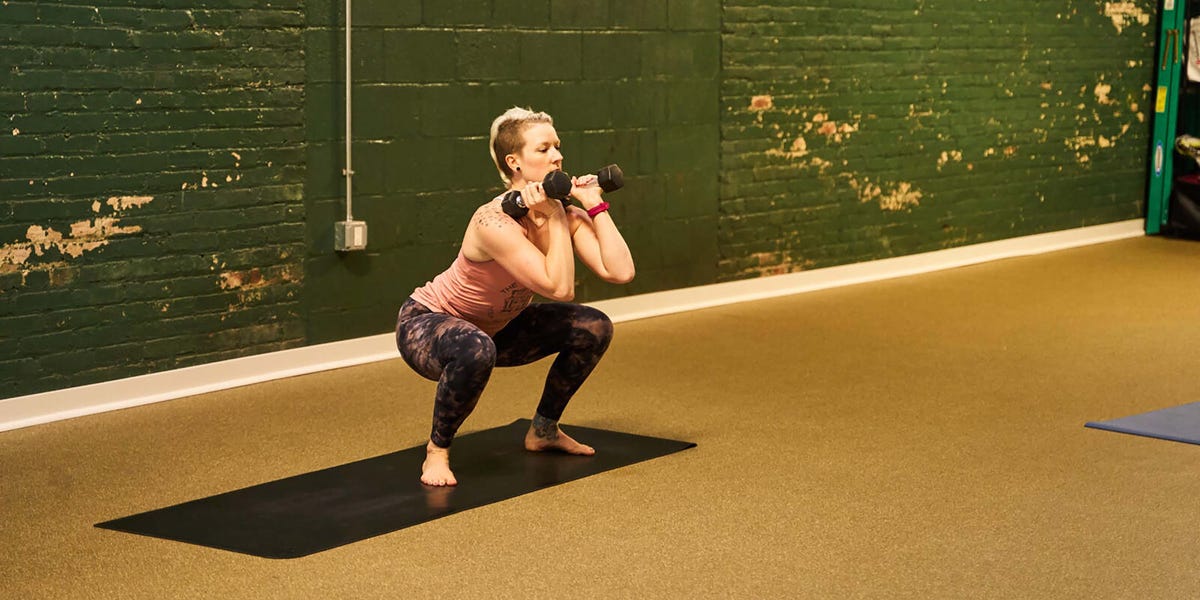
Runners are chasing higher and higher mileage weeks, with recreational athletes now chasing numbers previously reserved for elite marathoners, says Alice Baquie, DPT, physical therapist and founder of forRunners. As people train more like pro athletes, replicate training plans they’ve seen online, and get competitive with their friends (or themselves) on apps like Strava, volume has become a focal point of training.But while your aerobic fitness might make 40, 50, or even 70 miles a week feel doable, that doesn’t necessarily mean your muscles and joints are prepared to handle the repetitive stress.“As a physio in the distance-running space for 13 years, all I really see is the carnage at the other end when people run too much and do too little in the way of body maintenance,” says Baquie. “Prehab is a hard sell because it’s far less sexy than clocking big miles but it makes a difference.”Many physical therapists and strength coaches use simple strength tests to gauge whether runners have the strength and mobility to tolerate adding mileage to their training. Casey Lee, CSCS, a personal trainer who works with runners in Richmond, Virginia, says he uses these strength tests for runners of any distance, “but especially if someone is looking to get upward of seven or eight hours of running a week or 45 to 55 miles,” he explains.To DIY these tests, try these six assessments for runners looking to progress or continue to run pain-free.While we offer weight ranges and reps that—on average—runners should aim for, these are just guidelines: “Every individual is slightly different and some people may be able to do more or less but still be quite ‘functional’ running,” says Baquie. However, these numbers can serve as benchmarks to help identify where you may have room to get stronger and therefore, run better.Single-Leg Calf RaiseTravor RaabWhy all runners should do it:Your calves do a huge amount of work when you run, helping absorb force when you land and propel you into your next stride. A simple single-leg calf raise can give you a sense of whether you have the muscular endurance necessary for that repeated stress.“If runners can’t do the bare minimum for calf raises, then how are you doing 170 steps per minute?” says Jessica Wulke, DPT, director of athlete integration at Athlete Restoration Lab in Frisco, Texas, as an example of cadence.How to execute:Stand barefoot with feet parallel. Use a wall or chair for balance if needed, but try to go without the support.Balancing on one leg, rise as high as you can onto the ball of the foot.Lower heel back to the floor with control. Aim for 25 consecutive reps on each side, moving through full range of motion, which means coming all the way up onto the ball of the foot and back down until the heel taps the floor. What to pay attention to:The rep count is important, but you also need to pay attention to your form throughout. As you rise, press into your big toe and avoid rolling toward the outside of your foot. If you roll onto the outer edge of your foot, Wulke says this can be a sign of compensation that is common in runners with Achilles issues or a history of ankle sprains.Goblet Squat Noam TamirWhy all runners should do it: This is a test of how strong your lower body is relative to your frame, says Lee. It also combines core strength and hip mobility: If your core starts to fatigue, he says, you'll often drop the weight or lose your posture. If your hips are tight, you may also not be able to get into deep flexion required for a goblet squat.How to execute:Hold a dumbbell or kettlebell at chest, feet shoulder-width apart, toes turned just slightly out. Send hips down and back to squat until thighs are at least parallel to the floor, keeping core engaged and chest up. Repeat.What to pay attention to:Lee’s benchmark for runners is 20 reps, while holding 50 percent of your bodyweight, but you can certainly work up to this.Keep the dumbbell high—about shoulder level—and maintain a neutral spine. Let your hips drop as low as you can without rounding at the lower back (known as “butt wink”). Also, avoid heels lifting off the floor, which would indicate poor ankle dorsiflexion (toes to shin).Plank and Side Plank HoldAdam HoffAdam HoffWhy all runners should do it:Running may be a lower-body-dominant sport, but you can’t do it injury-free without a strong core. “It’s the epicenter of your torso and the connector of your arms and legs when you run,” says Baquie. “Having a strong core means better running posture, a more stable pelvis, and a more efficient running gait.”How to execute forearm plank:Place forearms on mat, elbows below shoulders and step feet back, hip-width apart.Press into forearms to lift hips. Body should create a straight line from head to heels.Hold. How to execute side plank:Lie on right side, place forearm on mat, elbow directly under shoulder and stack shoulders, hips, knees, and ankles. Drive forearm into floor and lift hips up. Body should form a straight line from head to ankles. Hold.Then switch sides. What to pay attention to:Baquie and Wulke both say that runners should be able to hold a 90-second front plank and a 60-second side plank on each side. Don’t let your hips sag toward the floor or pike toward the ceiling in the forearm plank. “Or else it doesn’t count,” says Baquie. “I’m hard on this.” Same with the side plank: Maintain that straight line with the body.Single-Leg Step DownThomas HenggeWhy all runners should do it:Running requires you to repeatedly control your bodyweight on one leg, and the single-leg step-down can reveal how well your core, hip, knee, and foot work together as you absorb force.It also tests eccentric strength through the quads—the ability of the muscle to produce force as it lengthens—which is particularly important when running downhill, says Baquie. The movement also requires decent ankle dorsiflexion, or the ability to bring your shin forward over your foot, which is crucial so that you land in the proper position during the foot strike.How to execute:Stand on one leg on a six-inch step or box. With hands on hips, slowly bend standing knee to lower the heel of free foot toward the floor and lightly tap the floor.Return to standing. Repeat.What to pay attention to:Your knee should stay in line with your toes and shouldn’t cave inward. Baquie’s benchmark is 10 controlled reps on each side, although Wulke says advanced runners should work up to 60 seconds on each side.You should also assess the quality of the movement. Wulke suggests asking yourself these questions: Did you lose balance? Did one hip drop? Did you lose your balance or take your hands off your hips to steady yourself? Did you lean your torso to one side? These cues can reveal whether you’re losing stability or control through the descent.Single-Leg Hop Trevor RaabWhy all runners should do it:Every running stride requires your leg to absorb the force of landing and quickly rebound into the next step. Single-leg hops test this reactive strength, or how well your muscles and tendons can absorb and return force repeatedly.How to execute:Stand on one leg and perform 10 to 15 small, quick hops in place, landing on the same foot and immediately springing back up. Keep it light and rhythmic rather than trying to jump as high as possible, and land lightly.What to pay attention to:You should be able to maintain the same rhythm and position throughout the set without your knee collapsing inward or your opposite hip dropping. Baquie says that hip drop—often called a Trendelenburg sign—can indicate that weak hip stabilizer muscles (like the abductors) are causing you to lose control as you land.Broad JumpTrevor RaabWhy all runners should do it:The broad jump tests your lower-body explosive power, which matters for runners because you need to produce force quickly every time you push off the ground. It is especially beneficial for speedwork or hill drills.Plyometric training can also improve running economy and increase tendon stiffness, which helps tendons handle and transmit force.The broad jump is particularly useful because it tests not only how much force you can produce, but how well you can absorb it when you land. “Training a big broad jump is going to tie in concentric power with eccentric strength,” says Lee. “You need to have just as big of a landing and force absorption as you do an explosive jump.”How to execute:Stand with feet about hip-width apart, reach arms up and extend through the hips and torso. Swing arms back as you hinge forward and bend knees into a shallow squat.Explosively jump forward as far as you can. Land on both feet with knees bent and stick the landing. What to pay attention to:Avoid stumbling or taking an extra step, which can signal that your body isn’t ready to absorb forces that high, your form is slightly off, or you need to work on sticking the landing. You should land softly in a low squat position with your chest pointing forward, not at the ground.Lee says runners should aim to jump a distance equal to their height, and an elite score would be your height plus 20 percent. It’s more about that distance than the number of reps.Hannah Singleton is a freelance journalist who writes about fitness, health, wellness, travel, and the environment. Her work has been in publications such as the New York Times, Wall Street Journal, GQ, Vox, Wired, National Geographic, Forbes, and Fast Company. You can follow her @hannahsingleton.
These 6 Strength Tests Show Whether Your Body Is Ready for More Miles and Harder Workouts
Full Article
Original Source
Read the full article at Runnersworld →KhanList aggregates and links to publicly available news content. We do not host full articles from third-party sources. Always verify important information with original sources.