
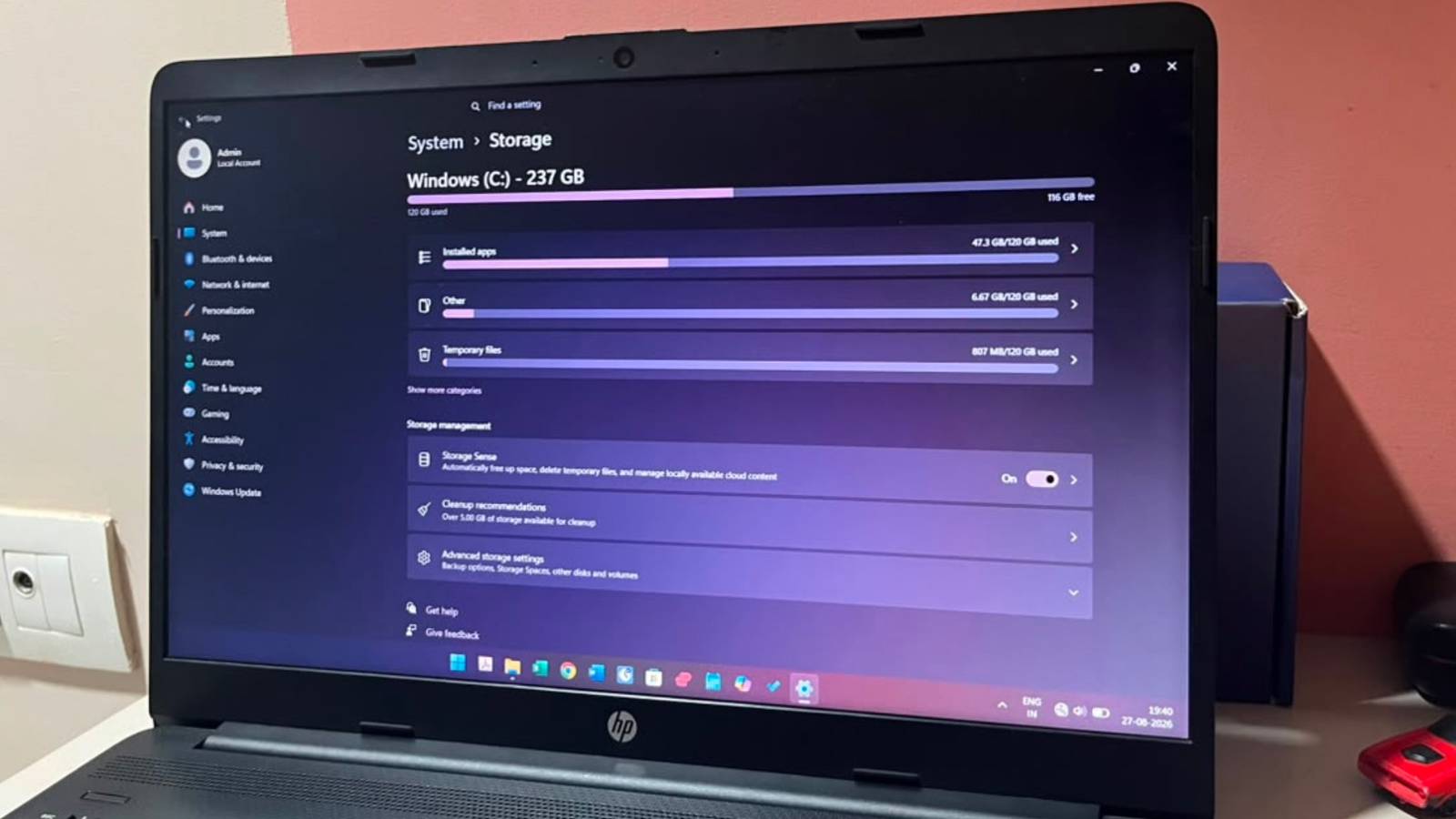
Published Sep 2, 2026, 10:30 AM EDT Viraj Gawde is a Tech Journalist with bylines at Travel+Leisure India & South Asia, Android Headlines, 91Mobiles, Croma Unboxed, etc. He has written thousands of news pieces, how-to guides, product comparisons, listicles, and op-eds on consumer tech. Currently, Viraj is obsessed with the fast-evolving world of artificial intelligence and how it is reshaping the way we work, create, and use tech. As a curious generalist, Viraj's work extends into a wide range of subjects, formats, and storytelling styles. When away from desk, he is a finance, sports, and travel geek with a constant curiosity for new experiences. Running out of storage usually means one thing—hovering over the downloads folder with increasingly desperate intent and looking for anything you can move to an external drive. But unless you’ve genuinely run out of files to delete, the problem likely isn’t what you have; it’s how much space Windows is quietly using behind the scenes. It turns out that a surprising amount of storage is tied to temporary files, recovery data, old updates, and system clutter. The good thing is that you don’t need another PC cleaner because Windows already has a capable cleanup kit built-in. These are the four built-in Windows tools that helped me claw back 16.1GB of storage space that my computer was wasting, and not a single personal file went away in the process. Disk Cleanup The most useful button is the one most people miss Storage Sense and Temporary Files cover the everyday surface layer, but Disk Cleanup goes underneath it. This is a classic utility tool that ships with Windows and one that goes further by surfacing options that aren’t obvious in the Settings panel. Search for Disk Cleanup in the Start menu, select your system drive, and let it scan. The tool displays downloaded program files, temporary internet files, Recycle Bin contents, and other system files. At the bottom of the window is one specific button called “Clean up system files” that most people overlook. It offers deeper cleanup with two additional options—Windows Update Cleanup and, on PCs that have been upgraded, Previous Windows Installation(s). The former removes superseded files from installation packages that the system holds onto after update completion, whereas the latter contains files from previous installations if you want to roll back to that version. Both of these can be an easy source of several gigabytes of storage space. So, unless you want to roll back to a past update or troubleshoot a recent one, they’re dead weight. On my machine, this step returned 8.48GB on its own. Storage Sense Keeps things automatically under control Storage Sense is turned off by default if you have an older PC running an older version of Windows. It is the easiest place to begin because it automatically cleans temporary files, empties the Recycle Bin on schedule, and sweeps out stale files without touching anything you’ve intentionally saved. To use Storage Sense, head to Settings > System > Storage > Storage Sense, and then flip the toggle on. You can set how often you want the tool to run, when the Recycle Bin should be cleared, and how long files can sit in downloads before being removed. For everyday junk that builds up between sessions, Storage Sense runs quietly in the background and handles it without you having to remember. I set mine to run every 14 days, and it freed up 1.86GB the first time I ran it. Temporary files Reveals hidden storage hogs Temporary files, as the name suggests, break down the disposable data Windows has accumulated. This includes cached thumbnails, Delivery Optimization files left over from Windows update downloads, error reports, and residual data from features you may not even use. Go to Settings > System > Storage > Temporary Files, and Windows lays out everything by category with a size estimate beside each entry. That makes it easy to see what's taking up room on your PC. Pay attention to categories such as Downloads before selecting them because the folder can contain files you actually want to keep. I prefer this approach the most instead of blindly running a cleanup utility because I’m informed about what is going away and how much space my PC will reclaim. Storage Sense and Temporary Files cover a lot of the same ground. Don't be surprised if the latter cleans up the system more lightly than expected, because it means that the former has been doing its job. I use Storage Sense for automatic maintenance, while Temporary Files gives me control over what gets removed. System Restore Shrink your safety net instead of deleting it Unlike other tools here, System Restore is basically an undo button for Windows system changes, like when a driver, update, or application causes problems. That makes restore points a sound precaution. However, it becomes far less useful when left unchecked because Windows can reserve a sizable chunk of your drive for them. The good thing is that System Restore lets you control how much space it claims going forward. Search for “Create a restore point” > Open the System Protection tab > Select the system drive > Click Configure. You'll see two figures: Current Usage, which is the amount of space your existing restore points occupy, and Max Usage, which is the space you’re allowing Windows to use. So, here you can put a hard ceiling on how much room restore points can consume. On my PC, the existing restore points were using 17.6GB, after which I lowered the maximum allocation to 5 percent or 11.86GB. So, this gave me 5.76GB of space back. It’s important to note that System Restore doesn’t back up personal files; it is primarily designed to restore the system files, drivers, registry settings, and other parts of Windows to an earlier state. None of these tools delete your personal files or require you to remove them. They simply clear up what Windows quietly accumulated on its own. Run all four on a machine that hasn't seen a cleanup in a year or two, and you might be surprised at how much breathing room you can get back.
These 4 Windows tools helped me regain 16.1GB of storage without deleting a single file
Full Article
Original Source
Read the full article at Howtogeek →KhanList aggregates and links to publicly available news content. We do not host full articles from third-party sources. Always verify important information with original sources.