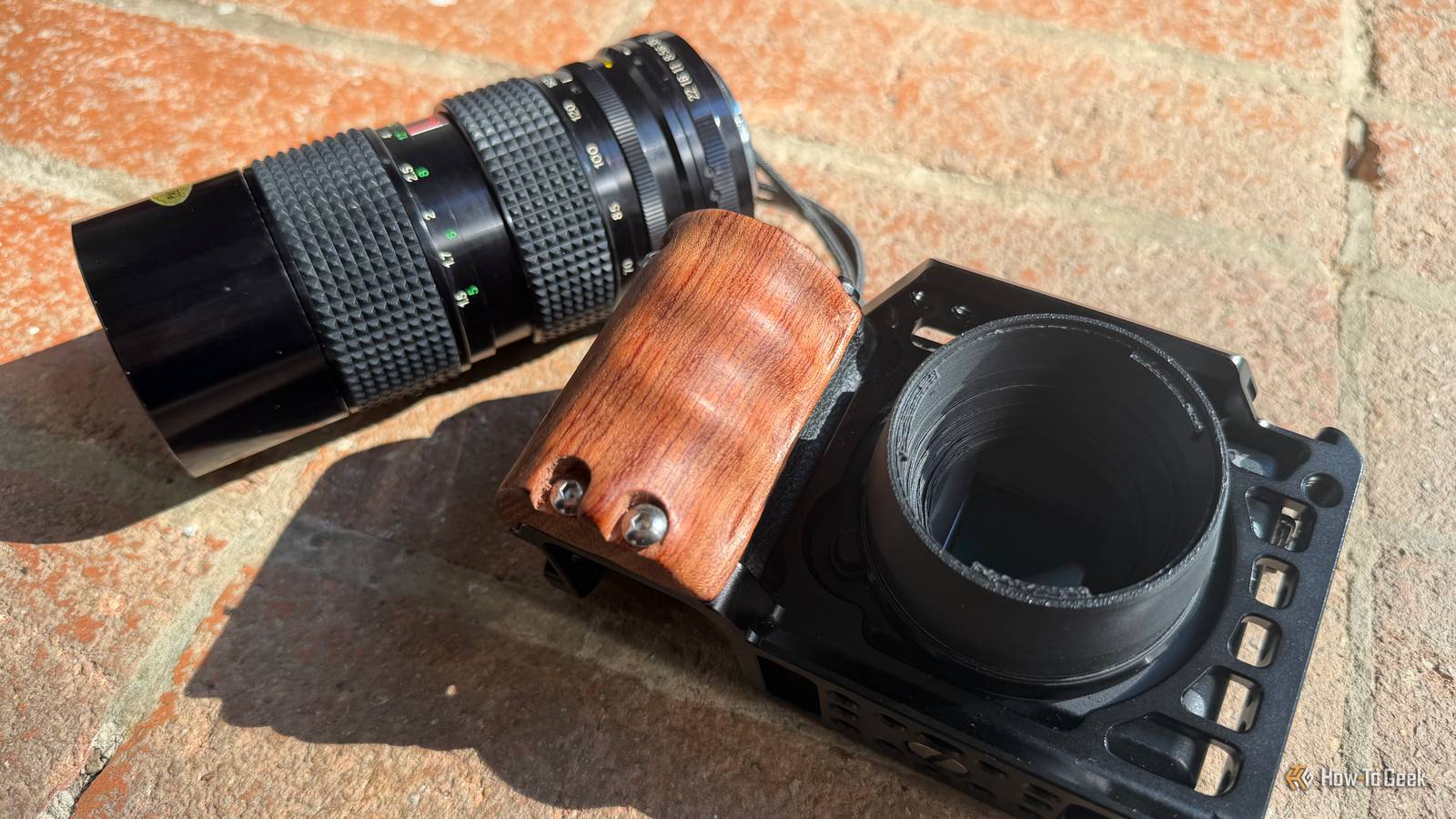
Published Aug 9, 2026, 7:00 AM EDT Tim has been covering technology for almost 20 years, in that time spanning a broad range of topics from security to product reviews. He is especially focused on the Apple ecosystem, productivity, and consumer advice. Over the years Tim has written thousands of articles, reviews, and round-ups in addition to producing video content and original photography. A graduate of journalism, he found his footing as a freelancer with a laptop and loves how he is able to work from practically anywhere. Now a Senior Editor for iPhone, Mac, and Smart Home at How-To Geek, Tim still loves to write. He can also be found crafting round-ups and productivity posts for the Zapier blog. Earlier in his career Tim spent nearly a decade as a writer and eventually Apple section editor for MakeUseOf. Tim currently lives in Brisbane, Australia. Outside of work he loves to hike and work out, play video games, and spend quality time with his wonderful partner and two cats Inka and Roger. You can’t just stick a Canon lens on a Sony body, nor can you use a lot of the old glass that predates your modern camera. Doing so requires a lens adapter—one for every lens mount and camera body combination you own—which can get expensive fairly quickly. So what if you could 3D print them instead? I’ve got some good news. The pros and cons of 3D printed lens adapters It’s not all pin-sharp sunflowers and daisies Credit: Tim Brookes / How-To Geek Lens adapters have existed for decades, making it possible to migrate a lens designed for one mount to a body that uses another. The most basic means of achieving this is two mounts on either end of a tube—one goes into the camera, the other to the lens. More advanced versions include some electronic controls, sometimes autofocus, sometimes aperture, rarely both. “Dumb” adapters allow the use of the lens in its most primitive form. This means focusing and setting aperture manually. Even electronic adapters can deliver disappointing autofocus results, and most modern cameras have features like focus peaking (which highlights in-focus areas on the electronic viewfinder or rear display) to help you nail a shot in manual mode. Aperture control is easy, as long as you have an aperture control ring on the lens. Lenses that use electronic aperture control will default to “wide open,” and this isn’t ideal for every use case. If you’re serious about controlling modern lenses, this is arguably the biggest roadblock you’re going to face. The other is electronic focus-by-wire systems, where the focusing mechanism isn’t directly linked to the rotation of the focus ring. This means that 3D-printed lens adapters are ideal for older lenses, which make up a huge portion of the used market (and maybe your existing collection). This makes them perfect for photo and video experiments, especially using older 35mm-era lenses to shoot video. You won’t miss out on autofocus when the lens never supported it in the first place! The quality of 3D-printed adapters can be a bit up and down, so your mileage may vary depending on which you download. Some commenters complain about not being able to focus to infinity, but I’ve not personally had any issues in my testing. If the free models available online fail you, there are plenty of paid alternatives you might want to try (for only a few dollars each). There’s an adapter for (almost) every lens You’ve just got to find them The first adapter I printed was a simple Canon EF to Sony E, since I primarily shoot on a Sony a6500 APS-C mirrorless. The lens I first tried was an old Canon EF 17-40mm L, which requires electronic aperture control but defaults to f/4 across the entire focal range when used with a dumb adapter. This was good enough to sell the concept to me. Since then, my personal favorite has been a Pentax K mount to Sony E mount adapter. I have an old Pentax K1000 35mm film camera that belonged to a family member, and with it a weird old 70-162mm f/3.5 zoom. Since I don’t have the patience to shoot film these days, the lens sat unused until I decided to hunt down an adapter. It’s a fully manual affair, with a twist-to-macro mode for focusing on closer objects, that has been taken care of over the past 50 or so years. It’s also built like a tank (weighing more than the camera it’s now mounted to). I’m now on the hunt for a C/Y bayonet mount for some old Yashica lenses I own too. While I’ve mostly experienced success, there have been some failings. I can’t for the life of me find a decent Nikon F mount adapter that fits both the Sony body and Nikon D lenses that I own (right now, it’s one or the other). So far I’ve printed three different adapters, with the same design uploaded multiple times to different places. I’ve seen a great number of adapters for both bodies and lenses for Canon, Sony, Nikon, Fuji (M43), and similar. Finding the right combination of these is the main challenge! The 3D print file search engine Yeggi has been incredibly useful in hunting these down, while printing marketplace Cults3D has lots of paid options. Vintage glass is fun and often great value Put old lenses to use on modern cameras Credit: Tim Brookes / How-To Geek I already happened to own a bunch of older lenses that I wanted to use, but I’m always on the lookout for older glass. You’ll often find these antiquated lenses going for cheap on auction sites like eBay or websites like Facebook Marketplace. Though they have value, they aren’t always in hot demand. Not everyone wants to deal with manual focusing or potential fungal growth. But at the sort of budget prices that these things appear at both online and in thrift stores, taking a punt on a cheap old lens is a lot more tempting when you know you can 3D print (or already have) an adapter. Worst case scenario, you can have a crack at making one by yourself. Looking for more places to download weird and wonderful prints? Check out these 3D printing model resources you’ve never heard of.
These 3D-printed lens adapters are a game changer for camera nerds
Full Article
Original Source
Read the full article at Howtogeek →KhanList aggregates and links to publicly available news content. We do not host full articles from third-party sources. Always verify important information with original sources.