
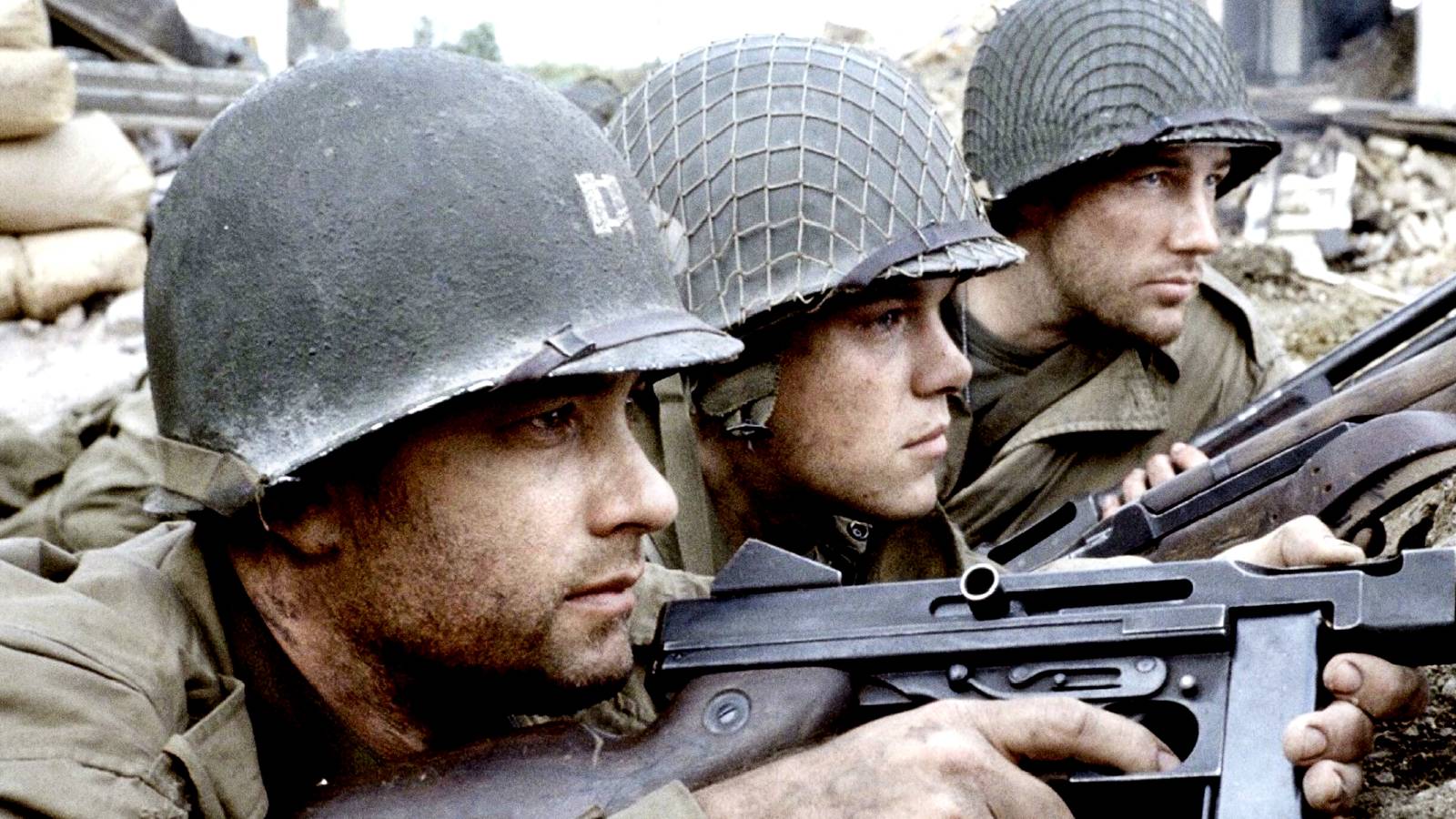
Published Aug 7, 2026, 8:53 AM EDT Senior Music Editor at Screen Rant, Sarah's love of sound and story drive the beat. A globetrotting brand whisperer and award-winning journalist, she’s built cross-cultural narratives around the world—but music has always been her true north. She launched DJ Mag North America, successfully introducing the iconic UK brand to the U.S. market. Previously, she carved a space for EDM inside the pages of VIBE, blending electronic and hip-hop culture long before it was trendy. Warning: This article contains spoilers for the movies discussed. War movies have existed almost as long as cinema itself, but only a small number have permanently changed how conflict is represented on screen. The greatest examples do more than reconstruct important battles or place recognizable actors in military uniforms. They interrogate the institutions that send people to fight, then remain with the soldiers after patriotic certainty has disappeared. There is no single formula for a war masterpiece. Some filmmakers create overwhelming combat sequences that make the audience feel trapped alongside the characters. Others barely show the battlefield at all, focusing instead on prisoners, officers, or frightened recruits caught inside systems they cannot control. The 20th century gave filmmakers no shortage of material. Two world wars and the prolonged trauma of Vietnam inspired radically different approaches to the genre. The resulting movies range from historical epics to claustrophobic survival stories, yet the best of them share an unwillingness to romanticize what war takes from the people required to fight it. These 10 films do not need allowances for their age or historical importance. Their performances remain immediate, and their visual ideas have lost none of their force. Together, they show why the greatest war movies are rarely about victory alone. All Quiet On The Western Front (1930) Lewis Milestone’s adaptation of Erich Maria Remarque’s novel follows German students who enlist during World War I after being stirred by their teacher’s patriotic speeches. Their excitement does not survive contact with the trenches. Hunger and exhaustion replace every romantic idea they carried with them, while death becomes so routine that there is barely time to process each loss. Released only 12 years after the war ended, All Quiet on the Western Front refused to transform military service into heroic sacrifice. Milestone’s camera moves through the battlefield with startling confidence for an early sound film, but its quietest moments leave the deepest wound. Paul Bäumer returns home unable to communicate what he has seen, only to discover that civilians still want reassuring stories about honor. Nearly a century later, the movie’s final image remains devastating. Paths Of Glory (1957) If All Quiet on the Western Front shows young men being destroyed by combat, Paths of Glory reveals how little protection they receive from their own commanders. Stanley Kubrick’s film begins with a French general ordering an assault on a heavily defended German position. When the attack fails, three soldiers are selected to stand trial for cowardice. Kirk Douglas plays Colonel Dax, who attempts to defend the men against a military proceeding designed to preserve the reputations of those responsible for the disaster. Kubrick contrasts the generals’ palatial surroundings with the mud of the trenches, exposing the distance between those giving orders and those expected to die carrying them out. Dax understands the injustice perfectly, but intelligence and moral clarity cannot save men condemned by a system that has already decided what truth should look like. For the harrowing No Man's Land battle sequence in Paths of Glory, Stanley Kubrick hired hundreds of local German policemen to act as French extras. Because the extras had strict military training, Kubrick struggled to make them look realistically terrified on camera, repeatedly forcing them to refilm charges until they stopped looking like disciplined soldiers attempting acts of bravado. The Bridge On The River Kwai (1957) Another prisoner-of-war masterpiece turns captivity into a study of pride. In David Lean’s The Bridge on the River Kwai, British soldiers are forced to construct a railway bridge for the Japanese army in Burma. Alec Guinness’ Colonel Nicholson initially resists his captors in defense of military law, but once he is allowed to supervise the project, the bridge becomes a reflection of his own identity. Nicholson grows so invested in demonstrating British discipline that he loses sight of the fact that his achievement will help the enemy. Guinness refuses to play him as a fool, making his obsession both understandable and horrifying. William Holden’s Shears, meanwhile, is pulled into the mission to destroy the bridge. Lean surrounds these competing ideas of duty with the scale of an epic, but the movie finally rests on one man realizing that his greatest professional achievement may also be an act of betrayal. Das Boot (1981) World War II looks very different from inside the German submarine U-96. Wolfgang Petersen’s Das Boot follows a crew entering the Battle of the Atlantic with flashes of bravado that quickly give way to boredom and dread. Once the vessel descends, the sailors are trapped inside a narrow steel structure that could become their coffin without warning. The movie’s tension depends as much on waiting as it does on attack. The men listen for enemy ships and for the groaning of the hull as depth charges shake the submarine. Petersen presents them as frightened, exhausted human beings without separating them from the military machine they serve. That balance gives Das Boot its unsettling power. It removes any sense of adventure from submarine warfare and replaces it with the terror of being buried alive beneath the ocean. Saving Private Ryan (1998) Where Das Boot traps its soldiers inside metal walls, Saving Private Ryan exposes them on the open beach. Steven Spielberg’s D-Day landing at Omaha Beach does not unfold like a clean military maneuver. Soldiers become disoriented before reaching shore, orders vanish beneath the gunfire, and survival appears to depend as much on chance as training. The rest of the film follows Captain Miller and his squad as they search for Private James Ryan, whose brothers have all been killed. Their mission raises a question no one can comfortably answer: how many people should be placed in danger to bring one man home? Tom Hanks plays Miller with a weariness that gradually reveals the cost of command. Spielberg’s film is openly emotional, but its sentiment never erases the brutality required to earn it. During the rigorous boot camp prior to filming Saving Private Ryan, director Steven Spielberg deliberately excluded Matt Damon from the grueling physical training. He did this so the rest of the squad would naturally harbor a genuine sense of frustration toward his character. Dunkirk (2017) After Saving Private Ryan drops viewers into the blood and confusion of an assault, Christopher Nolan’s Dunkirk creates a different kind of panic. Hundreds of thousands of Allied soldiers are stranded on the French coast, waiting for rescue while the German army closes in. Nolan refuses to give the evacuation a single hero, dividing the story across land, sea, and air as each timeline races toward the same point. The result is less a traditional war drama than a sustained act of suspense. Hans Zimmer’s ticking score makes every delay feel fatal, while Hoyte van Hoytema’s large-format photography turns the open beach into a trap with nowhere to hide. The characters are not built through speeches or elaborate backstories; they are revealed by what they do when survival becomes the only objective. Dunkirk finds grandeur in retreat and heroism in simply getting men home alive. Schindler’s List (1993) Steven Spielberg approaches World War II without placing the audience on a battlefield. Schindler’s List follows Oskar Schindler, a German industrialist who initially sees the Nazi occupation of Poland as an opportunity to make money. As the persecution of Kraków’s Jewish population escalates into systematic murder, his factory gradually becomes a refuge for workers who would otherwise be sent to concentration camps. The black-and-white cinematography prevents the historical setting from feeling safely distant, while Spielberg refuses to turn Schindler’s transformation into uncomplicated heroism. Liam Neeson plays him as charming, compromised, and painfully aware that he acted too late to save more people. Ben Kingsley gives Itzhak Stern a restrained authority, while Ralph Fiennes makes Amon Göth the most terrifying villain of all time precisely because his cruelty has become routine. Schindler’s List is devastating because it measures survival one name at a time. Stanley Kubrick begins Full Metal Jacket before its Marines ever reach Vietnam. Gunnery Sergeant Hartman strips the recruits of their names and identities at Parris Island, replacing them with insults and repetition. Vincent D’Onofrio’s Leonard Lawrence, nicknamed Gomer Pyle, becomes the platoon’s target after struggling to meet Hartman’s demands. His breakdown reveals the terrifying logic behind the training: the military must dismantle the individual before it can manufacture a soldier. The second half follows Matthew Modine’s Joker into Vietnam during the Tet Offensive and eventually the devastated streets of Huế. The shift from the regimented world of boot camp to disordered urban warfare can feel deliberately jarring. Kubrick first shows how men are conditioned to kill, then places them in a conflict incapable of providing any coherent meaning for what they have become. To keep the actors' reactions entirely authentic, Stanley Kubrick did not allow the recruits to meet drill instructor R. Lee Ermey prior to filming. Furthermore, Ermey—who was a real-life former U.S. Marine drill instructor—improvised almost all of his own dialogue, marking the first time Kubrick allowed an actor to improvise since Dr. Strangelove. Apocalypse Now (1979) United Artists /Courtesy Everett Collection Full Metal Jacket studies how soldiers are prepared for war. Francis Ford Coppola’s Apocalypse Now enters the void left once that process has consumed almost everything else. Martin Sheen plays Captain Willard, an intelligence officer sent upriver to assassinate Colonel Kurtz, a decorated soldier who has abandoned military command and established his own brutal kingdom. The journey follows the logic of a nightmare rather than a traditional mission. Robert Duvall’s Lieutenant Colonel Kilgore treats destruction like a theatrical extension of his personality, staging a helicopter attack to Wagner before discussing the quality of the local waves. Marlon Brando’s Kurtz waits at the end of the river as the embodiment of the darkness Willard has encountered along the way. Coppola does not explain Vietnam through tactics or policy. He presents war as a moral infection, making Apocalypse Now the only possible ending for a list about what violence ultimately reveals. The Hurt Locker (2008) Kathryn Bigelow’s The Hurt Locker strips war down to its most intimate danger: one soldier walking toward a bomb while everyone else holds their breath. Jeremy Renner plays Staff Sergeant William James, an explosives expert whose astonishing skill is tangled up with his need to keep testing how close he can get to death without losing. Bigelow keeps the camera near James and his team, making every abandoned car, ringing phone, and watching face feel potentially lethal. Renner never plays him as a swaggering action hero. James is competent enough to inspire trust and reckless enough to terrify the people depending on him. When he returns home, the ordinary rhythm of family life feels more alien than Baghdad ever did. The final image of James back in the bomb suit lands like a verdict: for some soldiers, war is not the thing they survive—it is the only place they still know how to live.
These 10 War Movies From The 20th Century Are Genuine Masterpieces (There's No Debate)
Full Article
Original Source
Read the full article at Screenrant →KhanList aggregates and links to publicly available news content. We do not host full articles from third-party sources. Always verify important information with original sources.